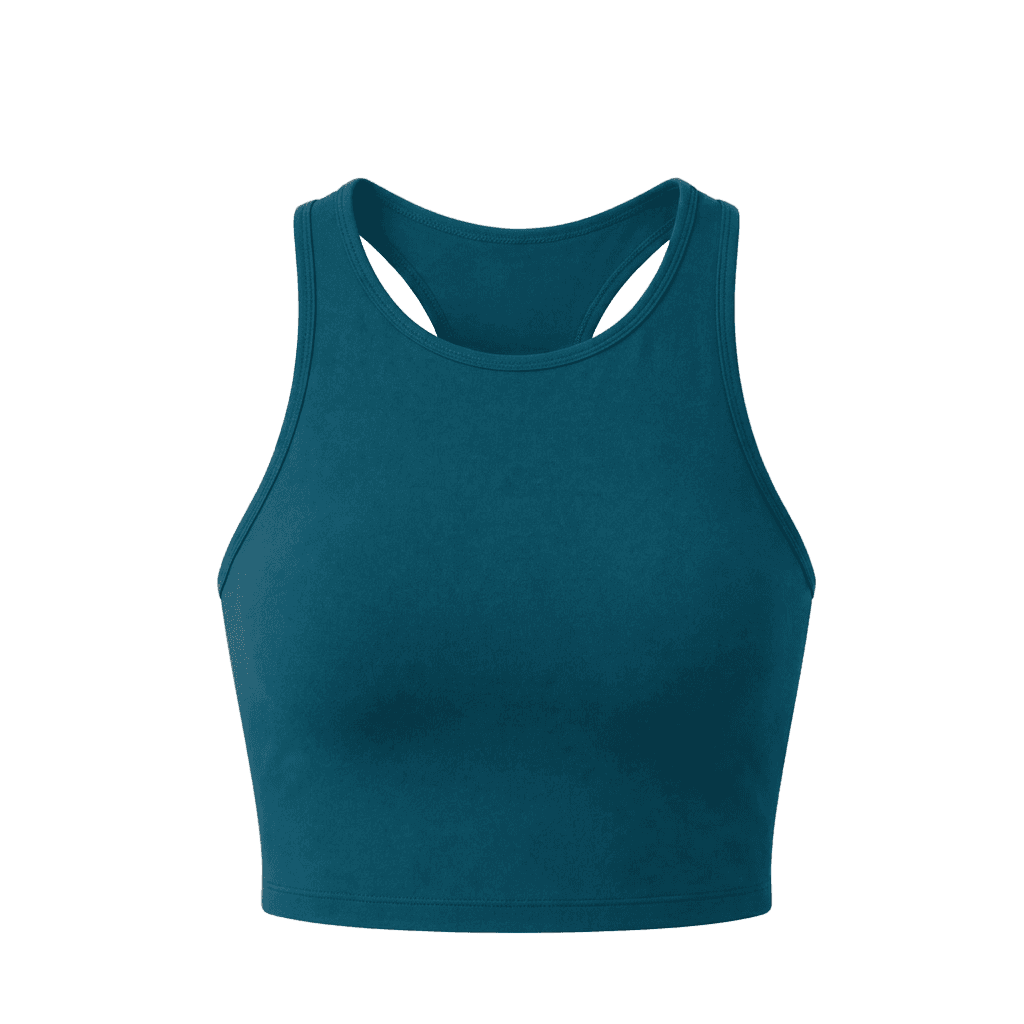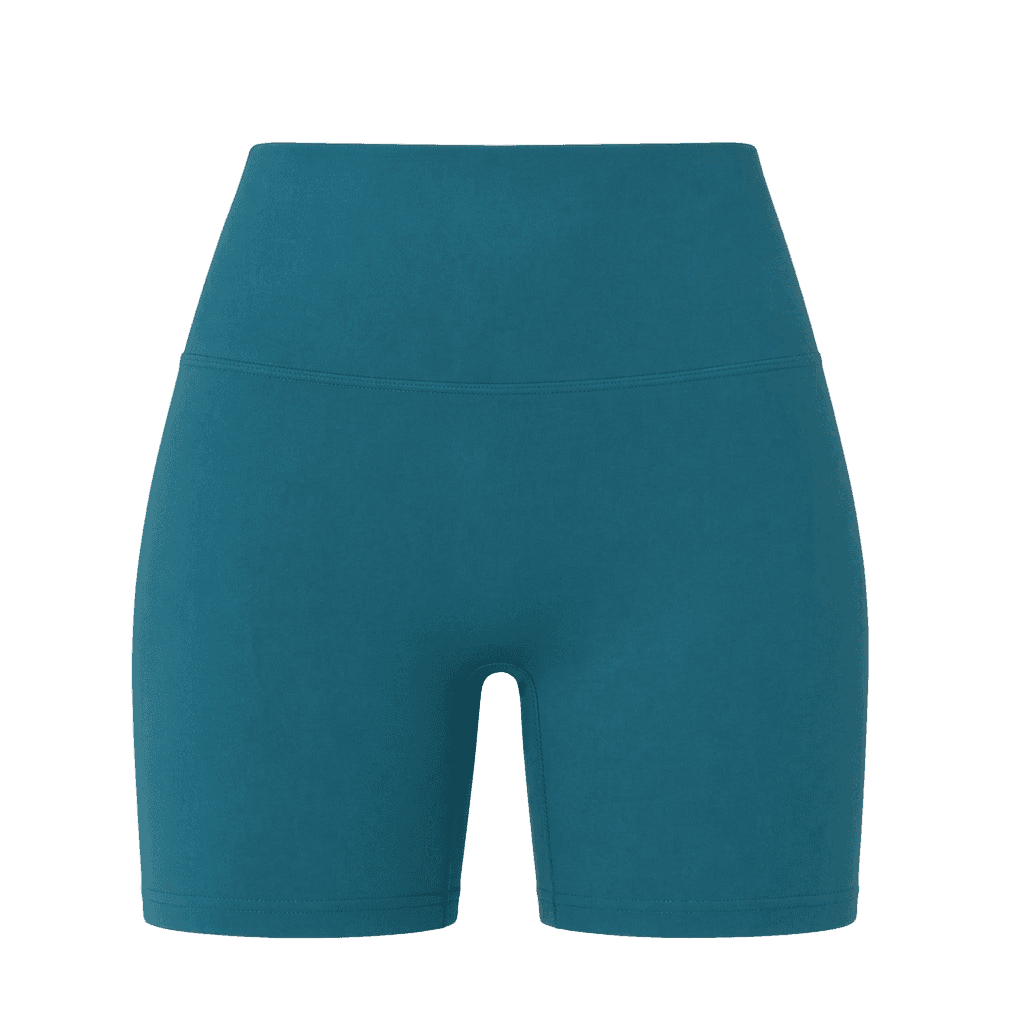
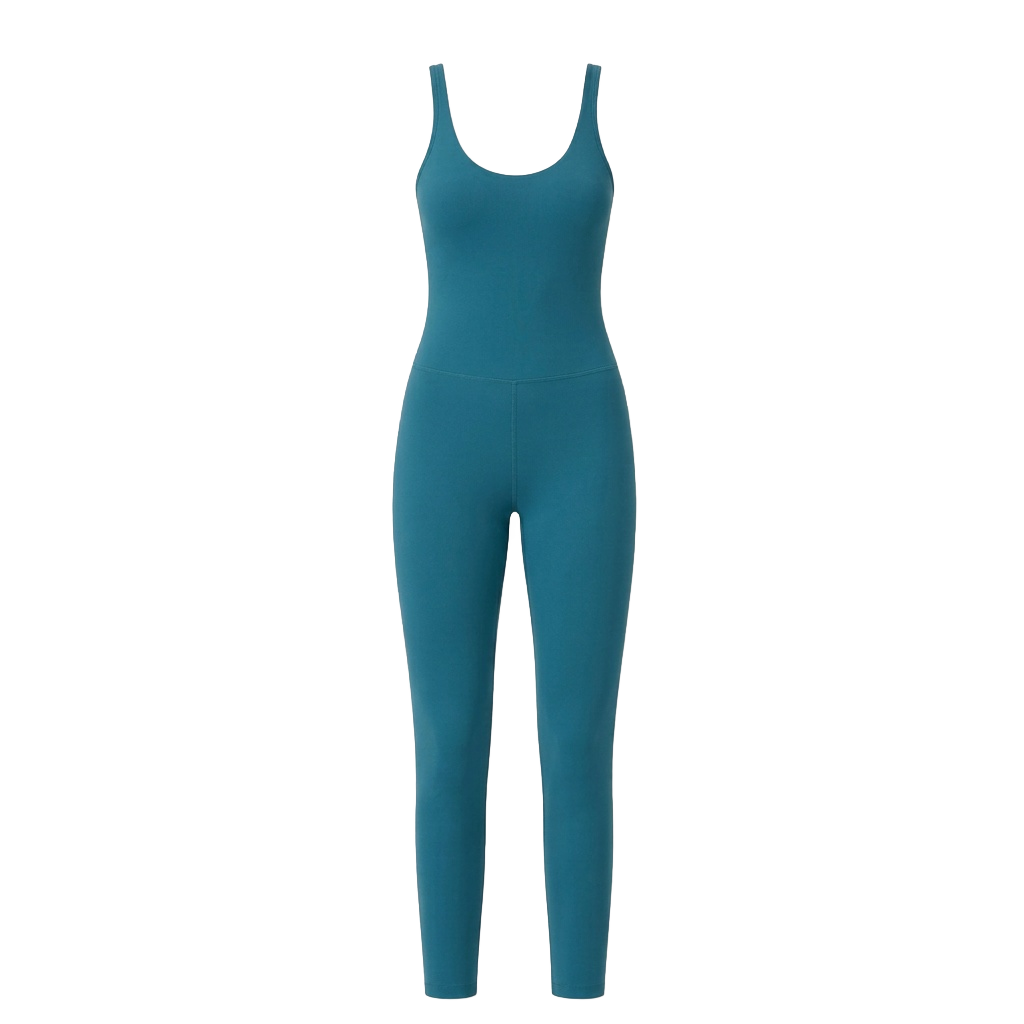
Full-Length Activewear Bodysuit
A single form-fitting unitard that runs continuously from narrow shoulder straps to straight ankle-length hems. The scoop neckline and deep scoop back are joined by straps that sit at the shoulder apex, while a horizontal seam marks the waist above a center-front leg seam. Step-in entry occurs through the neck opening, and the bodycon cut follows the torso, hips, and legs closely.
The same factories that produce for houses like Celine and Balenciaga can produce this piece, directly to you
GABI
Make it yours
Material gradeMOQ 50
Colour
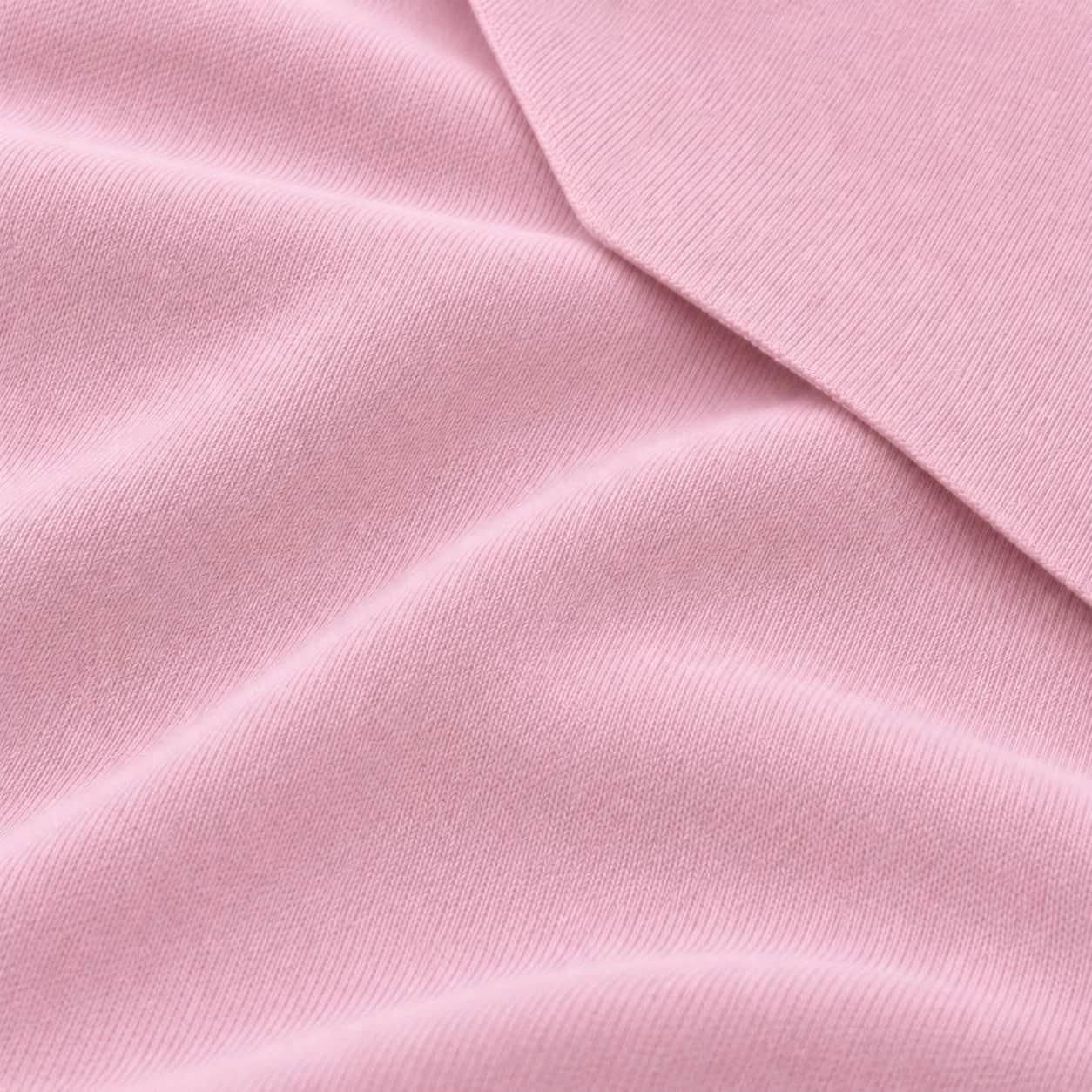
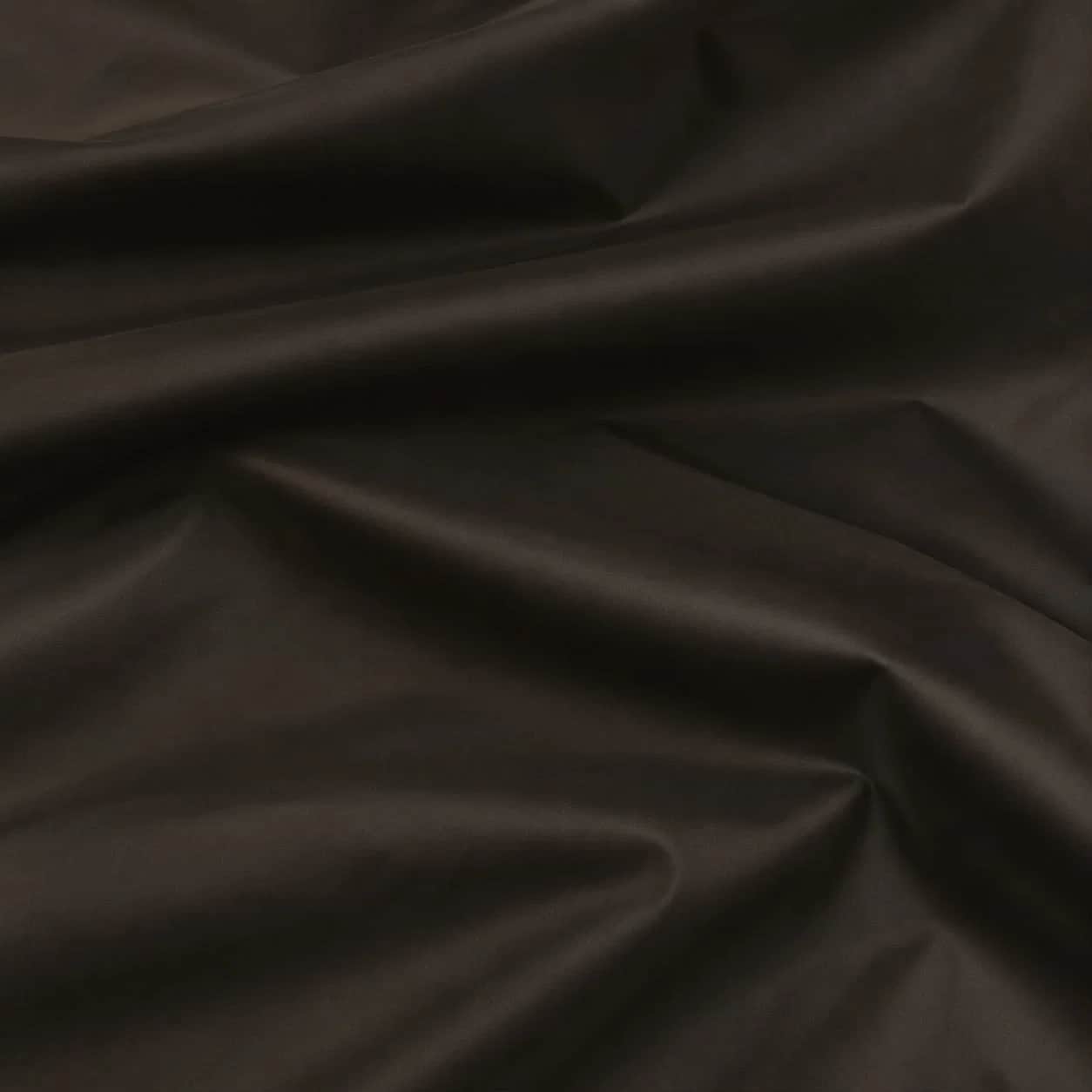
- Main Fabric: 80% Recycled Polyester / 20% Elastane, 220gsm
- gusset lining: 100% Cotton
- Machine wash at 30°C on a gentle cycle
- Do not bleach
- Do not tumble dry
- Iron on a low setting
A guide based on the garment’s materials — always follow the care label on the item itself.
Fabrics

In the 1980s, every aerobics instructor in America was wearing a leotard. Then Donna Karan took that same construction, made it from jersey instead of lycra, gave it a scoop neck instead of a racer back, and called it a bodysuit. She put it under a high-waisted skirt and invented the power dressing uniform of a generation. The bodysuit's genius is structural: it never untucks. It never rides up. It stays exactly where you put it. In a market where every brand is fighting for the purchase that comes back again and again, the bodysuit is a foundational piece. The snap at the bottom is one of the most important hardware decisions in the Family 01 catalogue.
The Bodysuit -- "It Never Untucks. It Never Rides Up. The Snap at the Bottom is Everything."
The bodysuit's functional logic is simple: a jersey top that snaps closed at the crotch eliminates the gap between top and waistband that appears when a standard shirt is tucked into high-waisted bottoms during movement. This is a practical problem -- a shirt that untucks disrupts the clean silhouette that high-waisted skirts, trousers, and jeans require. The bodysuit solves it permanently.
The garment's fashion lineage begins in dance and performance. The leotard -- a close-fitting, crotch-to-shoulder jersey garment without the snap closure -- was a dance and gymnastics standard from the early 20th century. Donna Karan's 1984 Seven Easy Pieces collection adapted the leotard's construction logic for everyday fashion: cotton and modal jersey, multiple necklines, a snap closure at the crotch that allowed bathroom access without fully undressing. The bodysuit became a staple of the power dressing era and never fully left.
The bodysuit re-emerged as a DTC market staple in the mid-2010s with brands including Aritzia, Skims, and Frankies Bikinis building significant commercial ranges. The contemporary bodysuit market spans cotton jersey basics, ribbed modal, seamless construction, and lace or mesh versions. The core construction -- snap gusset, lined crotch, jersey body -- is consistent across all variations.
The snap is the defining construction detail. A light press stud will fail under the tension of a bodysuit in wear -- the snap must be a heavy-duty KAM or equivalent, rated for minimum 15N pull force. Three snaps are the commercial standard (some brands use two; premium use four for a cleaner crotch). The snap placement determines the crotch depth. If the snap is too far forward, the crotch seam pulls up uncomfortably. If too far back, the snap is inaccessible. Correct snap placement requires a fit trial on a body -- not a dress form.
Articles
Guide · Jersey Basics
What a Bodysuit Actually Costs to Make: $17 to $32
The bodysuit is a T-shirt with a snap-crotch extension — and that extension is the whole cost story. Here's the full build at two tiers.
Guide · Jersey Basics
The Snap That Makes or Breaks a Bodysuit (Literally)
A light press stud will fail under the tension of a bodysuit in wear. KAM heavy-duty snap is the minimum commercial standard — and it's not optional.
Guide · Jersey Basics
Why an Unlined Gusset Isn't a Commercial Bodysuit
An unlined crotch gusset isn't a corner you can cut. Here's what a properly lined, correctly sized gusset actually requires.
Guide · Jersey Basics
The Fit-Trial Mistake That Turns a Bodysuit Into a Returns Problem
A dress form doesn't sit, walk, or bend. Snap placement and crotch depth determined on a dress form instead of a real body is the root cause of most bodysuit returns.
Guide · Jersey Basics
Bodysuit vs Leotard: What Actually Changes in the Factory
Same fabric system, same factory — one construction detail separates a bodysuit from a leotard. Here's exactly what it is.
Guide · Jersey Basics
You're Already Making T-Shirts. A Bodysuit Is $3 Away.
The bodysuit uses the exact same jersey knit factory as your T-shirt and tank top range. Two added operations, one modest CMT adder.
FAQ
A bodysuit costs $17-32 landed. Affordable China cotton jersey scoop neck: ~$17 → $70-$87 retail. Premium Portugal GOTS cotton rib square neck: ~$32 → $127-$159 retail. The snap crotch adds $2.50-4.00 CMT over a standard jersey top.
A bodysuit has a snap-close crotch gusset allowing bathroom access without removing the garment, and is typically made from jersey fabric for everyday wear. A leotard has a fixed crotch (no snap) and is made from performance lycra or jersey for dance, gymnastics, or stage use. From a manufacturing perspective: same factory, same fabric system, different crotch construction.
KAM heavy-duty snap -- specify by name on the tech pack. Minimum 15N pull force. Three snaps is the commercial default. Available in plastic (KAM standard) or metal (premium). Specify colour (gold, silver, black, or colour-match to fabric) on the tech pack. Do not accept substitution to a light press stud -- it will fail in wear within weeks of regular use.
Yes. An unlined gusset is not a commercial bodysuit. The gusset must be double-layered (outer + lining, same or softer fabric), cut separately, and sewn between the crotch layers. Minimum gusset width 8cm at its widest point. The lining fabric can be the same jersey as the body or a softer cotton if the outer is a rough-textured rib.
Crotch depth must be determined by fit trial on a live body across the full size range -- not a dress form. A dress form does not sit, walk, or move. The crotch extension grading (the extra length added per size for the crotch panels) must be validated separately from the body grading. A bodysuit that fits correctly at size S but is too short at size L or XL is a grading error.
Cotton jersey (180-200 GSM) for the most commercial and accessible version. Ribbed cotton/spandex (200-280 GSM) for the strongest DTC aesthetic. Cotton/modal blend for a softer, more premium hand. Modal for luxury drape and softness. Specify minimum 200 GSM for any bodysuit marketed for second-skin or fitted wear -- lighter fabrics may be insufficiently opaque.
V-neck and scoop neck are the highest-volume commercial performers -- universal, layering-friendly, flattering across body types. Square neck is the strongest current fashion direction. Long-sleeve versions in rib perform strongly in autumn/winter. The polo collar bodysuit (using polo construction from Family 03) is an emerging premium-casual option.
Same factory, same machines, same fabric system. Two additional operations: (1) the crotch extension panels cut and sewn onto the body hem, and (2) the snap application and gusset lining construction. These two operations add $2.50-4.00 CMT. The bodysuit is in the same production run as the T-shirt range -- no factory change required.
GOTS x1.23 for organic cotton jersey. OEKO-TEX STANDARD 100 as baseline. RCS for recycled cotton. For modal: TENCEL or equivalent Lenzing certification if using Lenzing fibres. Certifications for the gusset lining fabric must match the outer -- the gusset is in direct intimate contact.
Same regions as T-shirt (Family 01): China primary affordable, Portugal Made in Europe, Turkey EU delivery, Vietnam growing premium, India GOTS cotton. No specialist factory required beyond standard jersey knit capability with snap application experience.
Yes -- using the same cup construction as the sports bra (Family 08). Removable soft pad in a chest pocket is the most common approach. Sewn-in foam cup for shape. Specify cup pocket width and depth on the tech pack. A bodysuit with cups eliminates the need to wear a bra underneath -- a strong commercial benefit for fitted styles.
HS 6109 -- jerseys, pullovers, T-shirts, and similar articles of knitted or crocheted fabric. The bodysuit is classified with jersey tops despite having a crotch construction, because it is worn as a top garment. Confirm with your customs broker for your specific markets.