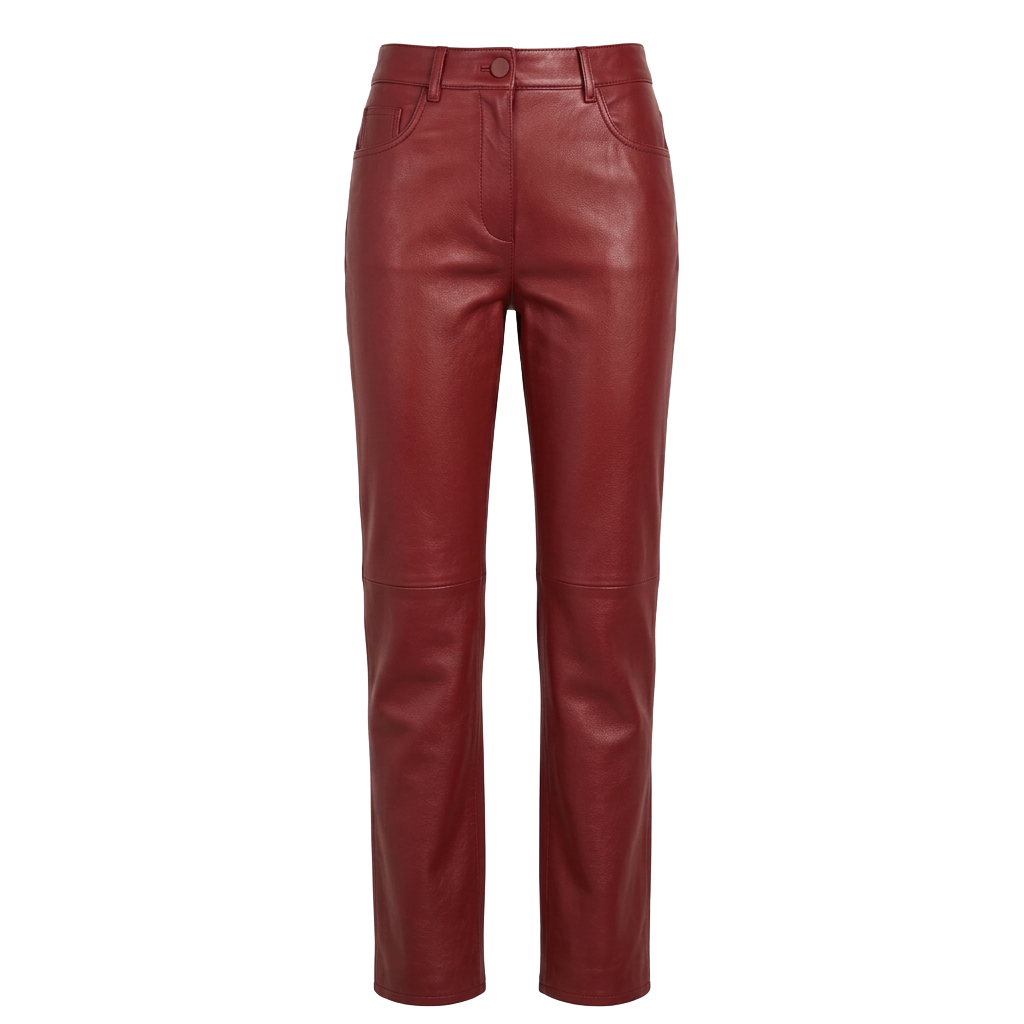
brighter red Leather Pants
These pants feature a fitted hip and thigh that transitions into a straight leg from the knee to the ankle-length hem. A center front metal zipper fly is secured by a single leather-covered shank button at the waistband. Horizontal seams cross the front and back legs at the knees, while belt loops and a back yoke complete the waist structure.
The same factories that produce for houses like Celine and Balenciaga can produce this piece, directly to you
GABI
Make it yours
Material gradeMOQ 50
Colour
- Main Fabric: 100% Leather, 650gsm
- Lining: 100% Recycled Polyester
- Pocket Bag: 100% Cotton
- Do not wash — specialist clean only
- Do not bleach
- Do not tumble dry
- Do not iron
A guide based on the garment’s materials — always follow the care label on the item itself.
Fabrics
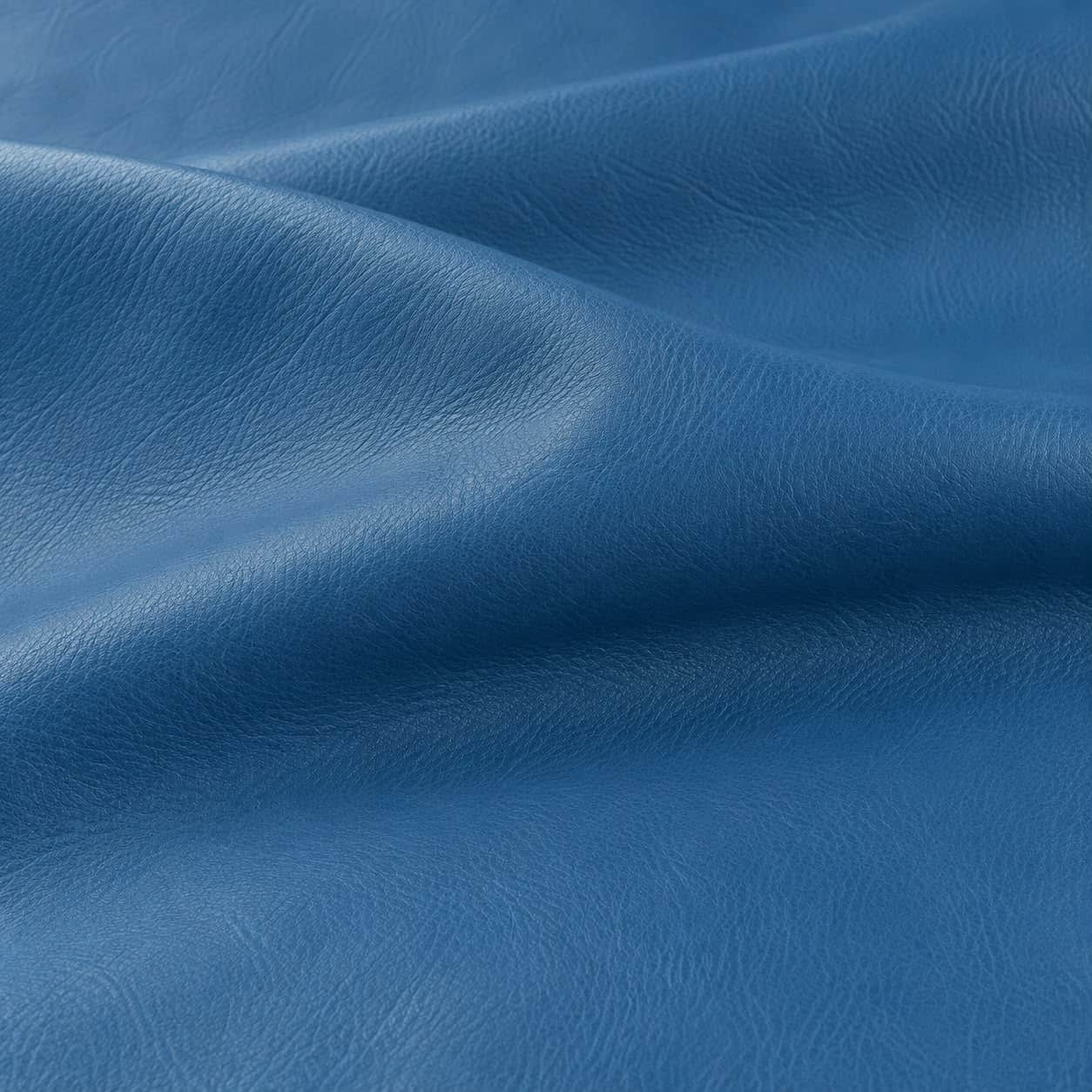
Leather pants are trousers with no tolerance for vague fit. The material does not forgive excess bulk, weak seams, or cheap coating. When they work, they turn a basic bottom into a statement; when they fail, the customer hears it, feels it, and returns it.
The Leather Pants -- "Leather pants are trousers with no tolerance for vague fit."
Leather trousers come from riding, motorcycle, western, and performance contexts before becoming a fashion staple through rock, nightlife, and luxury dressing. Modern versions range from real leather to coated stretch fabrics and vegan alternatives, but the commercial expectation is the same: sleek shape, strong seams, and controlled shine.
Construction logic
Leather pants require panel planning, lining decisions, reinforced crotch seams, and careful waistband construction. Stretch leather or coated stretch fabric changes the fit logic dramatically. Needle holes, seam bulk, and knee bagging are the main production enemies.
Commercial logic for creators
For creators, leather pants are a statement SKU with high perceived value. They can be produced in genuine leather, vegan leather, or coated fabric, but the material must be tested for cracking, colour transfer, and recovery. Fit samples are non-negotiable.
FAQ
Leather pants are trousers made from leather, leather alternative, or coated fabric that creates a leather-like appearance.
Common options include lambskin, stretch leather, PU-coated fabric, vegan leather, coated denim, lining, and metal hardware.. Choose based on target price, handfeel, durability, and care requirements.
Focus on panel matching, reinforced crotch seams, waistband stability, zipper strength, lining or half lining, and hem finishing. These details usually determine whether the product feels credible or cheap.
Check rise, seat, thigh, knee, stretch allowance, waistband comfort, and whether the silhouette is slim or wide-leg. Fit should be reviewed on the body type and use case the product is designed for, not only on a flat measurement sheet.
The main cost drivers are material grade, usable hide area, lining, hardware, specialist labour, and waste. Sampling time and rejection risk also increase cost when the fit is sensitive.
Request checks for abrasion, colour transfer, coating crack, seam strength, stretch recovery, and zipper durability. For performance or workwear products, test under the real use condition rather than only visually.
Watch for knee bagging, squeaking coating, peeling surface, weak crotch seams, and uncomfortable waistband. These issues should be caught at fit sample, pre-production sample, and bulk inspection stages.
affordable uses coated fabric; premium uses better vegan leather or split leather; luxury uses real leather with refined lining and hardware.
Include material thickness, stretch percentage, lining map, seam type, rise, hardware, and wear-test requirements. Add reference photos and tolerance notes where fit or construction is easy to misread.
leather trouser or specialist bottoms factories are best; coated fabric can be handled by experienced woven bottoms factories.
Use OEKO-TEX STANDARD 100 as a consumer-safety baseline where possible. Use GOTS for organic cotton, GRS for recycled polyester or nylon, RWS for responsible wool, and leather-specific or chemical compliance where relevant to the material.
clean according to material; many coated fabrics cannot tolerate heat, solvents, or aggressive washing.