Discover with
Encyclopedia
Explore an extensive collection of garments curated by the community, featuring tailored filters and distinctive viewpoints.
Discover with
Encyclopedia
Explore an extensive collection of garments curated by the community, featuring tailored filters and distinctive viewpoints.
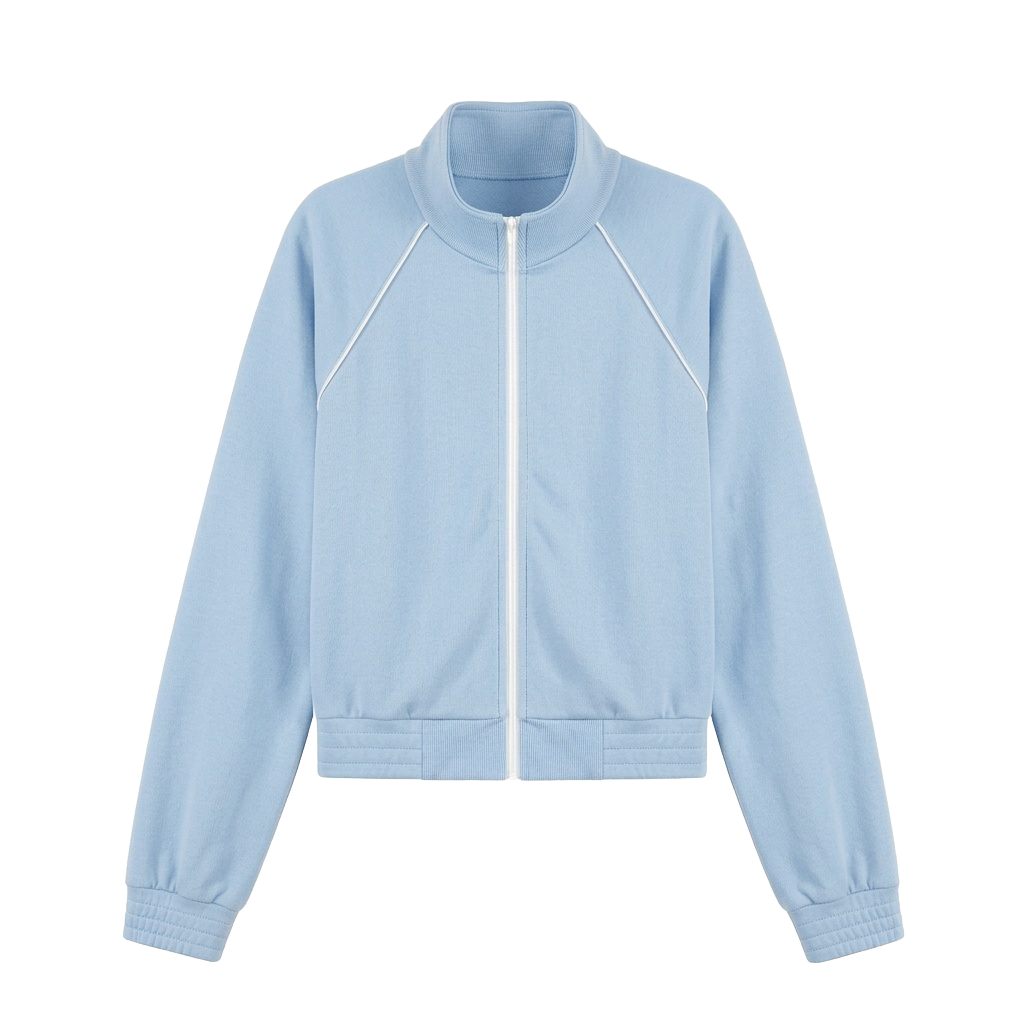
The track jacket is warm-up gear that learned to pose. Zip front, rib hem, side stripes, stand collar: every detail came from sport, then hip-hop, football terraces, and streetwear made it permanent. It is not a blazer and not a hoodie; it is logo-ready movement.
The same factories that produce for houses like Celine and Balenciaga can produce this piece, directly to you
GABI
Make it yours
Material grade
Colour
The track jacket is warm-up gear that learned to pose. Zip front, rib hem, side stripes, stand collar: every detail came from sport, then hip-hop, football terraces, and streetwear made it permanent. It is not a blazer and not a hoodie; it is logo-ready movement.
The same factories that produce for houses like Celine and Balenciaga can produce this piece, directly to you
GABI
Make it yours
Material grade
Colour
The track jacket is warm-up gear that learned to pose. Zip front, rib hem, side stripes, stand collar: every detail came from sport, then hip-hop, football terraces, and streetwear made it permanent. It is not a blazer and not a hoodie; it is logo-ready movement.
The Track Jacket -- "The track jacket is warm-up gear that learned to pose."
Track jackets began as athletic warm-up layers for runners, footballers, and training teams. Synthetic knits and woven shell fabrics made them lightweight and easy to move in. Their cultural crossover came through team identity, music, and street styling, where stripes and piping became visual shorthand for sport heritage.
Construction logic
Track jackets can be knit tricot, woven nylon, or performance polyester. The common language is a zip front, collar or mock neck, elastic or rib hem, side pockets, and contrast piping or stripes. Zipper waves and uneven panels are the common failures.
A track jacket is a zip-front athletic warm-up jacket, usually in knit tricot, nylon, or performance polyester.
Common options include polyester tricot, nylon, recycled polyester, cotton/poly ponte, rib trim, zipper tape, and mesh lining.. Choose based on target price, handfeel, durability, and care requirements.
Focus on zipper insertion, collar construction, rib hem, side pockets, stripe or piping application, and panel symmetry. These details usually determine whether the product feels credible or cheap.
Check shoulder width, sleeve length, hem tension, collar comfort, and whether it is cropped, fitted, or relaxed. Fit should be reviewed on the body type and use case the product is designed for, not only on a flat measurement sheet.
Commercial logic for creators
For creators, the track jacket is a strong set-building product with matching pants or shorts. It carries colour blocking well and photographs clearly. Premium versions need better zippers, clean piping, and fabric that does not shine cheaply.
The main cost drivers are fabric, zipper quality, stripes, piping, pockets, rib trims, and lining. Sampling time and rejection risk also increase cost when the fit is sensitive.
Request checks for zipper waves, seam pucker, colourfastness, pilling, rib recovery, and stripe alignment. For performance or workwear products, test under the real use condition rather than only visually.
Watch for wavy zipper, twisted panels, cheap shine, rib stretching, and uneven piping. These issues should be caught at fit sample, pre-production sample, and bulk inspection stages.
affordable uses basic polyester; premium uses heavier tricot or nylon; luxury uses refined technical fabric and branded hardware.
Include fabric, zipper length, stripe placement, rib spec, pocket construction, and matching bottom reference. Add reference photos and tolerance notes where fit or construction is easy to misread.
sportswear and light outerwear factories with zipper and panel work are preferred.
Use OEKO-TEX STANDARD 100 as a consumer-safety baseline where possible. Use GOTS for organic cotton, GRS for recycled polyester or nylon, RWS for responsible wool, and leather-specific or chemical compliance where relevant to the material.
wash inside out and avoid high heat to protect synthetic fabric and trims.