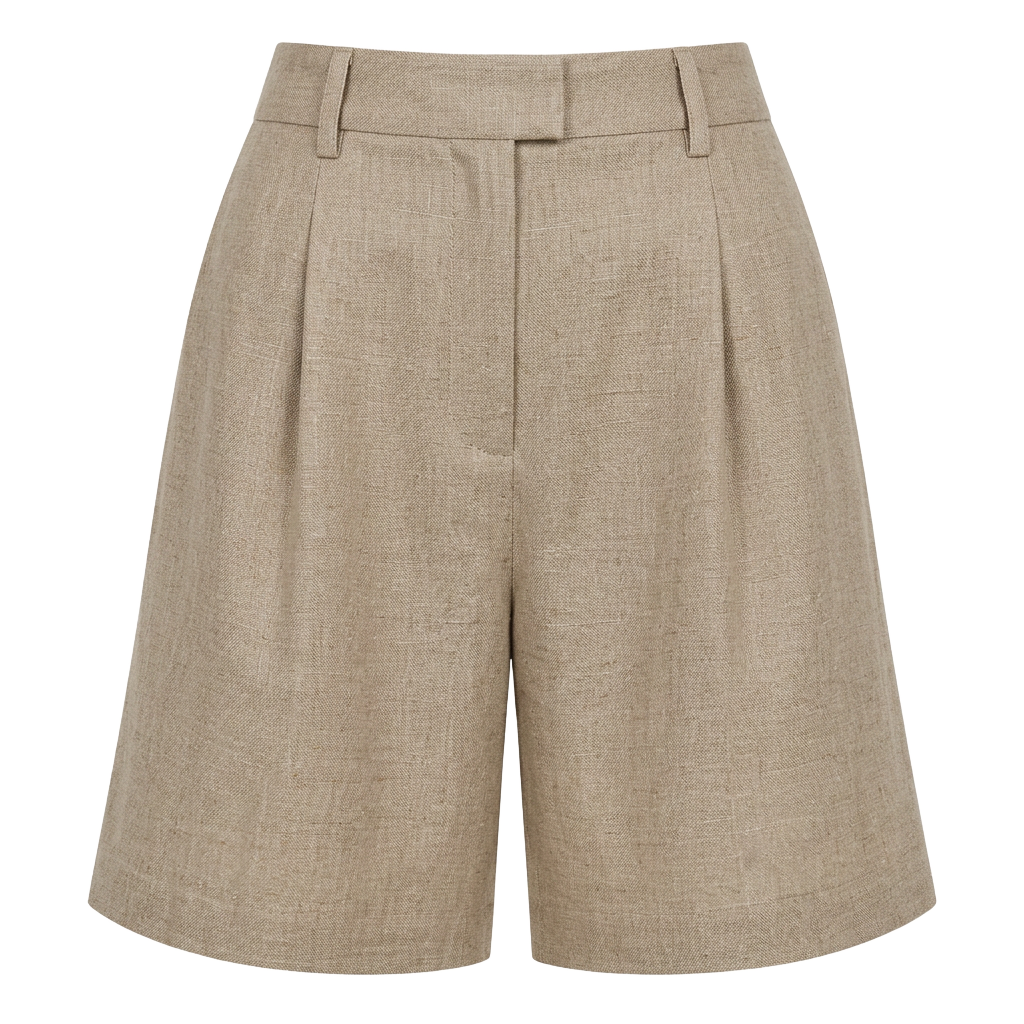
Formal Trouser Shorts
Linen shorts sell breathability with a tailoring problem attached. The same flax that keeps the leg cool in 40-degree heat also frays, shrinks, and exposes every shortcut at the waistband and hem — the two highest-stress points on the garment. A tailored short, a drawstring short, and a pull-on short can all come from the same flax story, but the waistband construction decides whether the wrinkle reads as expensive ease or as a cheap, collapsing seam.
The same factories that produce for houses like Celine and Balenciaga can produce this piece, directly to you
GABI
Make it yours
Material gradeMOQ 50
Colour
Formal Trouser Shorts
Linen shorts sell breathability with a tailoring problem attached. The same flax that keeps the leg cool in 40-degree heat also frays, shrinks, and exposes every shortcut at the waistband and hem — the two highest-stress points on the garment. A tailored short, a drawstring short, and a pull-on short can all come from the same flax story, but the waistband construction decides whether the wrinkle reads as expensive ease or as a cheap, collapsing seam.
The same factories that produce for houses like Celine and Balenciaga can produce this piece, directly to you
GABI
Make it yours
Material gradeMOQ 50
Colour
Linen shorts sell breathability with a tailoring problem attached. The same flax that keeps the leg cool in 40-degree heat also frays, shrinks, and exposes every shortcut at the waistband and hem — the two highest-stress points on the garment. A tailored short, a drawstring short, and a pull-on short can all come from the same flax story, but the waistband construction decides whether the wrinkle reads as expensive ease or as a cheap, collapsing seam.
The Linen Short — "Cool fabric, demanding seams"
Linen as a fibre predates fashion by millennia, but the linen short belongs to a much more recent story: resort wear, warm-weather tailoring, and the relaxed-luxury wardrobe. Where the linen shirt earned its place through the open-collar Mediterranean summer, the linen short inherited the same logic from the waist down — crisp, dry, breathable, and deliberately unpressed. The category runs from smart tailored shorts worn with a linen blazer to soft elastic-waist pull-ons built for the beach.
Construction logic
The category changes dramatically by waistband. A tailored short needs a structured waistband, fly construction (zip or button), belt loops, and a clean turn-up or hem. A drawstring or elastic short needs a stable casing, bar-tacked stress points, and balanced pocket bags that do not show through lightweight cloth. Across every silhouette, the fabric must be pre-washed or shrinkage will rewrite the inseam and rise after the first laundry cycle. Linen's low elasticity means the waistband and seat — where the garment is stressed most when sitting — are where cheap construction fails first.
Fabric and weight
Shorts run heavier than shirting. Where a summer shirt sits at 120–150 GSM, linen shorts are most credible at 180–260 GSM — enough body to hold a leg line, resist transparency at the seat, and survive repeated wear. Long-staple line linen (Belgian or Irish flax) softens and improves with washing; short-fibre tow linen pills at the inner thigh and collapses at the waistband within a season. European flax carries the strongest sustainability story at any tier — low-water, low-pesticide, and traceable through CELC Masters of Linen.
Commercial logic for creators
For creators, linen shorts are a summer-margin product with strong colour potential and a lower fabric consumption than trousers or dresses — which protects margin even at premium fabric prices. The risk is cheap sheerness at the seat, an unstable waistband, and shrinkage that ruins fit after one wash. Premium versions win through fabric weight, garment wash, French or flat-felled seams, bar-tacked stress points, and a relaxed-but-intentional leg that looks tailored rather than accidental.
FAQ
A linen short is a warm-weather woven bottom built from linen or linen-blend fabric, usually emphasising breathability, a dry handfeel, and relaxed drape from the waist down. Silhouettes range from structured tailored shorts to soft drawstring or elastic-waist pull-ons.
Common options include 100% linen, linen/cotton, linen/viscose, linen/Tencel, and garment-washed linen, with optional cotton-poplin pocketing. Choose based on target price, handfeel, durability, and care requirements. Favour 180–260 GSM cloth so the seat does not go sheer.
Focus on a stable waistband (structured, drawstring, or elastic casing), clean fly construction, bar-tacked stress points at the fly and pocket corners, balanced pocket bags, belt loops where relevant, and a clean turn-up or hem. These details usually determine whether the product feels credible or cheap.
Check waist and seat ease, rise, inseam length, thigh and leg-opening width, seat transparency, and pocket-bag show-through. Fit should be reviewed seated as well as standing, since the seat and waistband take the most stress on a short.
The main cost drivers are linen weight and grade (line vs tow), waistband and fly construction, pocketing, garment washing, and seam finishing. Sampling time and rejection risk rise when the fit or shrinkage is sensitive. Fabric — not CMT — is where linen costs more than a comparable cotton short.
Request checks for shrinkage, seam slippage, seat and pocket-bag sheerness, colourfastness, waistband-elastic recovery, fly and bar-tack security, and post-wash distortion. Test under real wear (sitting, movement) rather than only on a flat measurement sheet.
Watch for waistband roll or collapse, see-through seat panels, twisted leg seams, fly puckering, weak bar-tacks, and excessive shrinkage. Catch these at fit sample, pre-production sample, and bulk inspection stages.
Affordable uses linen blends and a simpler elastic or drawstring waist; premium uses heavier garment-washed linen with structured construction; luxury uses refined European line linen, precise tailoring, flat-felled or French seams, and selective finishing.
Include fabric weight, shrinkage allowance, waistband and fly construction, pocket-bag map, bar-tack placement, seam finish, hem/turn-up spec, and garment-wash instruction. Add reference photos and tolerance notes where fit or construction is easy to misread.
Woven bottoms factories with linen experience are ideal, because shrinkage handling and waistband construction are the main challenges. Tailored-short programmes benefit from a factory with trouser/tailoring capability rather than a basic cut-and-sew shop.
Use OEKO-TEX STANDARD 100 as a consumer-safety baseline where possible. Use GOTS for organic fibre and CELC Masters of Linen for European flax provenance; GRS for any recycled trims and RWS where relevant. European flax is inherently low-water and low-pesticide even without organic certification.
Cold wash, reshape while damp, and accept natural wrinkling; high heat can cause shrinkage and stress the waistband. Garment-washed linen is more forgiving and holds fit better through repeated laundering.