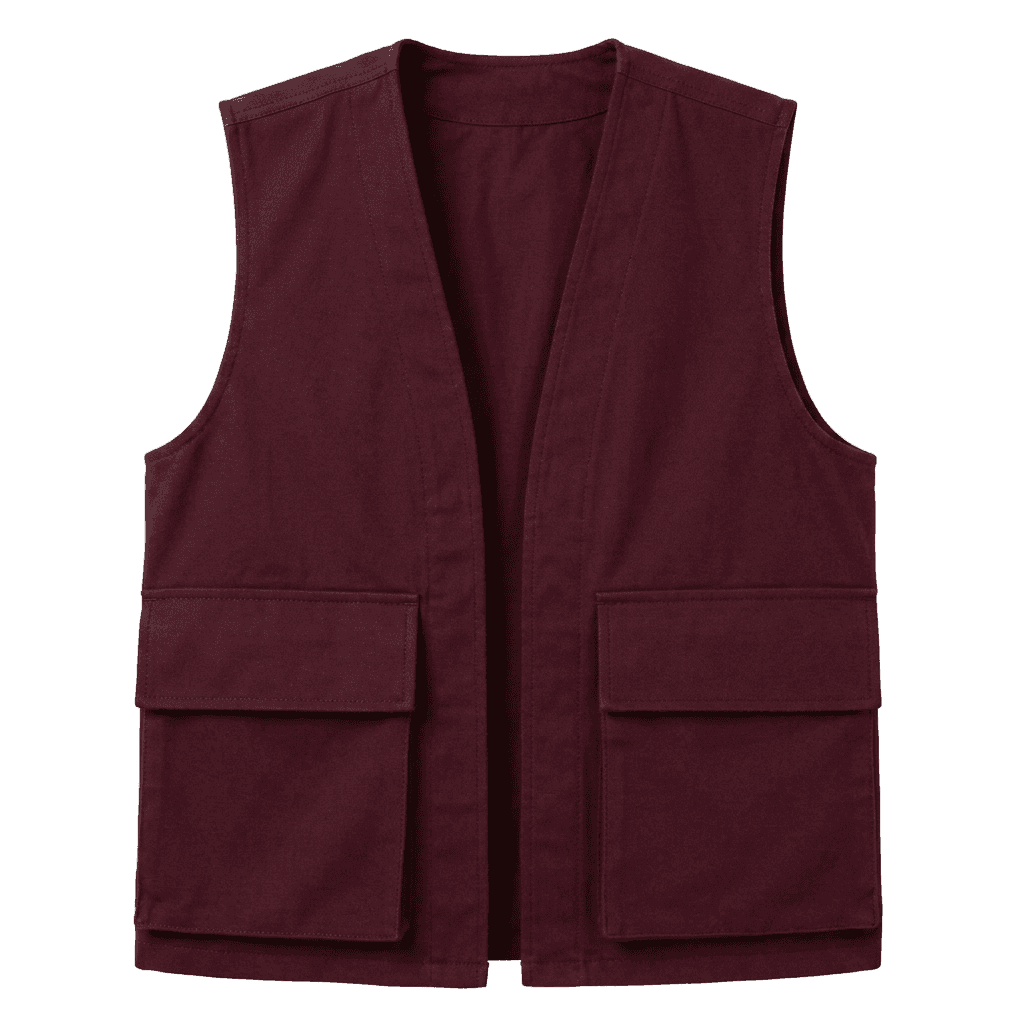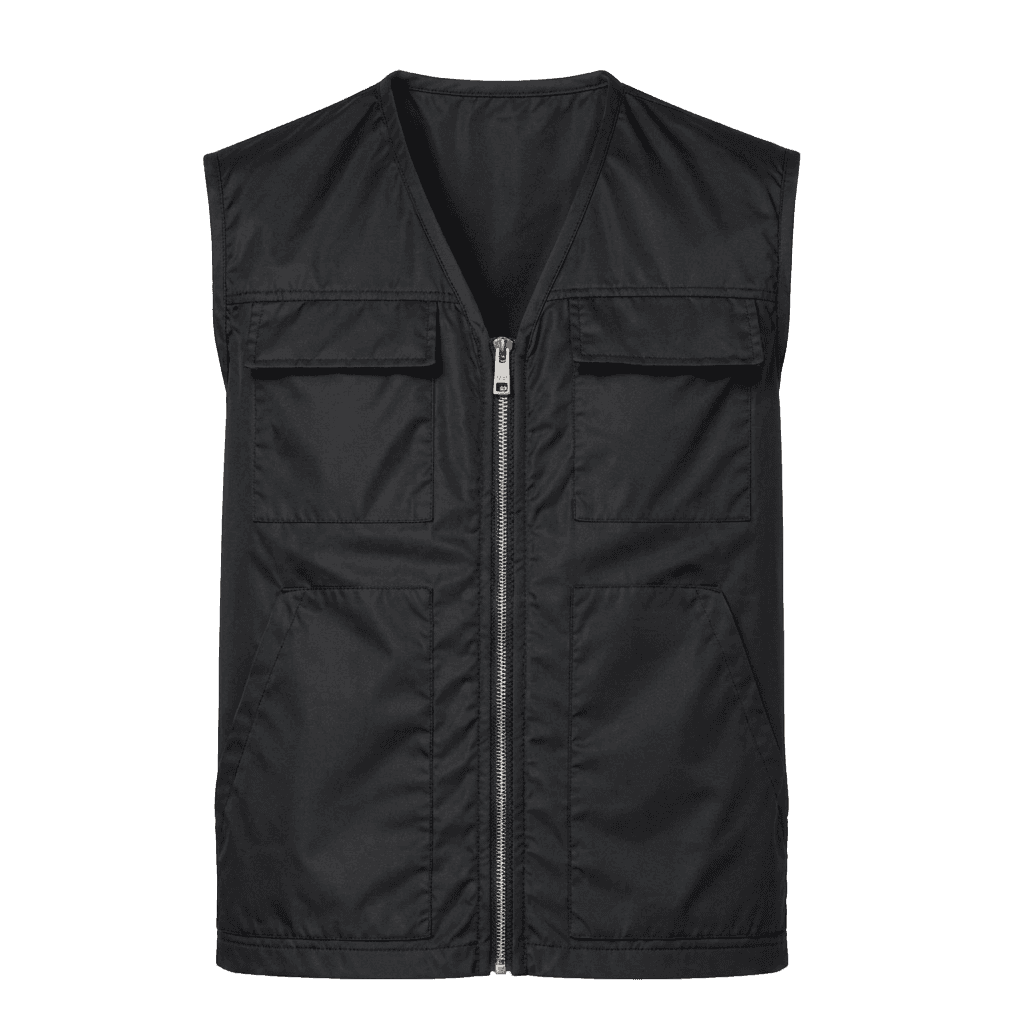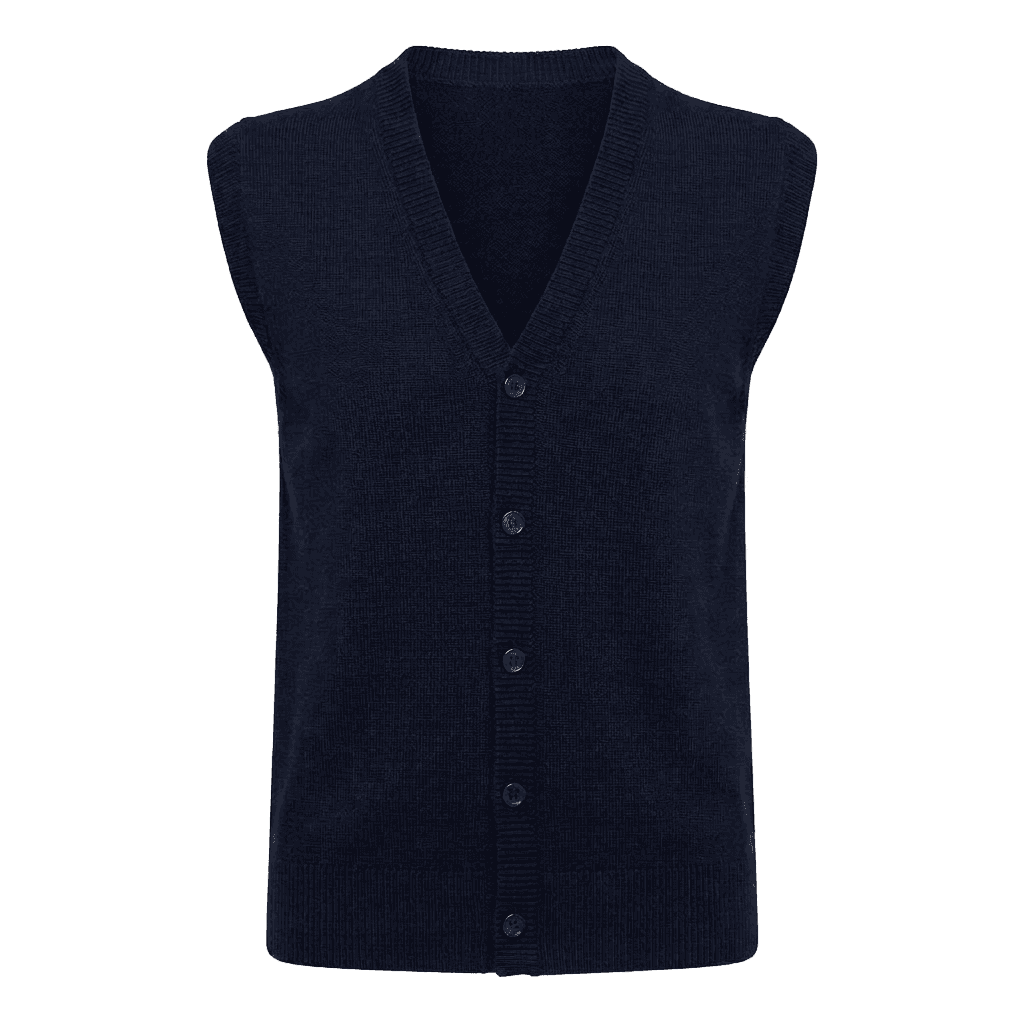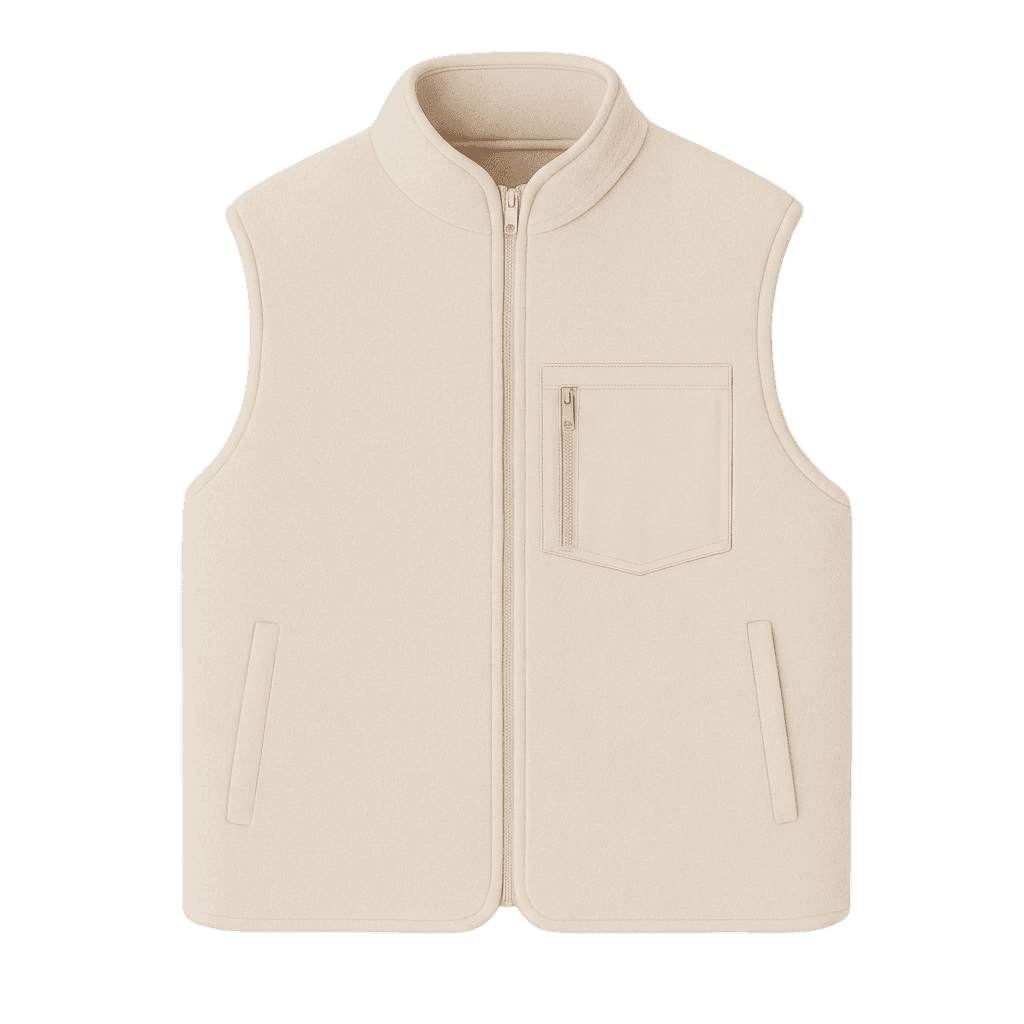
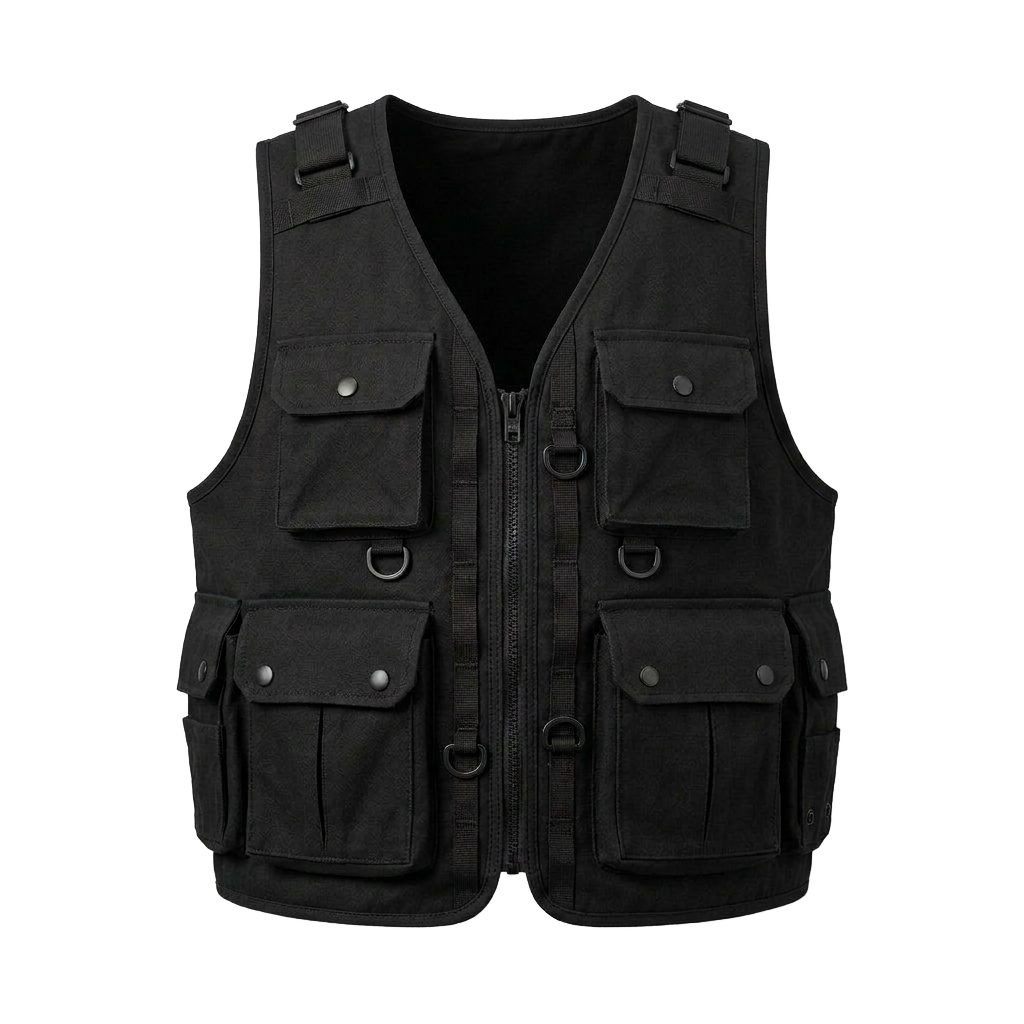
Black Tactical Cargo Vest with D-Ring Details
A boxy sleeveless vest with a regular body length and a straight hem that sits near the hip. The front closes with a center zipper, while the neckline is a bound-edge V-shape and the armholes are bound. Adjustable webbing straps with tension locks cross the shoulders, and the front is built from multiple 3D cargo pockets with snap flaps.
The same factories that produce for houses like Celine and Balenciaga can produce this piece, directly to you
GABI
Make it yours
Material gradeMOQ 50
Colour
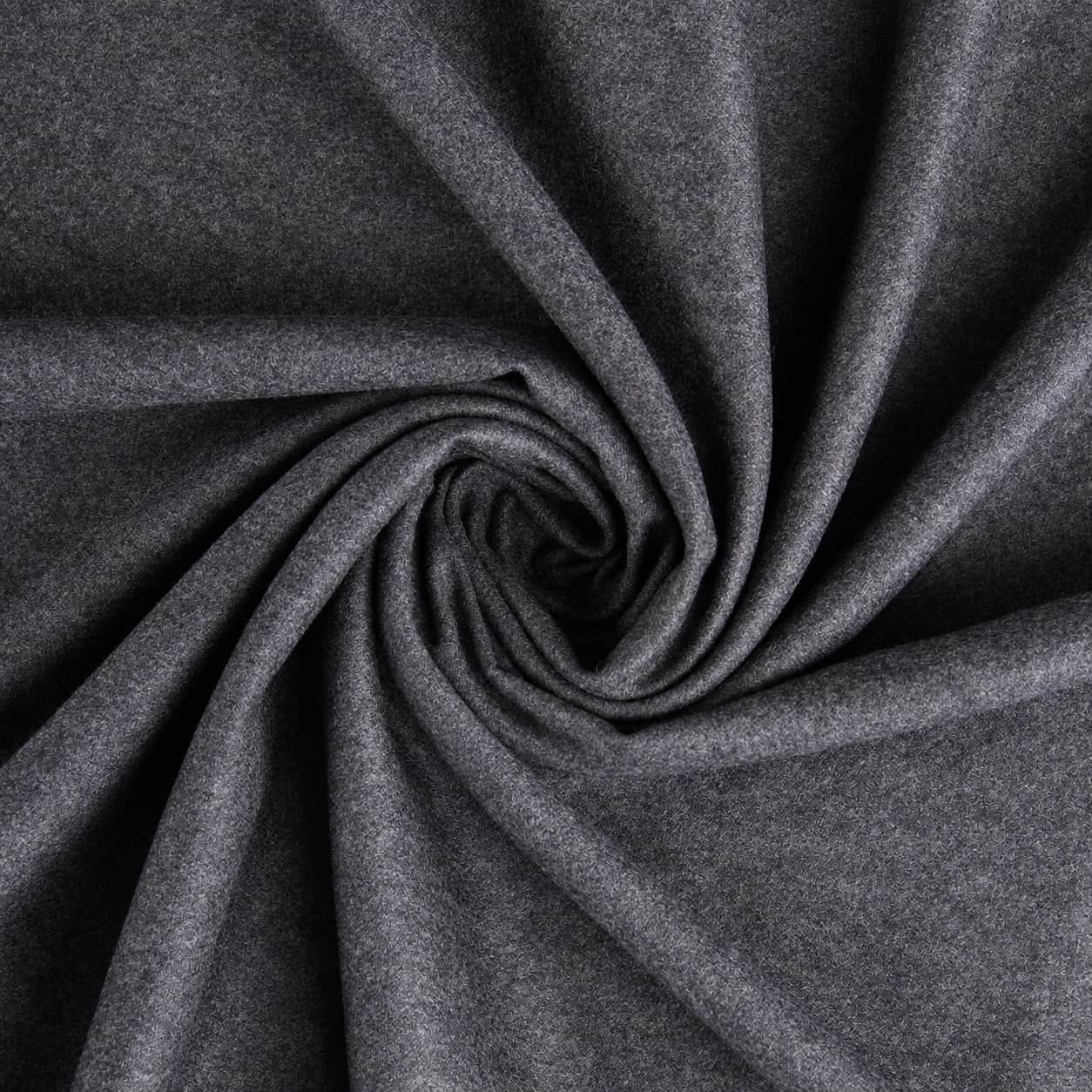
- Main Fabric: 100% Cotton, 320gsm
- webbing: 100% Nylon
- lining: 100% Recycled Polyester
- Machine wash at 30°C on a gentle cycle
- Do not bleach
- Tumble dry on low heat
- Iron on a low setting
- Fasten zips and hardware before washing
A guide based on the garment’s materials — always follow the care label on the item itself.
Fabrics

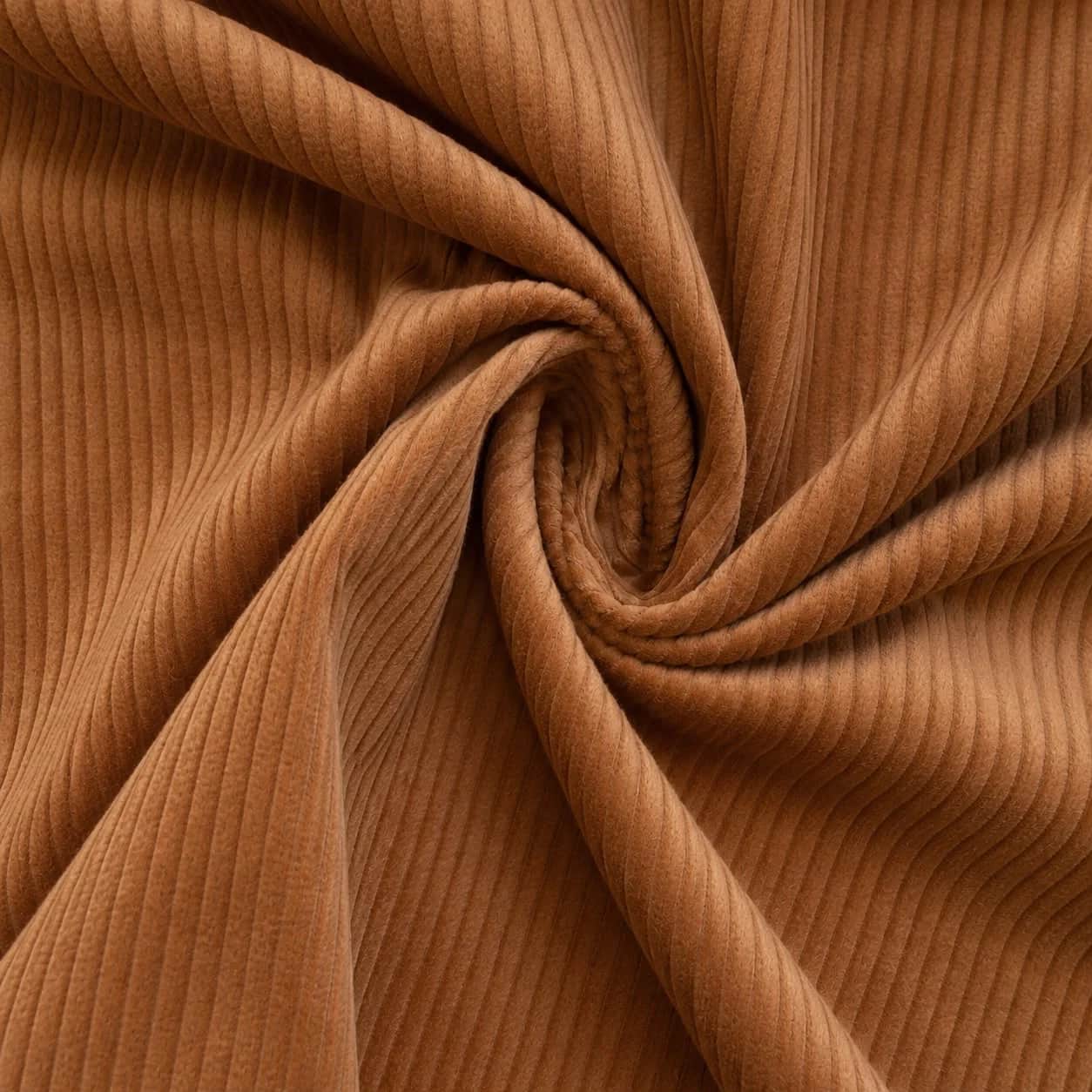
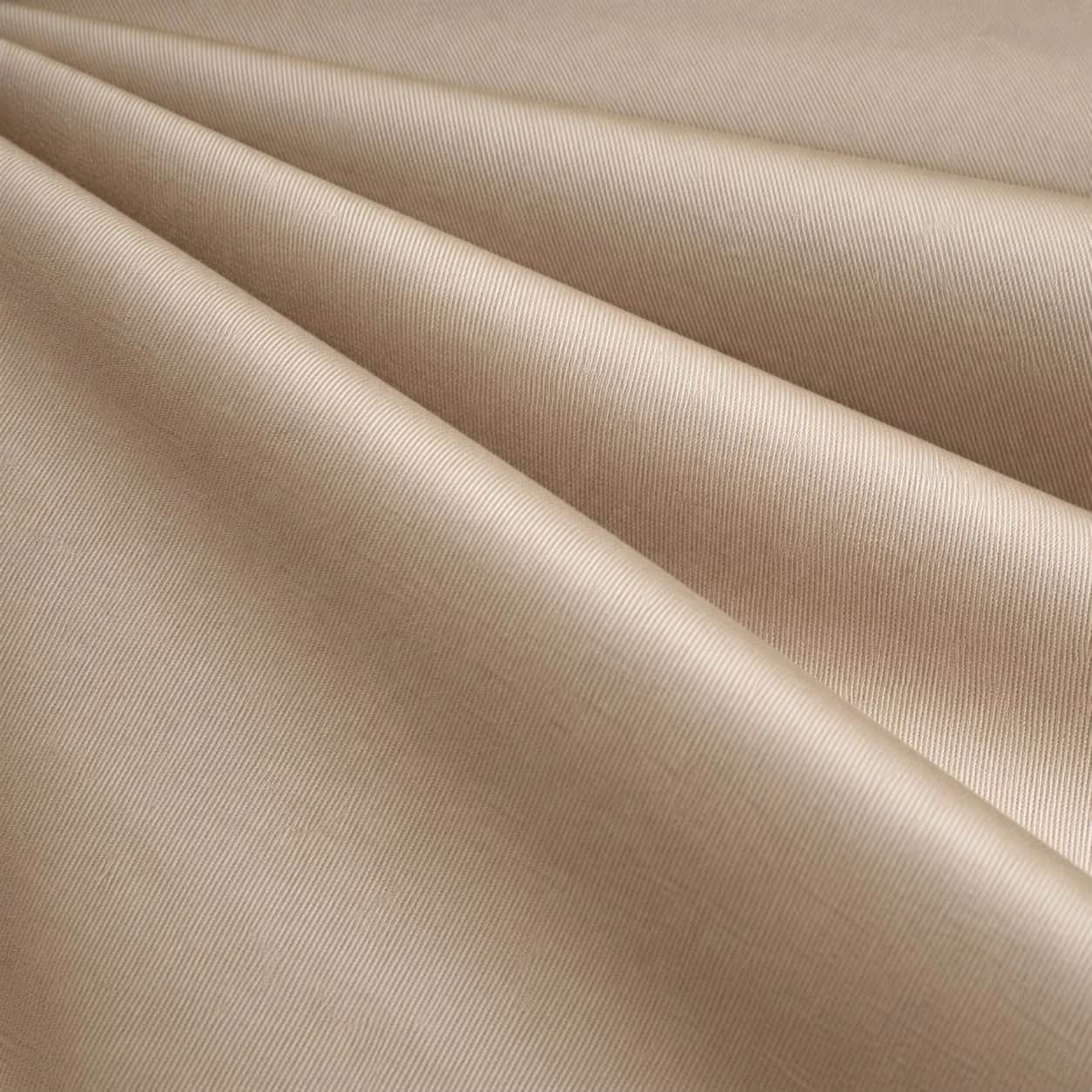
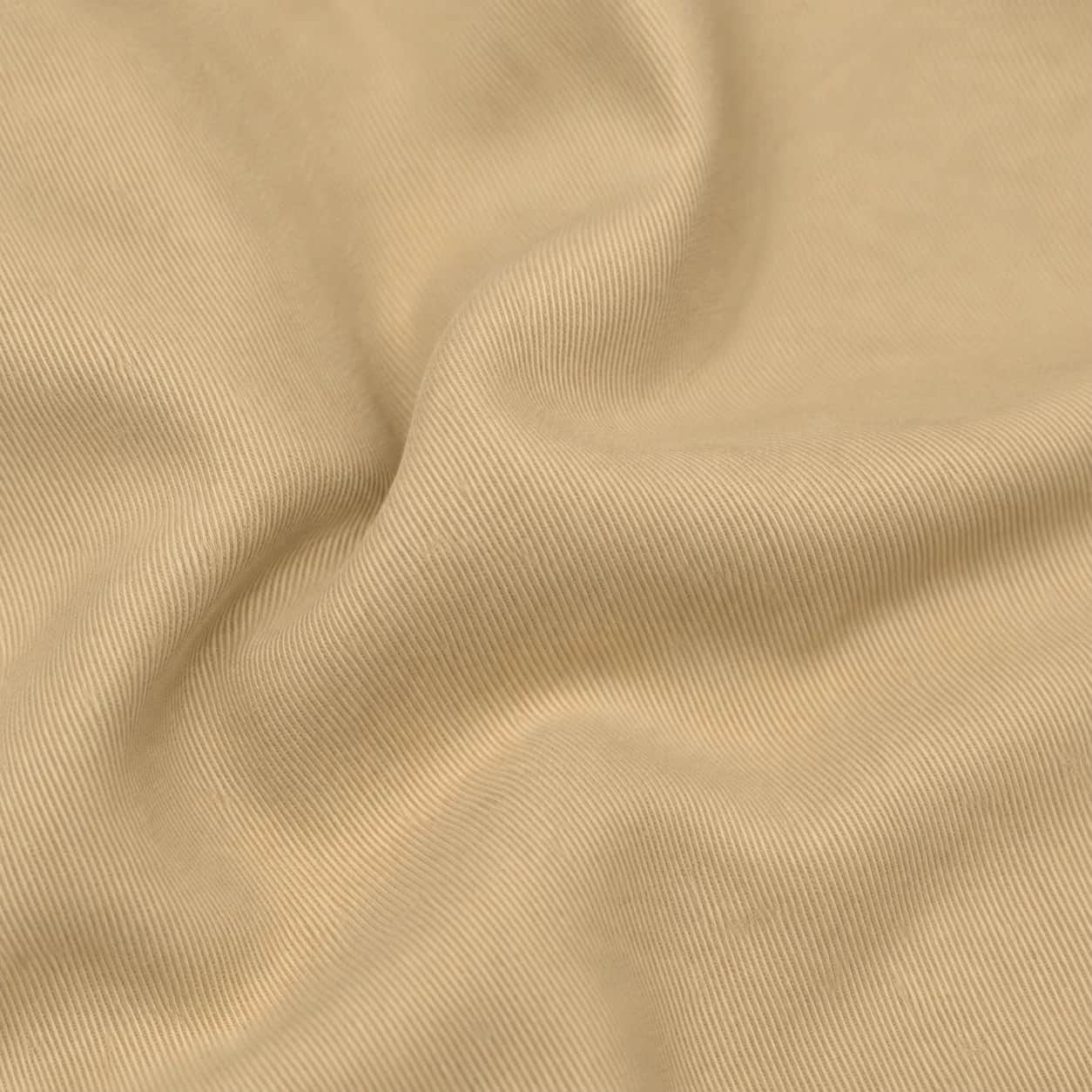
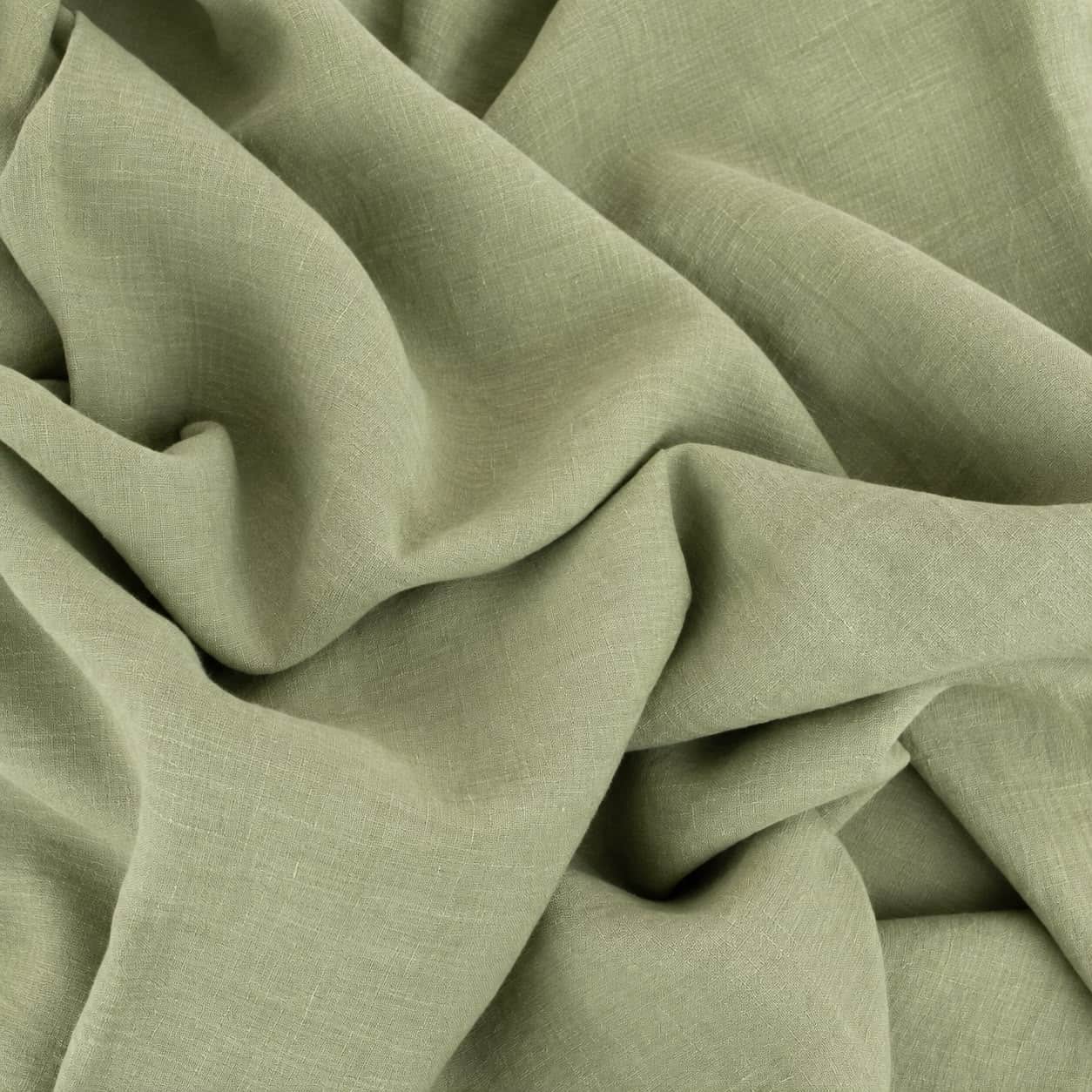
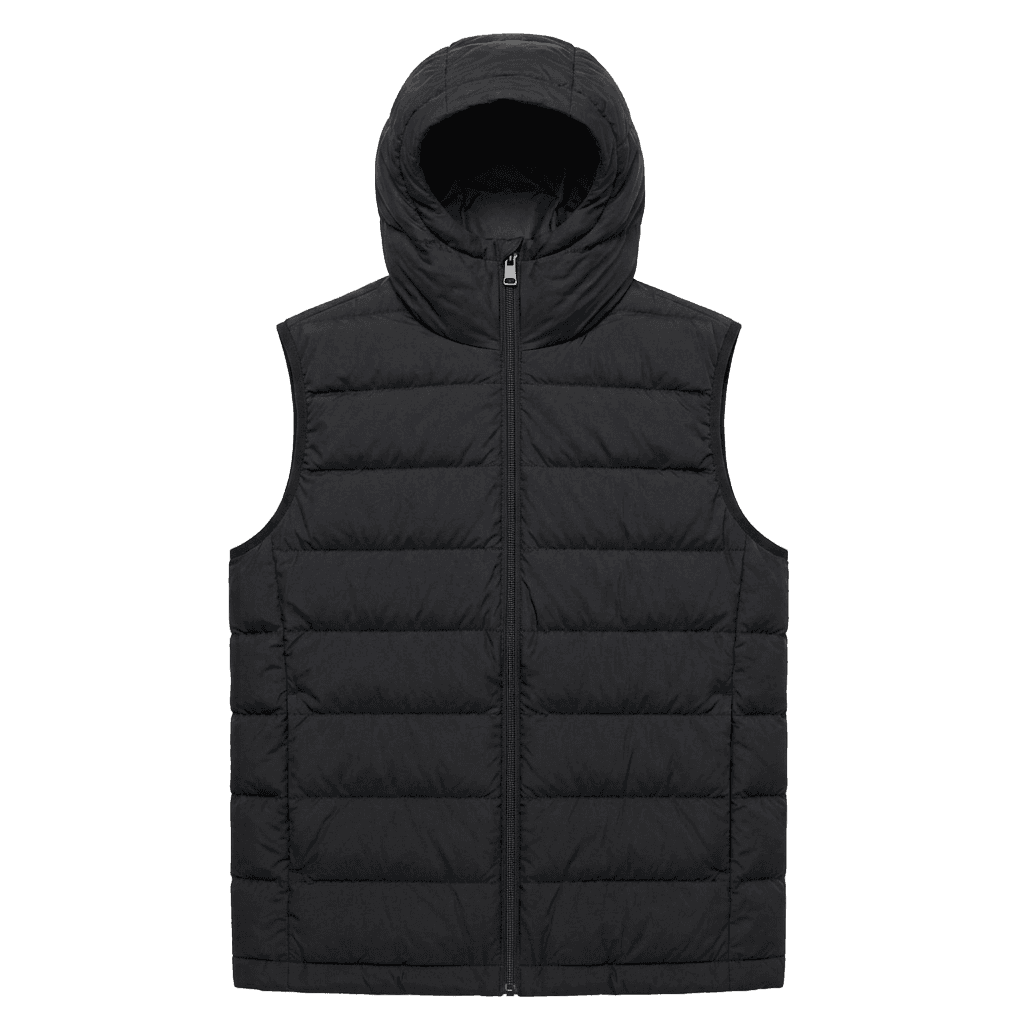
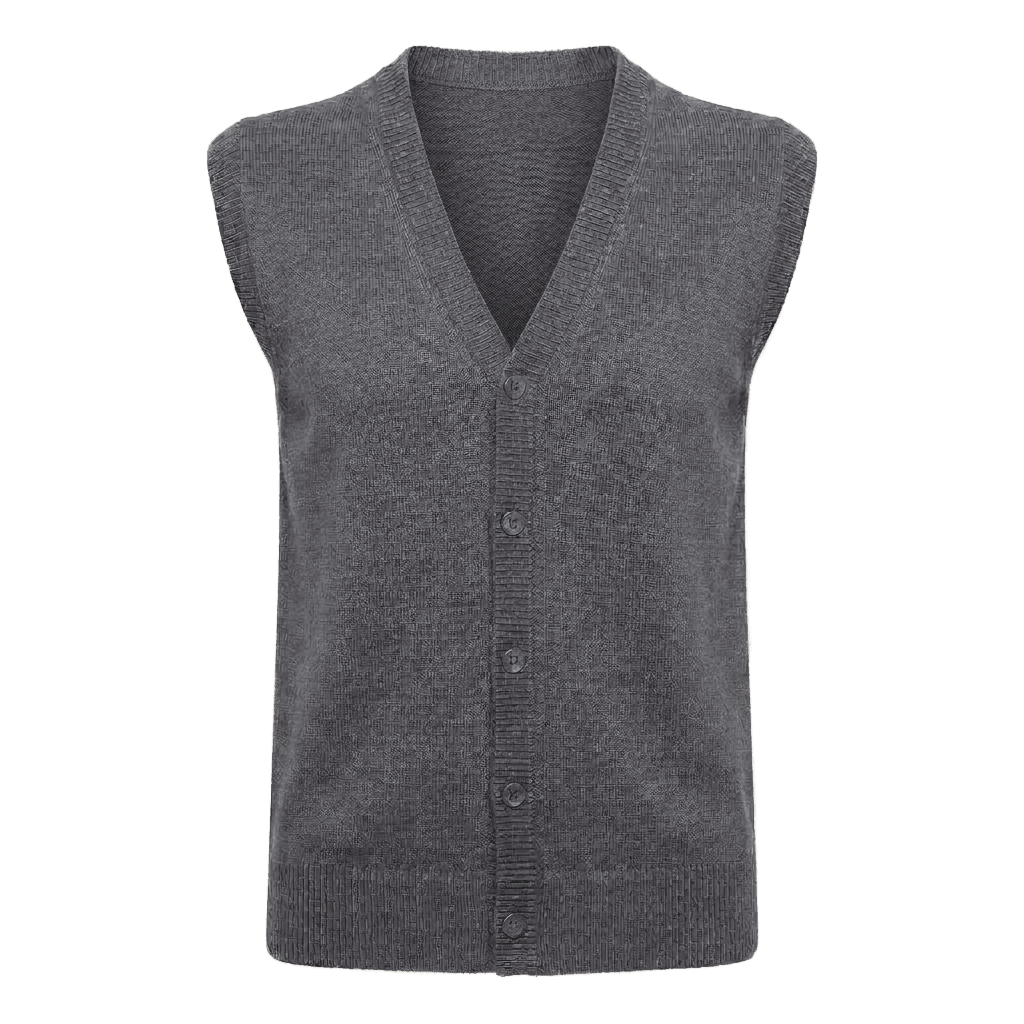
The vest is outerwear with the sleeves removed, which sounds simple until the armhole does all the work. A puffer gilet, utility vest, sweater vest, and fleece vest are different products sharing one commercial promise: warmth, pockets, or styling without committing to a full jacket.
The Vest / Gilet -- "The vest is outerwear with the sleeves removed, which sounds simple until the armhole does all the work."
Sleeveless layers have appeared in military, hunting, fishing, outdoor, and tailoring contexts for centuries. The modern vest splits into several families: padded gilets for insulation, utility vests for pocket systems, fleece vests for outdoor layering, and sweater vests for knitwear styling. The category works because it adds function without covering the sleeve silhouette underneath.
Construction logic
The vest's success depends on armhole shape, front closure, hem control, and the relationship between body volume and layering. Puffer vests need quilting and fill management; utility vests need pocket reinforcement; knit vests need neckline and hem recovery; fleece vests need clean bulky edges.
Commercial logic for creators
For creators, the vest is a strong transitional product. It can be styled over shirts, hoodies, knitwear, or uniforms and can be built from the same materials as jackets. The danger is overloading it with pockets or fill until it loses proportion.
FAQ
A vest or gilet is a sleeveless layer used for insulation, utility pockets, knit styling, or transitional outerwear.
Common options include nylon ripstop, quilted polyester, down or synthetic fill, fleece, wool knit, cotton canvas, and technical twill.. Choose based on target price, handfeel, durability, and care requirements.
Focus on armhole binding, front zip or buttons, pocket reinforcement, quilting, hem drawcords, rib trims, or knit recovery depending on type. These details usually determine whether the product feels credible or cheap.
Check armhole depth, body length, chest ease, hem opening, layering allowance, and shoulder width. Fit should be reviewed on the body type and use case the product is designed for, not only on a flat measurement sheet.
The main cost drivers are fill type, quilting, pocket count, zippers, lining, fabric weight, and specialty trims. Sampling time and rejection risk also increase cost when the fit is sensitive.
Request checks for zip durability, pocket tear strength, fill migration, pilling for fleece or knit, and armhole finishing. For performance or workwear products, test under the real use condition rather than only visually.
Watch for gaping armholes, uneven quilting, weak pocket corners, bulky hems, and collapsed fill. These issues should be caught at fit sample, pre-production sample, and bulk inspection stages.
affordable uses poly fill or basic fleece; premium adds technical shells and better trims; luxury uses down, wool, leather, or refined quilting.
Include vest type, fill weight, pocket map, armhole finish, closure spec, hem treatment, and layering fit. Add reference photos and tolerance notes where fit or construction is easy to misread.
outerwear, knitwear, or fleece factories depending on material; utility vests should go to workwear or bag-capable factories.
Use OEKO-TEX STANDARD 100 as a consumer-safety baseline where possible. Use GOTS for organic cotton, GRS for recycled polyester or nylon, RWS for responsible wool, and leather-specific or chemical compliance where relevant to the material.
care depends on material; down and padded versions need fill-safe washing, while knit and fleece need pilling control.