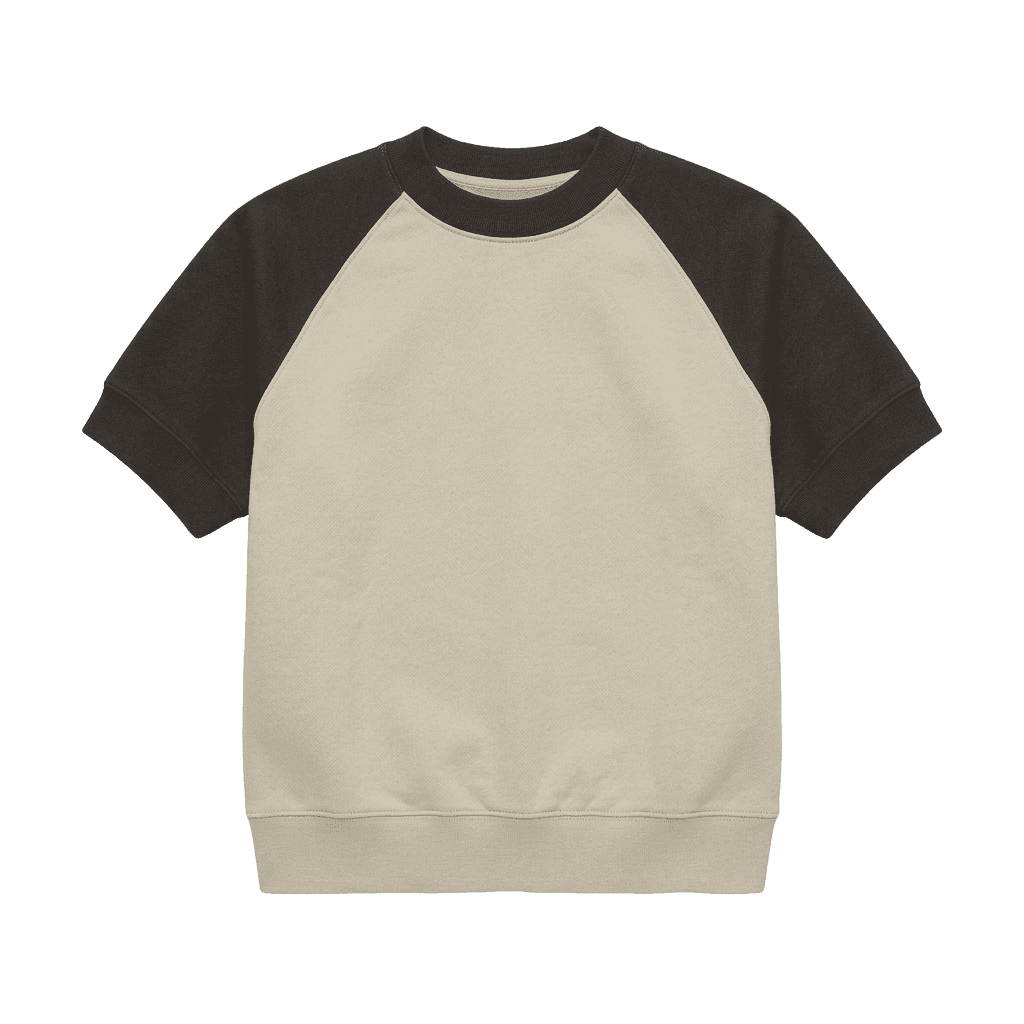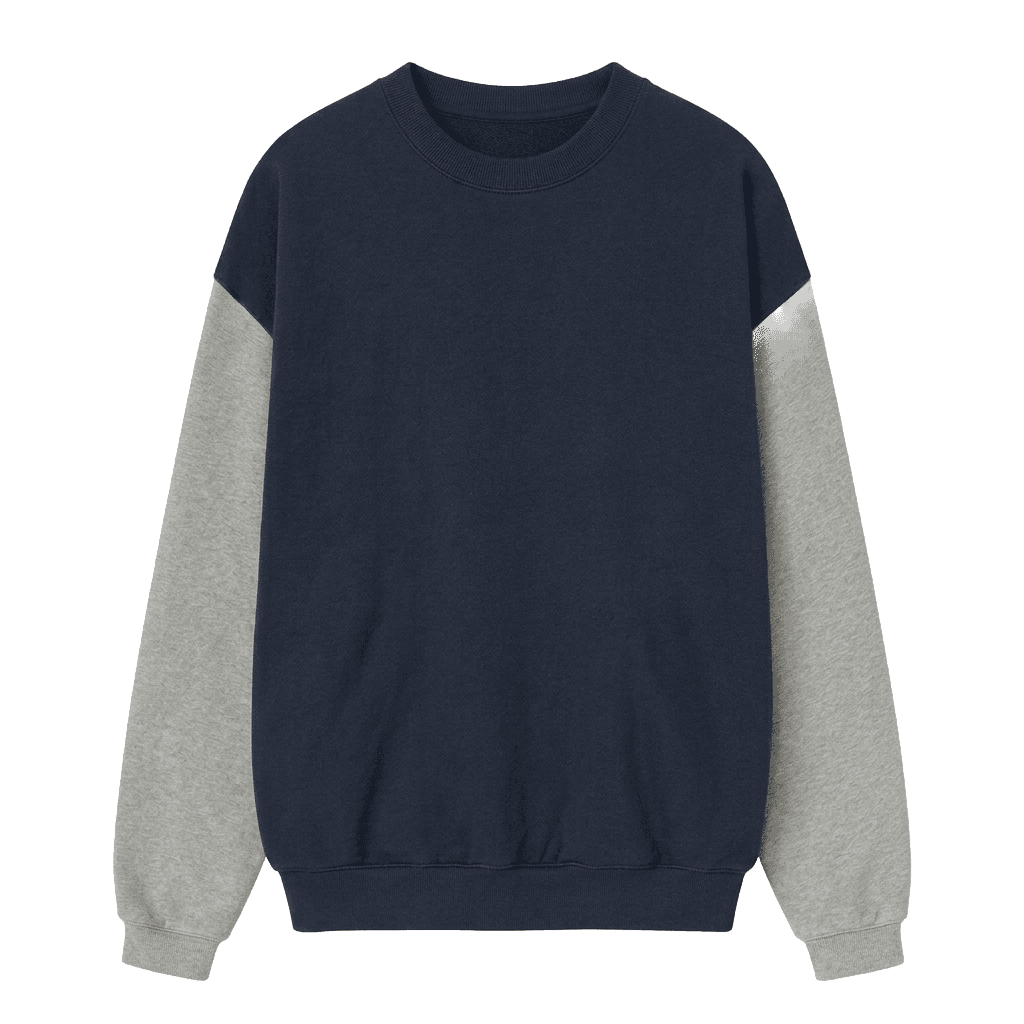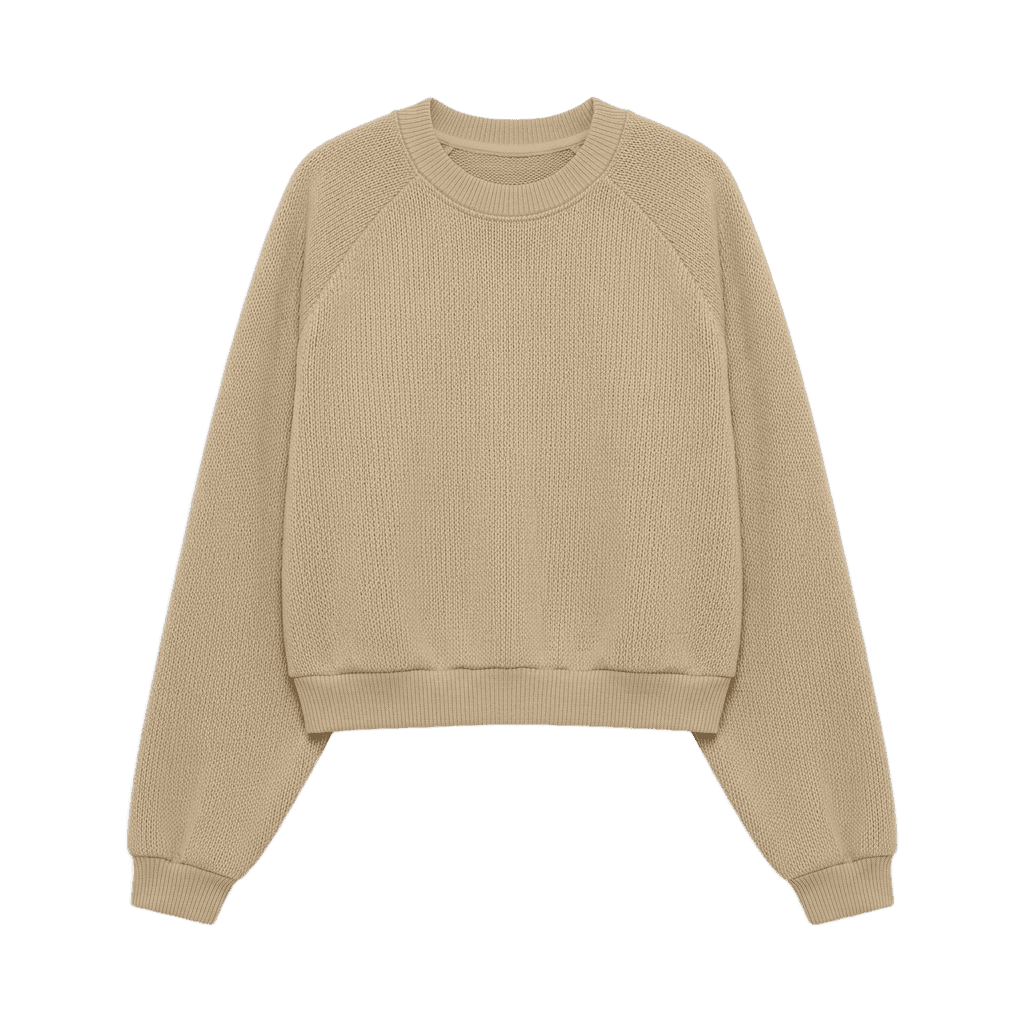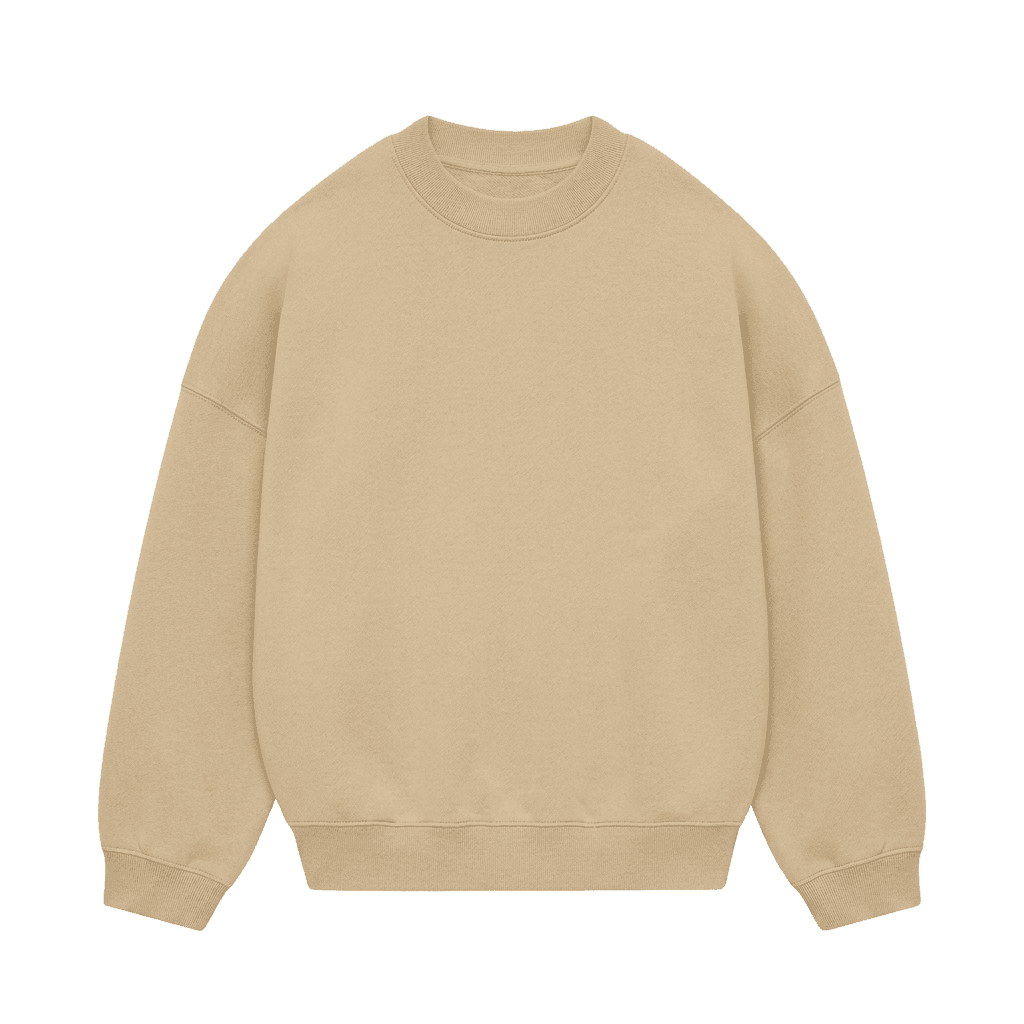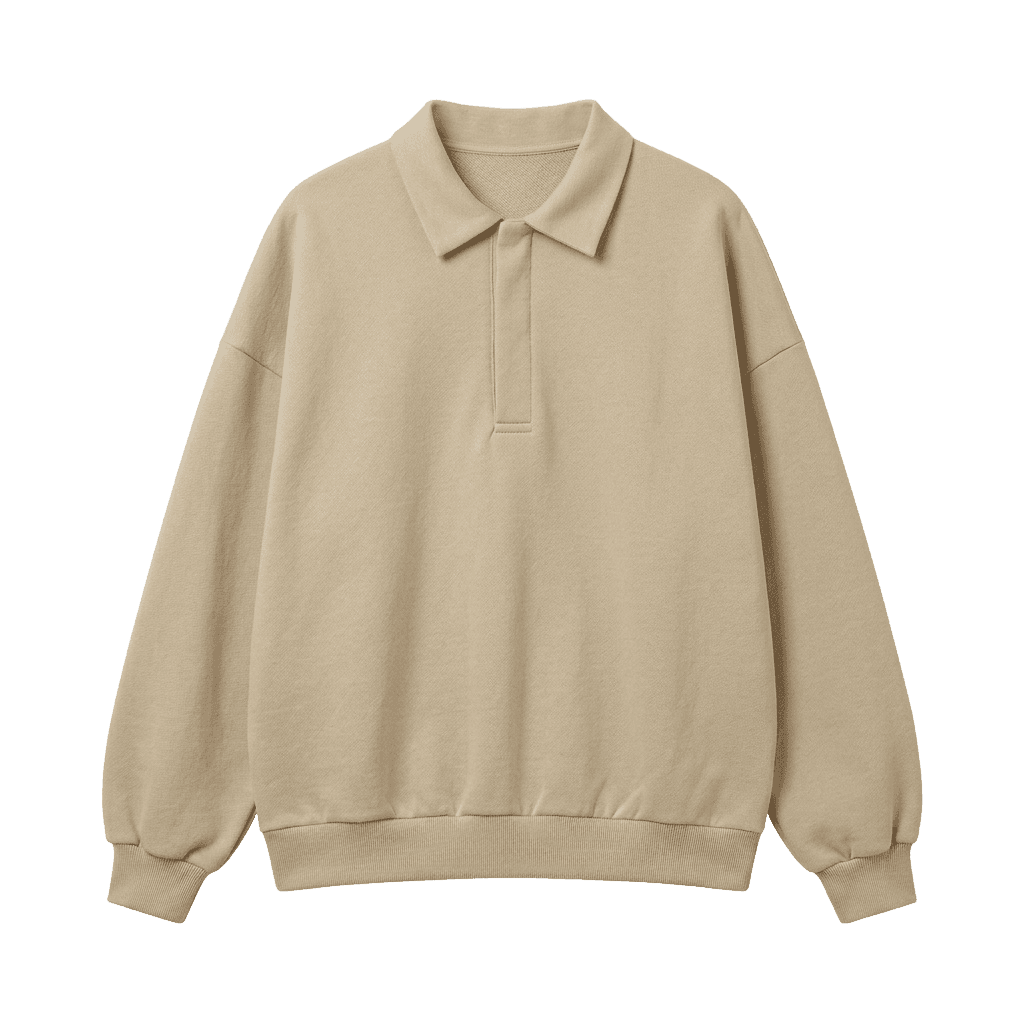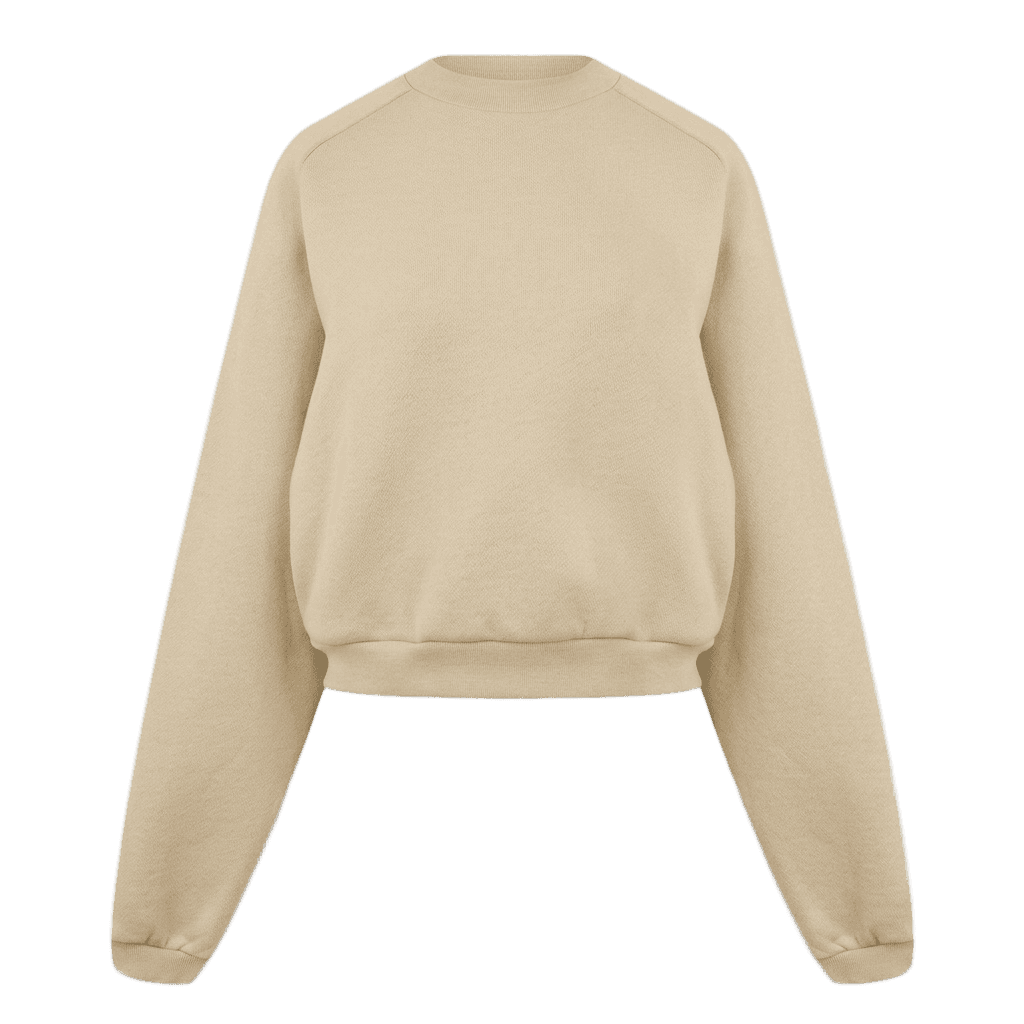
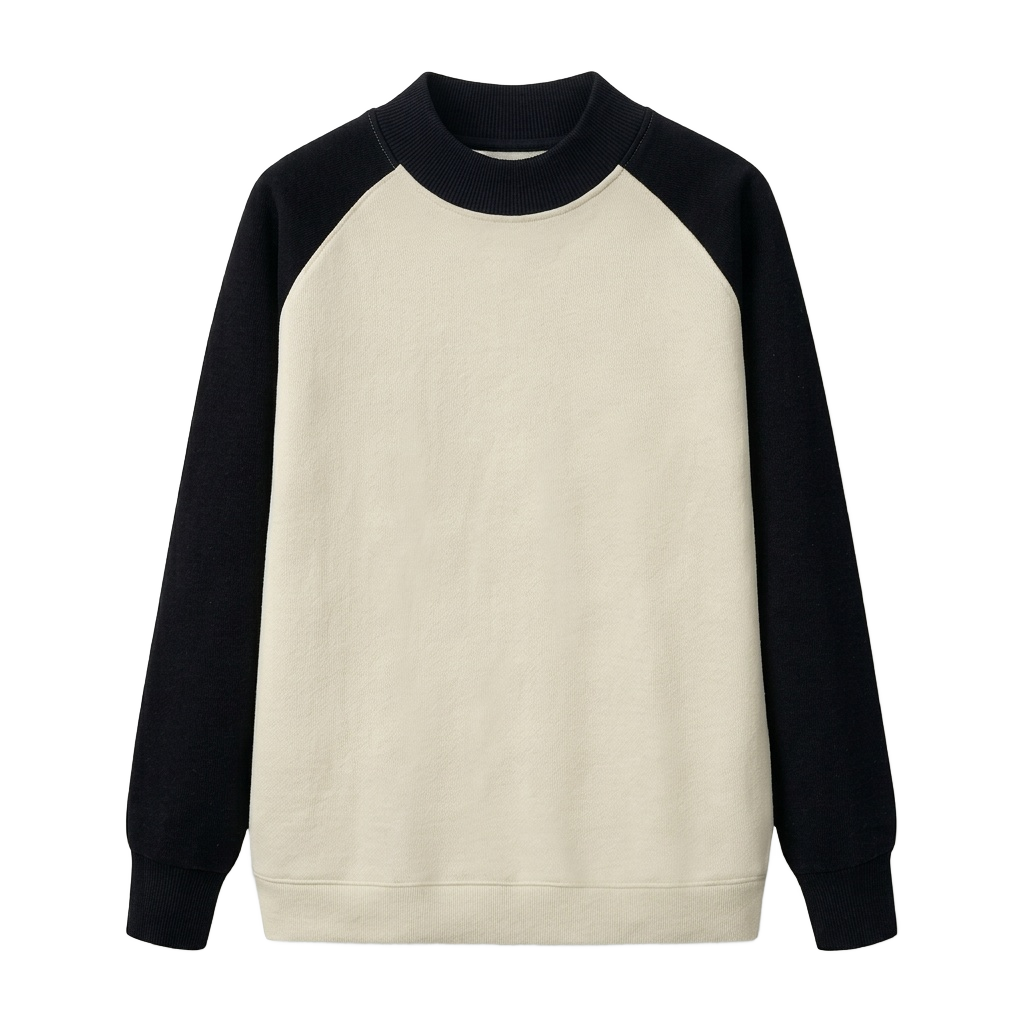
Raglan Sleeve Crewneck Sweatshirt (cream with black sleeves)
Raglan sleeves run from the ribbed crew neckline to ribbed cuffs, separating the cream body from the black sleeves along diagonal seams. The straight body falls to a regular length and ends in a ribbed hem band, giving a pullover shape with no front closure. It sits with a regular fit through the torso and sleeves.
The same factories that produce for houses like Celine and Balenciaga can produce this piece, directly to you
GABI
Make it yours
Material grade
Colour
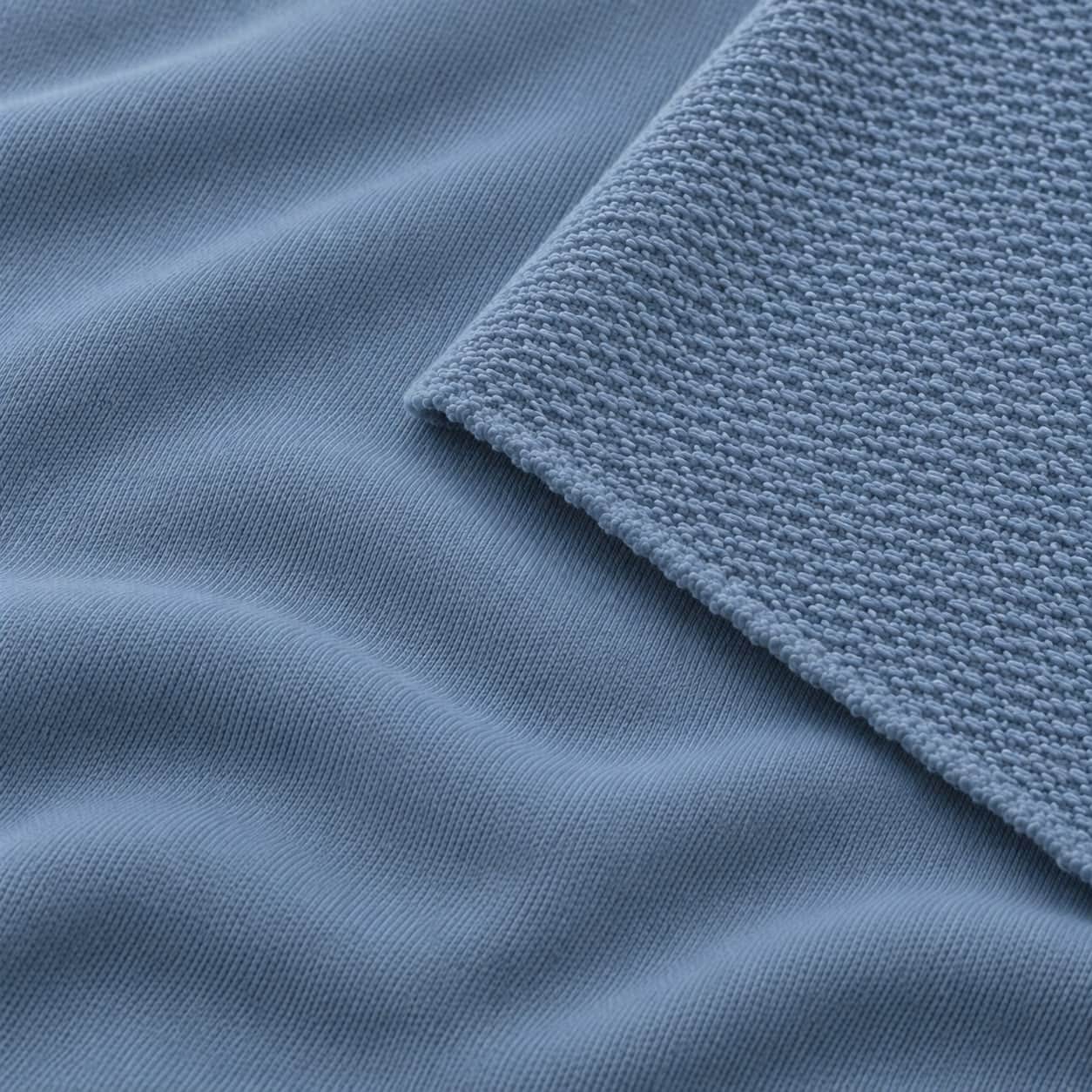
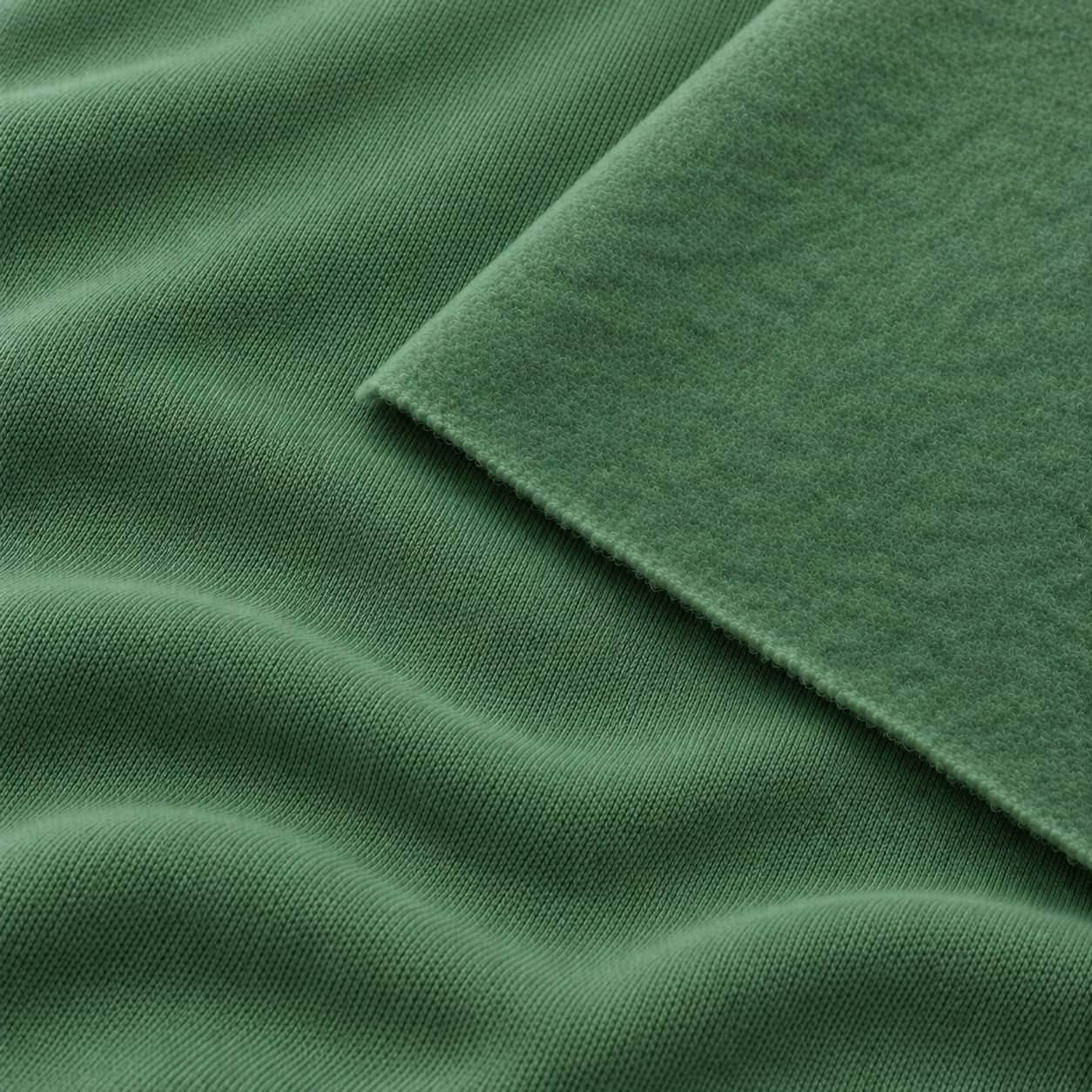
- Main Fabric: 100% Cotton, 340gsm
- Rib Knit: 95% Cotton / 5% Elastane
- Machine wash at 30°C on a gentle cycle
- Do not bleach
- Do not tumble dry
- Iron on a low setting
A guide based on the garment’s materials — always follow the care label on the item itself.
Fabrics
Before the hoodie. Before the zip-up. There was the sweatshirt. Just a crewneck, some fleece, and a vision — born on the training field, stolen by the street, claimed by luxury. Champion invented it. Hip-hop immortalised it. Balenciaga charges $450 for it. And the design? Still belongs to everyone. That's the sweatshirt. The garment that refused to stay in its lane.
The Story of the Sweatshirt — "The Uniform That Refused to Stay in Its Lane"
Did you know the sweatshirt was invented to solve a problem that no longer exists? In the early 20th century, athletes trained in wool jerseys — heavy, itchy, and brutal when wet with sweat. The cotton knit pullover was a revelation: lighter, softer, and quick to dry. Not beautiful. Not fashionable. Purely functional.
The Knickerbocker Knitting Company — later known as Champion — began producing the first crewneck sweatshirts in the 1920s for college athletes and military training programmes. No hood. No zip. Just a loopback cotton fleece body with a ribbed neckline, cuffs, and waistband. It was engineered, not designed.
By the 1930s, American universities had adopted it as their own. The crewneck became a canvas — screen-printed with team logos, college names, and mascots. For the first time, a piece of clothing communicated belonging before you said a word.
Then came the 1950s and a cultural pivot. As denim moved from workwear to youth culture, the crewneck sweatshirt followed the same trajectory. James Dean wore one on set. Marlon Brando wore one off set. It became the anti-suit — the garment of artists, rebels, and people who had better things to think about than getting dressed.
"The sweatshirt is the most honest garment ever made. It has no pretension. It asks nothing of you."
In the 1970s and 80s, sportswear brands commoditised it. Nike, Adidas, and Champion mass-produced crewneck sweatshirts in volume, turning the college uniform into a global staple. The logo became the product. The fabric was almost secondary.
Hip-hop changed the relationship between wearer and garment. In the 1980s and 90s, oversized crewnecks became a statement of identity, not just comfort. Artists like LL Cool J and later Kanye West wore sweatshirts as a deliberate aesthetic — volume, presence, and cultural authority worn on the body.
Then fashion decided it wanted in. In the 2010s, luxury brands discovered the sweatshirt. Givenchy's Rottweiler sweatshirt became one of the most copied garments in fashion history. Supreme turned limited-edition crewnecks into cultural currency. Fear of God built an entire aesthetic language around heavyweight, oversized French terry.
Today, the sweatshirt exists at every price point simultaneously. A $15 promotional crewneck and a $450 Balenciaga are technically the same garment. The difference is entirely in what happens before the cut — the fiber, the weight, the finish, the construction.
The global sweatshirt market exceeds $80 billion annually. More than 300 million units are produced every year. And like the hoodie before it — no one owns the design. The sweatshirt is open source. It always has been. The question is who gets to build it.
FAQ
A sweatshirt costs between $22 and $42 per unit landed, depending on material tier and factory region. A standard conventional cotton fleece crewneck at 300 units from China lands at approximately $22–$28 per unit, including fabric, CMT, trims, finishing, freight, and duties. Premium sweatshirts using GOTS-certified organic cotton from Turkey land at $35–$45 per unit at the same volume.
The best fabric for sweatshirt manufacturing is 280–340 GSM combed ring-spun cotton fleece or French terry. French terry (looped interior) is lighter and more versatile for year-round wear; fleece (brushed interior) is warmer and standard for winter-weight sweatshirts. Cotton/polyester blends should only be used when price is the absolute priority — they pill faster and last significantly less than 100% cotton constructions.
A standard sweatshirt should be 260–320 GSM for everyday wear, 220–260 GSM for lightweight styles, and 340–440 GSM for premium heavyweight streetwear. Below 240 GSM reads as a promotional or low-quality product.
French terry has a smooth outer surface and looped interior — lighter, cooler, and more versatile across seasons. Fleece has a brushed interior creating a soft, warm surface — heavier and warmer. French terry (220–300 GSM) suits fashion and year-round basics; fleece (260–360 GSM) is standard for winter-weight sweatshirts.
The minimum order quantity for sweatshirts is typically 300 to 500 units per colourway at standard factories, with smaller runs of 50 to 100 units accessible through specialist networks like Sparkit. Blank crewneck basics can be sampled from 12 units minimum.
Sweatshirt manufacturing takes between 30 and 96 days from order to delivery. China is fastest for sampling at 4 to 6 days for a standard crewneck; full production plus sea freight to the UK totals 57 to 83 days. Turkey offers the fastest European delivery at 30 to 50 days total.
Sweatshirts pill because fleece fibers rub and tangle into balls — accelerated by short-staple cotton or polyester content. Specify anti-pill finish in your fabric order and choose combed ring-spun or long-staple cotton. Anti-pill finishing is one of the simplest quality upgrades available.
Luxury sweatshirts use 360–440 GSM long-staple Pima or Egyptian cotton with a full finish stack including silicone softener, enzyme wash, anti-pill, and often garment dyeing. High street versions typically use 220–260 GSM CVC blends with no finishing. The rib quality at neckline, cuffs, and waistband is the most immediately visible quality signal.
A sweatshirt is a hoodie without the hood — simpler to produce, less fabric, lower CMT. The absence of hood panels, drawstring tunnel, and aglets reduces CMT by approximately 20–30% and fabric consumption by 0.45–0.55m per unit. Both use the same fleece or French terry fabric family and rib components at cuffs and waistband.
Prevent neckband stretch by specifying rib weight and tension in your tech pack and requesting a 5-cycle wash test before bulk production. Specify 1x1 rib for standard crewnecks and 2x2 rib for a bolder, more structured neckline with better shape retention over time.
Yes, regenerative cotton delivers the strongest sustainability credential in fashion without any performance trade-off. The sweatshirt — as a high-consideration, long-wear purchase — is an ideal vehicle for communicating regenerative credentials at a retail price of $120–$180.
CMT stands for Cut, Make, and Trim — the core labour cost covering cutting all panels, sewing them together, and attaching all trims including labels and ribbed components. For a standard crewneck, CMT ranges from $6.00 to $9.00 per unit at affordable tier in China or Vietnam, up to $18.00 to $28.00 at luxury tier in Portugal or Turkey.