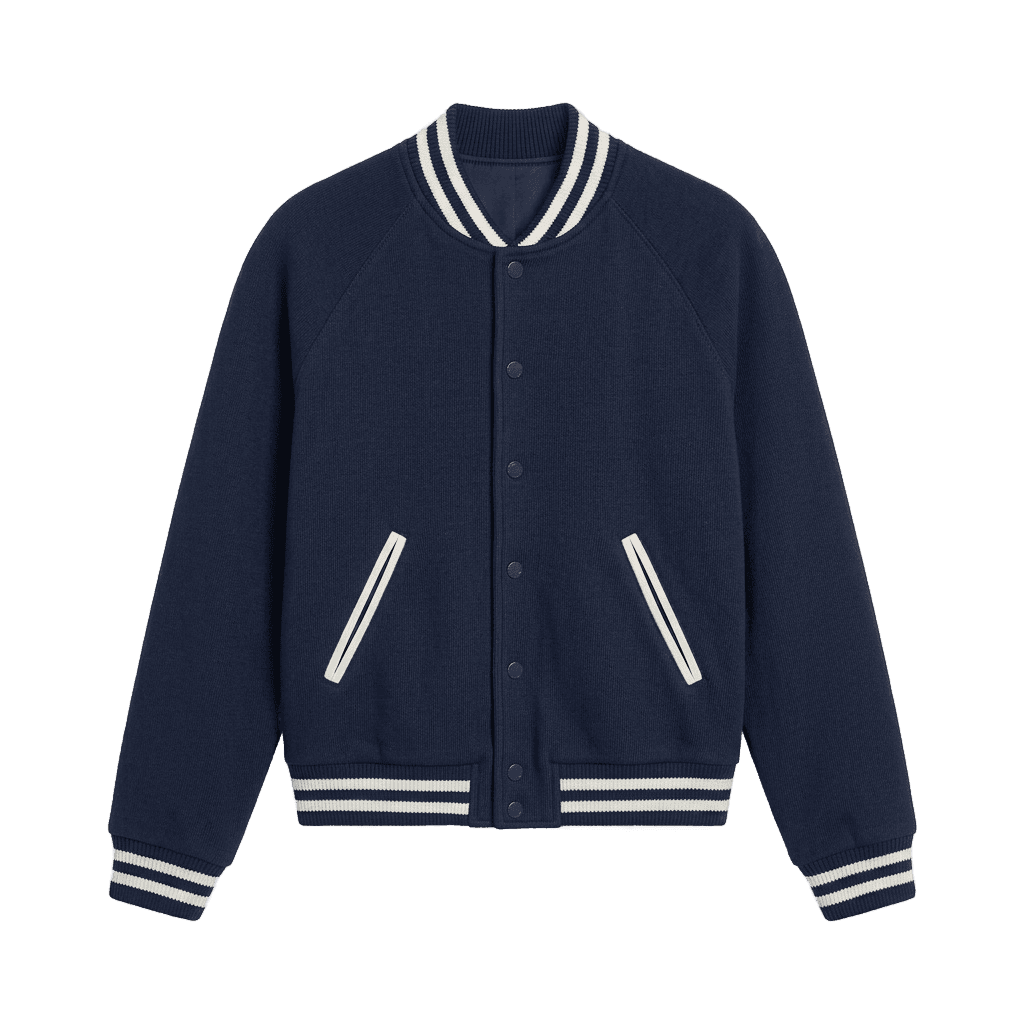
Discover with
Encyclopedia
Explore an extensive collection of garments curated by the community, featuring tailored filters and distinctive viewpoints.
Discover with
Encyclopedia
Explore an extensive collection of garments curated by the community, featuring tailored filters and distinctive viewpoints.
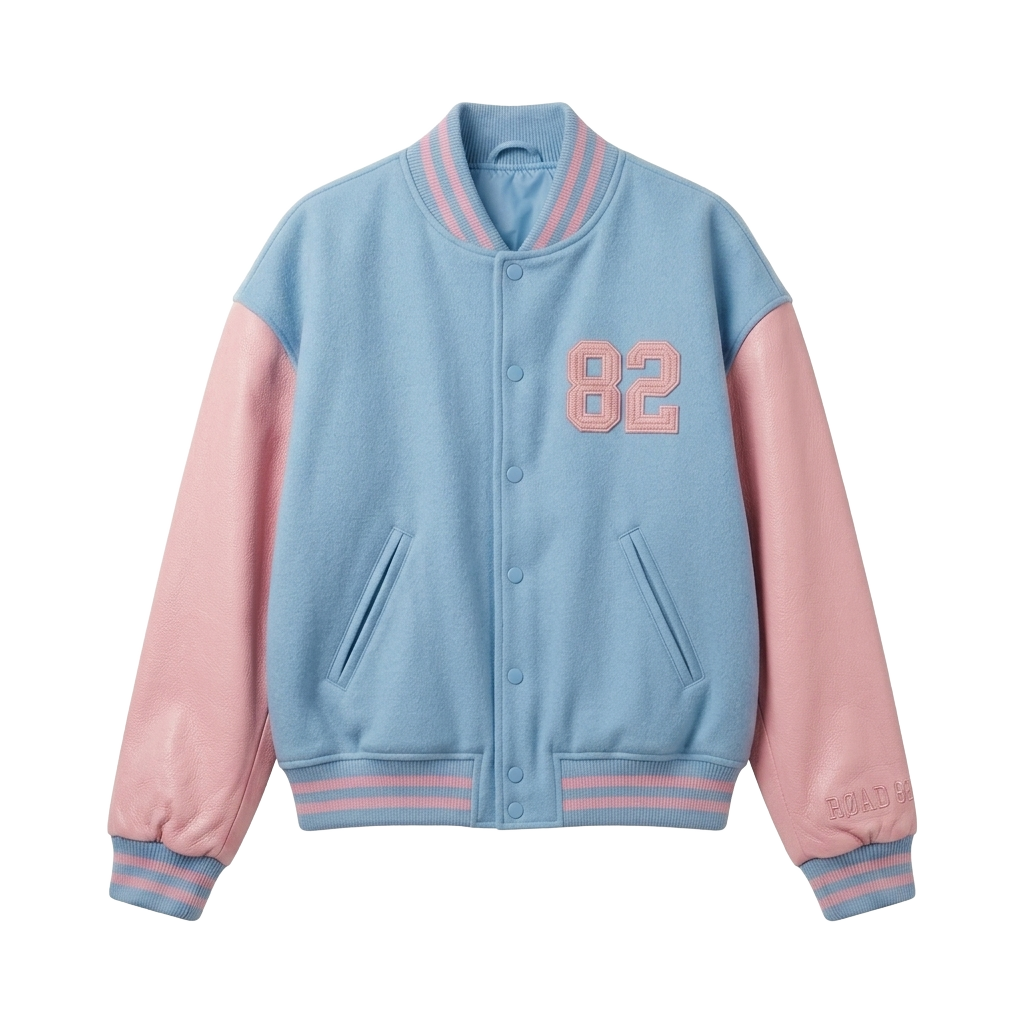
The same factories that produce for houses like Celine and Balenciaga can produce this piece, directly to you
GABI
Make it yours
Material grade
Colour
The same factories that produce for houses like Celine and Balenciaga can produce this piece, directly to you
GABI
Make it yours
Material grade
Colour
Harvard gave the first varsity letter in 1865 — a large H sewn onto a sweater for the baseball team. By 1930 it was a jacket with leather sleeves and a wool body. By 1980 it was in every American high school film ever made. By 2012, it was on the Givenchy runway. By 2023, it was the most counterfeited jacket in streetwear. The construction has not changed in 90 years. The wool body, the leather sleeves, the chenille letter, the snap buttons. You cannot improve the original. You can only execute it better or worse.
The Story of the Varsity Jacket — "The Jacket That Built American Youth Culture"
The varsity jacket has the most precisely documented origin of any garment in the Sparkit Encyclopedia. On a specific date in a specific year — 1865 at Harvard University — the baseball team awarded the first letterman letters to its players: a large block H to be sewn onto the player's sweater as a mark of athletic achievement. The tradition spread through American universities and then high schools with the speed and thoroughness that only institutional adoption can produce.
The varsity jacket is the only garment in Family 04 built from two fundamentally different fabric categories: a wool or melton textile body and leather sleeves. These materials require different needles, different thread, different sewing techniques, and often different factories or suppliers. The armhole seam joining wool body to leather sleeve is the most technically demanding seam in Family 04 outerwear. In addition, chenille patch decoration is one of the most labour-intensive graphic techniques in garment production and often requires a dedicated chenille supplier.
A varsity jacket costs between $71 and $302 per unit landed depending on materials, sleeve specification, and graphic treatment. An affordable wool/poly melton body with faux leather sleeves, stripe rib, and no chenille from China lands at approximately $71. A premium pure wool body with cowhide sleeves, stripe rib, and a chest chenille letter lands at approximately $156. A luxury pure wool body with soft cowhide sleeves, custom jacquard rib, large back chenille, and quilted lining from Japan lands at approximately $302. The leather sleeve specification and chenille patch complexity are the two primary cost variables above base construction.
Genuine leather sleeves are cut from cowhide, lamb, or nappa leather and develop patina with age and wearing. They are significantly more durable than faux leather over time. Faux leather sleeves are a PU-coated fabric — lighter, more consistent in appearance, and much cheaper. The quality risk with faux leather is delamination: cheap PU with insufficient backing will crack and peel within a season. Always specify minimum 200 GSM polyester backing on faux leather and request a peel test before bulk approval.
The transition from sweater to jacket happened progressively through the 1920s and 1930s as the wool body gained leather sleeves, a snap-button front closure replaced the pullover construction, and rib-knit collar, cuffs, and waistband became standard. The leather sleeves served a practical function — leather is more durable than wool at the points of greatest wear and abrasion, and the contrasting material provided a visual differentiation that reinforced the jacket's status as a prestige object.
The chenille letter — embroidered in a thick, textured loop pile that had originated in French silk weaving — became the standard decoration for the awarded letter because its raised surface and distinctive texture were visible from the stands of a sports field. The satin lining later became another personalisation surface, turning the jacket into a wearable archive of athletic and social achievement.
The fashion world's first serious engagement with the varsity jacket came through American designers in the 1980s who recognised its cultural weight — Ralph Lauren, Tommy Hilfiger, and Perry Ellis all incorporated versions of the format into their brand vocabularies. Its transition into global streetwear accelerated through hip-hop, while Japanese reproduction makers later elevated construction fidelity to a new standard.
The luxury fashion market's engagement with the varsity jacket has been consistent and commercially significant. Givenchy under Riccardo Tisci, Saint Laurent under Hedi Slimane, Gucci under Alessandro Michele, and many other houses have produced varsity jacket iterations with luxury leather bodies, cashmere or fine wool panels, and elevated hardware.
For independent creators, the varsity jacket is the most customisation-intensive accessible outerwear option in the encyclopedia. Its construction is well understood, its factories are specialised and accessible, and its cultural references are broad enough to serve almost any brand positioning. The primary production complexity is the dual supply chain — wool body and leather sleeves from different material sources — and the chenille patch, which requires a dedicated embroidery supplier with chenille capability.
Chenille is a loop-pile yarn construction used to create raised, textured letter shapes or graphics. The chenille letter is the defining decorative detail of the traditional varsity jacket. Chenille patches are produced by specialist embroidery suppliers using chenille tufting machines, then sewn onto the finished jacket rather than applied in-hoop like flat embroidery. A standard single letter at 4–6 inches costs roughly $4–10 per patch benchmarked, while a large complex back chenille graphic can cost $25–60 per patch.
Two-colour stripe rib is the standard — alternating stripes in the jacket's primary and secondary colours at collar, cuffs, and waistband. Specify a 2x2 rib construction for good elasticity and body. Include a minimum of 8% elastane for shape retention. Single-colour rib is cleaner and more contemporary. Three-colour stripe adds complexity and cost. Custom jacquard rib is the premium identity option but carries significant MOQ.
Yes. An all-wool varsity jacket — with the same wool melton used for both body and sleeves — eliminates the dual supply chain complexity and reduces construction cost by removing the leather sleeve attachment uplift. It produces a cleaner, more contemporary look and is appropriate for streetwear and fashion-forward positioning. Knit sleeves are another valid alternative.
Heavy press snaps in 24–27mm diameter are the standard for varsity jackets — large enough to be proportional to the wool body and strong enough to hold through repeated use. Antique brass is the most traditional collegiate reference, gunmetal is more contemporary, and black nickel is fashion-forward. Always specify reinforcement behind snap attachment points on the wool body and test at minimum 200 open-close cycles before bulk sign-off.
China has the most extensive varsity jacket factory infrastructure globally and the strongest chenille patch supply chain. It is the most accessible option for all tiers. South Korea has strong heritage capability at mid-premium tier. Japan represents the quality pinnacle for heritage reproduction varsity jackets. The United States retains domestic varsity manufacturing capability for Made in USA positioning. Pakistan can be a source for the leather sleeve component specifically.
The sukajan is a distinct but related garment that shares the varsity jacket's construction logic — contrast sleeves, knit trim, and snap closure — but uses a satin or nylon body rather than wool, elaborate back embroidery rather than chenille, and often a reversible construction. It originated in Japan after World War Two and requires a different factory, material set, and embroidery supply chain from a wool varsity jacket.
Correct chenille patch attachment has four steps: apply heat-seal adhesive backing to position the patch, apply woven stabiliser behind the wool body to prevent warping, machine-stitch around the full perimeter with zigzag or tight chainstitch, and spot-tack any raised interior areas that may lift over time. Large back patches should be hand-basted before final sewing. Always test with wash and flex cycles before bulk approval.
Satin taffeta is the traditional varsity jacket lining — usually in the jacket's secondary colour or a contrasting accent. The lining is both functional and a brand identity surface. Quilted lining at luxury tier adds warmth and a premium handle. Specify lining ease carefully so the satin does not pull against the wool shell in wear.
Varsity jackets use HS code 6201 for mens and unisex woven outerwear and 6202 for womens woven outerwear. The leather sleeves are incorporated components of the finished garment and do not trigger a separate leather goods classification. Final classification still depends on the destination market, so verify with your customs broker.