Discover with
Encyclopedia
Explore an extensive collection of garments curated by the community, featuring tailored filters and distinctive viewpoints.
Discover with
Encyclopedia
Explore an extensive collection of garments curated by the community, featuring tailored filters and distinctive viewpoints.
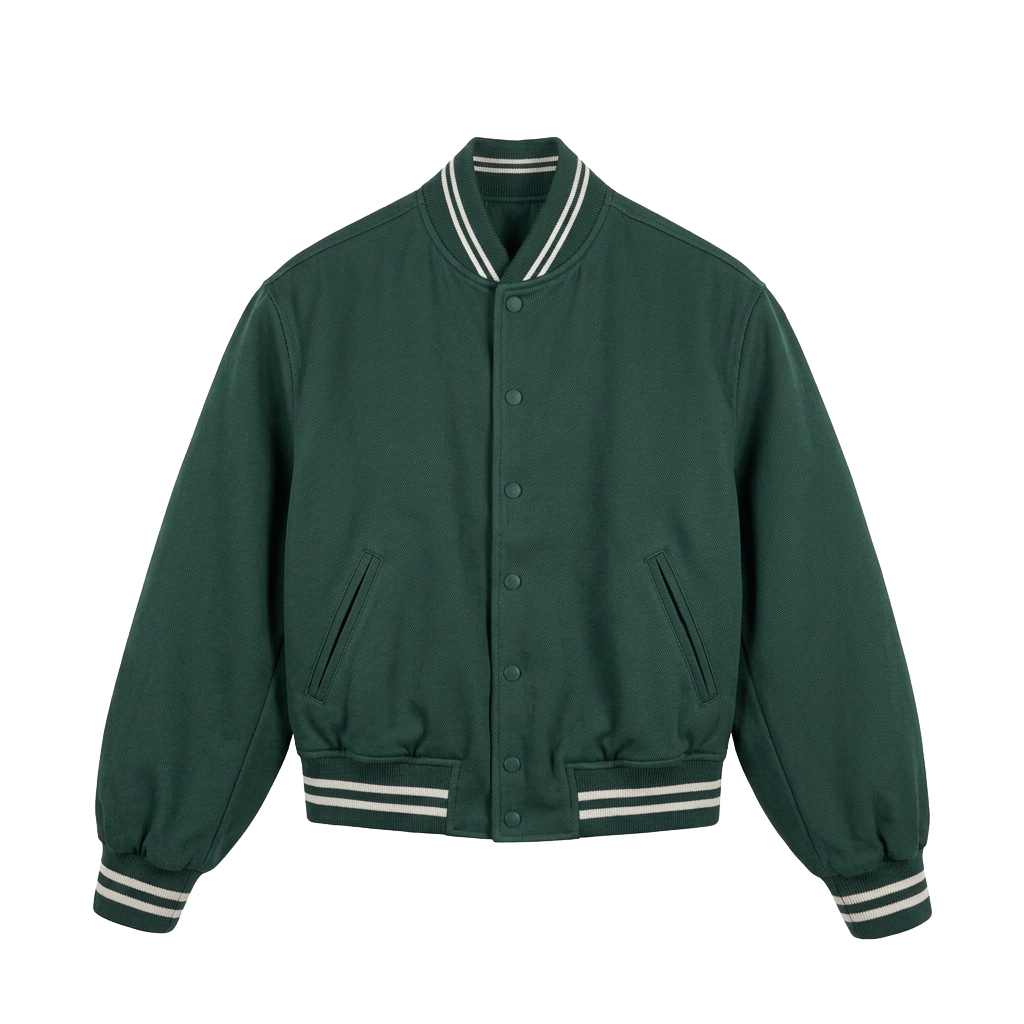
The MA-1 was designed by the US Air Force in 1950 to keep pilots alive in unpressurised cockpits at altitude. It was sage green nylon, reversible to blaze orange, with a ribbed collar that sealed against wind. By 1967, it was on the backs of skinhead gangs in East London. By 1986, it was on Tom Cruise in Top Gun. By 1996, it was on the Spice Girls. By 2012, it was on the Prada runway. No garment has survived as many cultural relocations without losing a single thread.
The same factories that produce for houses like Celine and Balenciaga can produce this piece, directly to you
GABI
Make it yours
Material grade
Colour
The MA-1 was designed by the US Air Force in 1950 to keep pilots alive in unpressurised cockpits at altitude. It was sage green nylon, reversible to blaze orange, with a ribbed collar that sealed against wind. By 1967, it was on the backs of skinhead gangs in East London. By 1986, it was on Tom Cruise in Top Gun. By 1996, it was on the Spice Girls. By 2012, it was on the Prada runway. No garment has survived as many cultural relocations without losing a single thread.
The same factories that produce for houses like Celine and Balenciaga can produce this piece, directly to you
GABI
Make it yours
Material grade
Colour
The MA-1 was designed by the US Air Force in 1950 to keep pilots alive in unpressurised cockpits at altitude. It was sage green nylon, reversible to blaze orange, with a ribbed collar that sealed against wind. By 1967, it was on the backs of skinhead gangs in East London. By 1986, it was on Tom Cruise in Top Gun. By 1996, it was on the Spice Girls. By 2012, it was on the Prada runway. No garment has survived as many cultural relocations without losing a single thread.
The Story of the Bomber Jacket — "The Garment That Survived Everything"
The bomber jacket was not designed for fashion. It was designed for survival. The first flight jackets appeared during World War One, when open-cockpit aircraft exposed pilots to temperatures that could incapacitate them within minutes. Early designs were leather — horsehide and later horsehide, sheepskin, and goatskin — with heavy wool or fur linings. The A-2 jacket, standardised by the US Army Air Corps in 1931, established the silhouette that would endure: hip-length body, fitted waist, knit cuffs and waistband, zip front closure, stand collar. Leather exterior, lining inside. The garment was engineered to retain body heat at altitude while allowing the arm movement required to operate aircraft controls.
A bomber jacket costs between $38 and $121 per unit landed depending on shell fabric, lining type, and factory region. An affordable nylon bomber with satin lining from China lands at approximately $38. A premium GRS technical nylon bomber with quilted lining from Turkey lands at approximately $71. A luxury GOTS cotton gabardine bomber with embroidered satin lining from Portugal lands at approximately $121. The lining is a significant cost variable — embroidered satin lining alone can add $20–25 per unit over a standard satin lining at small quantities.
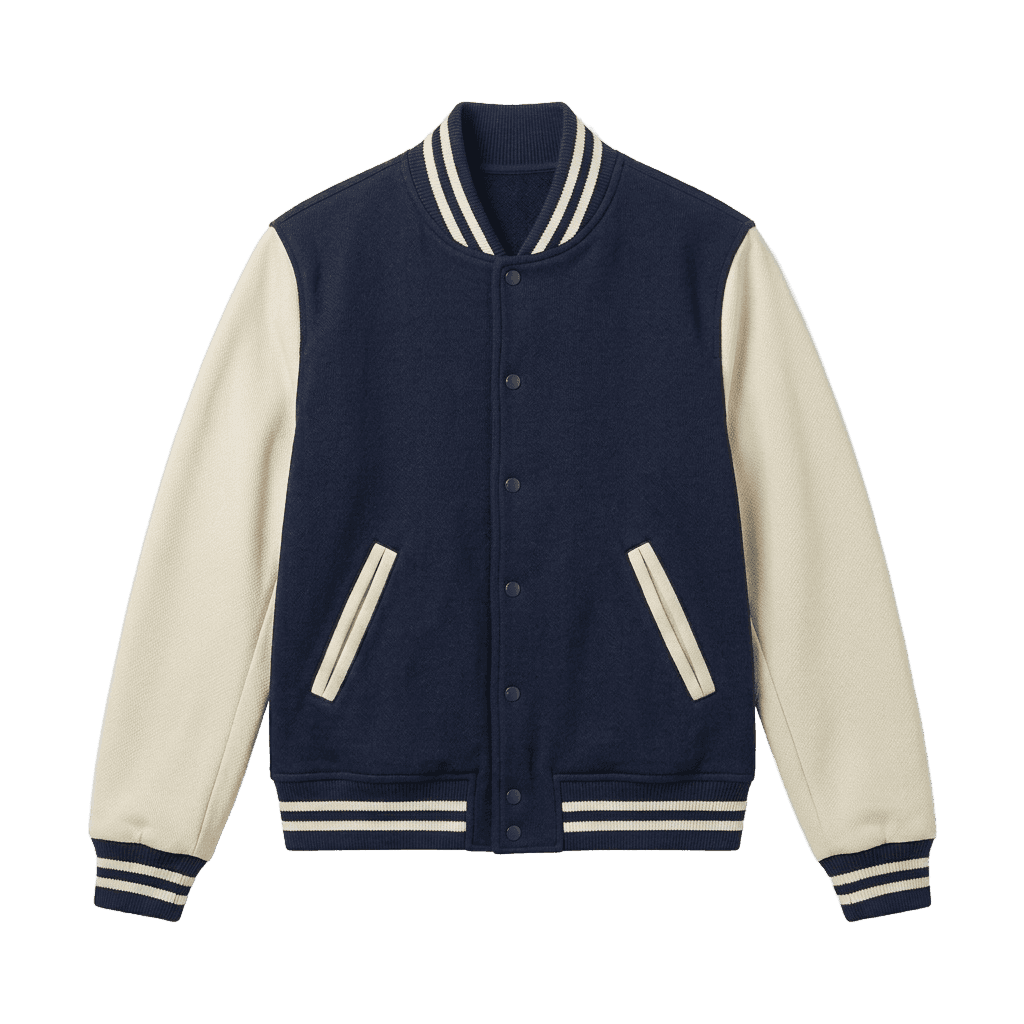
The MA-1 is the US Air Force bomber jacket introduced in 1950, defined by its sage green nylon shell, orange reversible lining, ribbed collar, cuffs, and waistband, and the small zip pocket on the left sleeve. It is the origin of the modern civilian bomber jacket and the reference point for the contemporary category. The MA-1 silhouette — hip length, clean front zip, knit bands at all openings — is the commercial default for any bomber jacket brief.
The ribbed collar, cuffs, and waistband are the primary quality signal in a bomber jacket. They seal the jacket against wind at every opening, define the garment's silhouette, and are the first component to degrade in a poorly made jacket. The minimum elastane content is 8–12% for correct shape recovery. The knit structure, yarn weight, finished dimensions, and attachment tension must all be specified in the tech pack. A rib that stretches out after 5 wears permanently damages the garment's appearance and function. This is the most commonly under-specified component in first-draft bomber tech packs.
The B-3 shearling bomber of World War Two was the definitive cold-weather variant — worn by bomber crews at high altitude over Europe where temperatures reached minus 40 degrees. Its bulk, its sheepskin lining, and its extraordinary warmth gave it an immediately recognisable silhouette that still appears on fashion runways. General Patton wore one. The Dambusters wore them. The B-3 is the garment that turned military clothing into cultural object.
The MA-1 arrived in 1950 and changed everything. The jet age required a different jacket. Jet cockpits were pressurised and temperature-controlled, so extreme insulation was no longer the primary requirement. The new brief was different: lighter weight, less bulk, better freedom of movement, identifiable from the ground in an emergency. The solution was sage green nylon with an orange reversible lining — the orange side worn in survival situations to signal location from the air. The ribbed collar, cuffs, and waistband remained. The silhouette was cleaner and more minimal than its leather predecessors.
The MA-1 escaped military supply channels in the 1960s through the American surplus market. It arrived in Britain through the same routes that supplied the mod scene and, critically, the skinhead subculture that emerged in working-class areas of East London and Birmingham in 1967 and 1968. The skinhead adoption of the MA-1 — worn with Levi's jeans, Doc Martens boots, and cropped hair — established the garment's first life as subcultural uniform. It was practical, cheap from surplus stores, durable, and carried a particular aesthetic of functional austerity that suited the subcultural context exactly.
The garment's subsequent trajectory through subcultures is one of the most documented in fashion scholarship. It moved through the ska and two-tone scenes of the late 1970s. It appeared in the punk periphery. It was adopted by American hip-hop in the 1980s, where its clean silhouette worked with tracksuits and fresh sneakers in a very different visual register from its East London origins. Top Gun in 1986 brought it to the mainstream cinema audience, where the G-1 leather variant worn by Tom Cruise became one of the most referenced garments in popular culture.
The 1990s were the bomber's golden decade in fashion. Raf Simons was designing bombers for his first collections. Helmut Lang was working in technical nylon. The satin baseball jacket — a structural cousin — was everywhere. By the time Alexander McQueen and Comme des Garçons began working with the silhouette in the early 2000s, the bomber jacket had accumulated more cultural reference layers than almost any other garment in the contemporary wardrobe.
The definitive contemporary moment was probably the Gucci Alessandro Michele era from 2015 to 2022, where the bomber jacket became the vehicle for embroidery maximalism — covered in floral embroidery, dragons, butterflies, and patchwork at price points above £2,000. This was the satin bomber lining turned outward, the flight crew's souvenir jacket tradition taken to its logical extreme. The souvenir jacket — a variant of the bomber with elaborate embroidered backs produced in Japan for American servicemen stationed there in the 1950s — had always been part of the heritage. Michele simply made it the main event.
Today the bomber jacket is one of the most commercially consistent outerwear categories across every price point. Affordable nylon MA-1s retail at £40. Premium cotton or technical fabric bombers retail at £200 to £400. Luxury leather or embroidered satin bombers retail at £800 to £3,000. The silhouette is stable. The variation is in shell material, lining treatment, and the ribbed band specification that is the technical quality marker for the category.
The five main options are: nylon woven (the MA-1 standard — lightweight, windproof, affordable to premium), polyester satin (souvenir jacket base — smooth, embroidery-friendly), cotton twill or gabardine (more structured, casual hand), technical fabrics including ripstop and Taslan nylon (performance and lifestyle positioning), and leather or faux leather (G-1 and A-2 heritage, premium to luxury, different factory). Nylon is the default. Specify DWR finish for all nylon and technical shells.
A souvenir jacket is a variant of the MA-1 bomber jacket with elaborate embroidered exterior — typically a large embroidered back panel — produced by Japanese craftsmen for American servicemen stationed in Japan in the 1950s. The tradition draws from Japanese embroidery craft and typically features dragons, tigers, chrysanthemums, and other traditional Japanese motifs. The Gucci Alessandro Michele era (2015–2022) brought the sukajan aesthetic to the luxury fashion mainstream. Full back embroidery on a souvenir jacket adds $40–80 per unit in embroidery cost alone.
DWR stands for Durable Water Repellent — a finish applied to the shell fabric that causes water to bead and roll off rather than penetrate the weave. It is standard specification for nylon and technical shell bombers and costs $1.00/m in the Sparkit engine. DWR does not make a garment waterproof — it resists light rain and surface moisture. It washes out over time and can be refreshed by tumble drying on low heat or reapplying with a spray-on DWR treatment. Always specify DWR for nylon shells. Include refresh instructions on the care label.
For nylon and polyester shells: GRS (Global Recycled Standard) for recycled nylon or polyester content, at ×1.15–1.20 multiplier. For cotton shells (gabardine, twill): GOTS at ×1.23 or organic non-GOTS at ×1.15. OEKO-TEX STANDARD 100 applies across all materials for consumer safety. Multiple certifications cap at ×1.28. Bluesign and PFC-free DWR are growing premium certifications for technical outerwear.
The lining is typically attached to the shell at the zip tape (front opening), at the collar rib join, and at the cuff and waistband ribs. The body lining hangs free inside the shell, attached only at the openings — this is the standard construction. In quilted or bonded constructions, the lining is laminated or bonded to the shell and moves with it. The standard construction allows the lining to move independently, reducing pucker and improving comfort in wear.
The small zip pocket on the left sleeve of the MA-1 bomber is one of fashion's most iconic details — originally used to store maps or documents in flight. Constructing it correctly requires inserting a zip on a curved sleeve surface, which demands fusible interfacing at the zip area and careful handling to prevent puckering. It adds $2–3 per unit in CMT. At affordable tier it is often omitted or poorly executed. At premium and luxury tier it is a required authentic detail and a visible quality signal.
China handles the largest volume of bomber jacket production across all tiers and offers the broadest capability for nylon, satin, and technical shells with strong embroidery infrastructure. Turkey and Portugal offer Made in Europe positioning for premium and technical bombers. Vietnam has strong outerwear capability for mid-premium production. Leather G-1 variants require a specialised leather goods factory — typically in China, India, or Turkey.
Embroidery adds cost that scales directly with stitch count. A left chest logo at 500–1,500 stitches adds $0.50–1.50. A back panel embroidery at 10,000–30,000 stitches adds $15–40. A full back sukajan at 50,000+ stitches adds $40–80 or more per unit. On nylon shells, always specify water-soluble topping and cutaway stabiliser to prevent the embroidery from distorting the fabric. On satin lining, specify lightweight tearaway stabiliser. Test on production fabric before bulk approval — nylon and satin both distort under embroidery pressure without stabiliser.
Bomber jackets use HS code 6201 for men's and unisex woven outerwear jackets and 6202 for women's woven outerwear jackets. This applies to nylon, polyester, cotton, and technical shell bombers. Leather bombers use a different classification under HS code 4203. Knit outerwear uses 6101/6102. Correct classification affects import duty rates — misclassification is common when factories default to the wrong code.