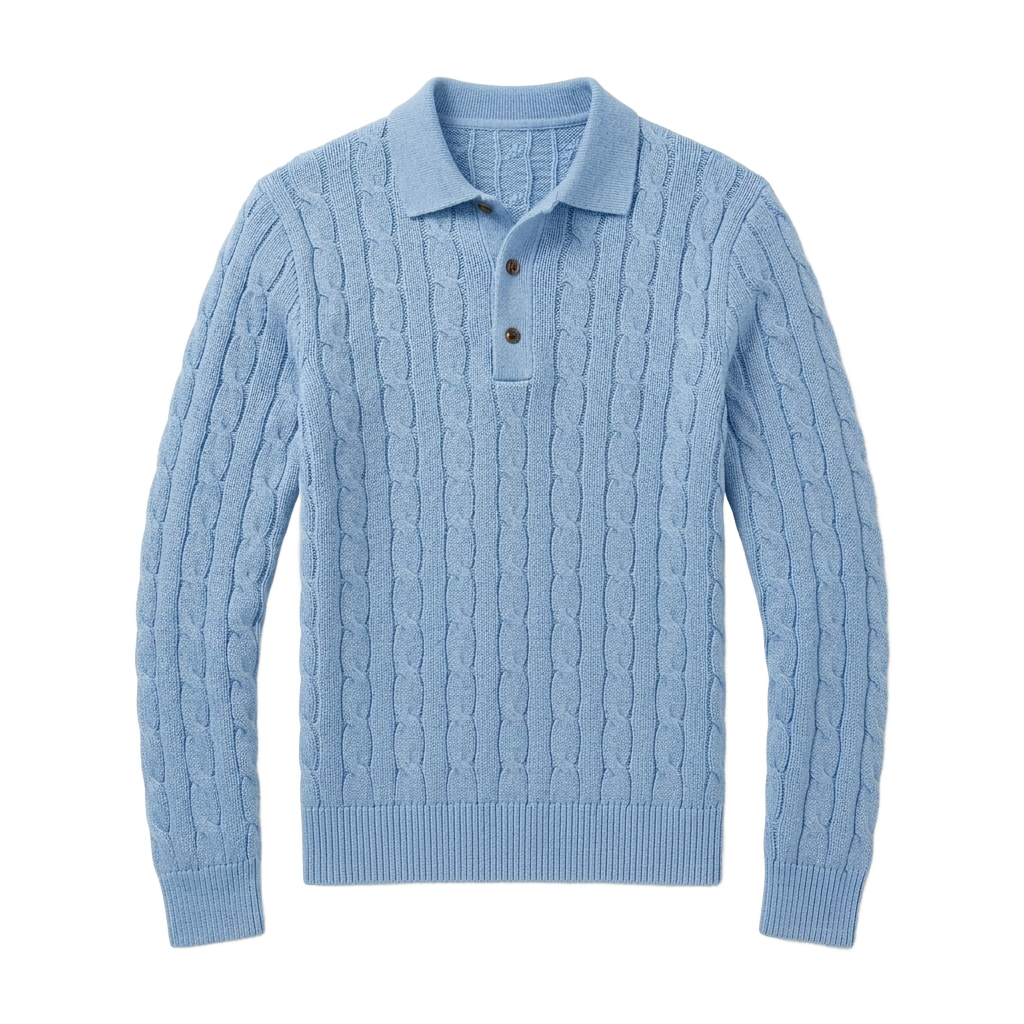
Blue Cable Knit Polo Sweater
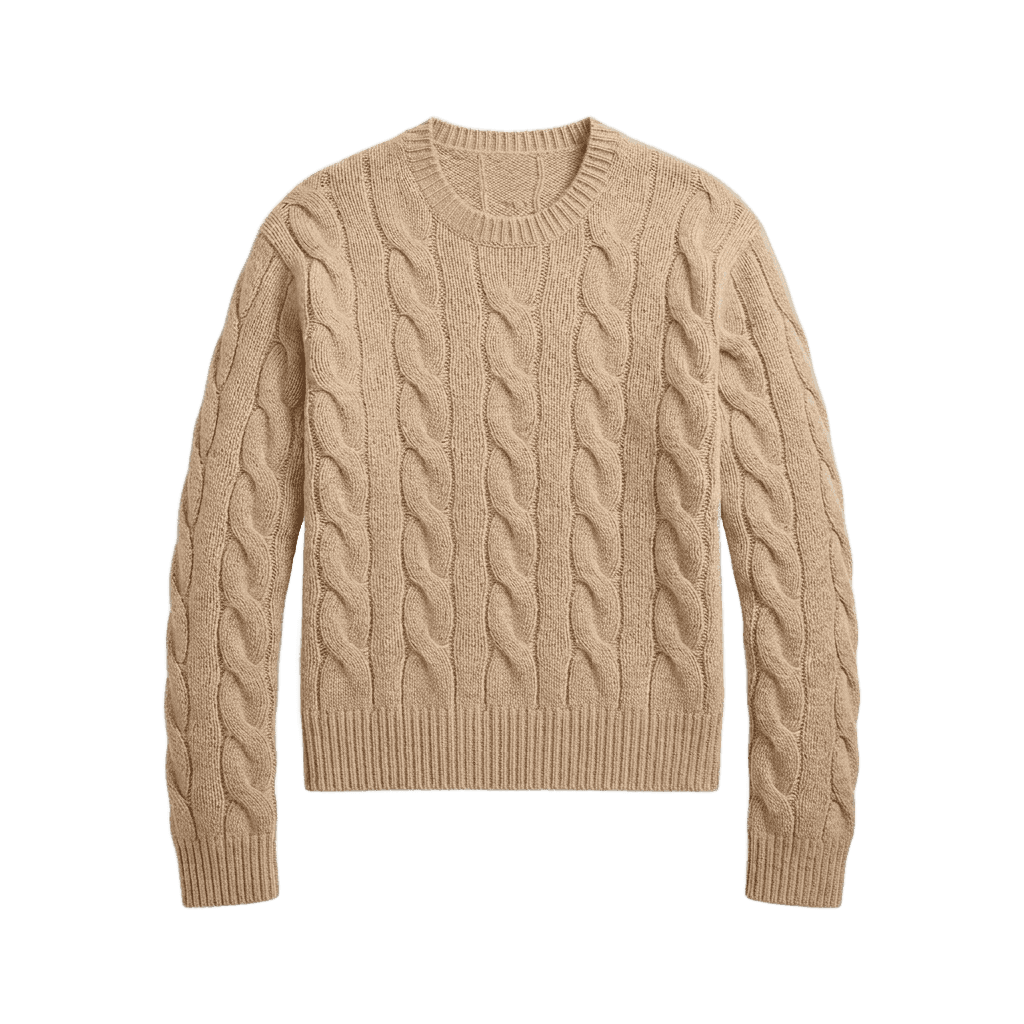
A straight-bodied pullover with a regular fit and regular length, ending at the hip in a straight hem. The flat knit polo collar closes with a three-button placket, while set-in sleeves with fully fashioned shoulder seams extend to linked rib cuffs. Vertical cable panels run down the body and sleeves, framed by 1x1 rib at the cuffs and hem.
The same factories that produce for houses like Celine and Balenciaga can produce this piece, directly to you
GABI
Make it yours
Material gradeMOQ 50
Colour
- Main Fabric: 100% Cotton, 280gsm
- Button: Plastic
- Machine wash at 30°C on a gentle cycle
- Do not bleach
- Tumble dry on low heat
- Iron on a medium setting
- Fasten zips and hardware before washing
A guide based on the garment’s materials — always follow the care label on the item itself.
Fabrics
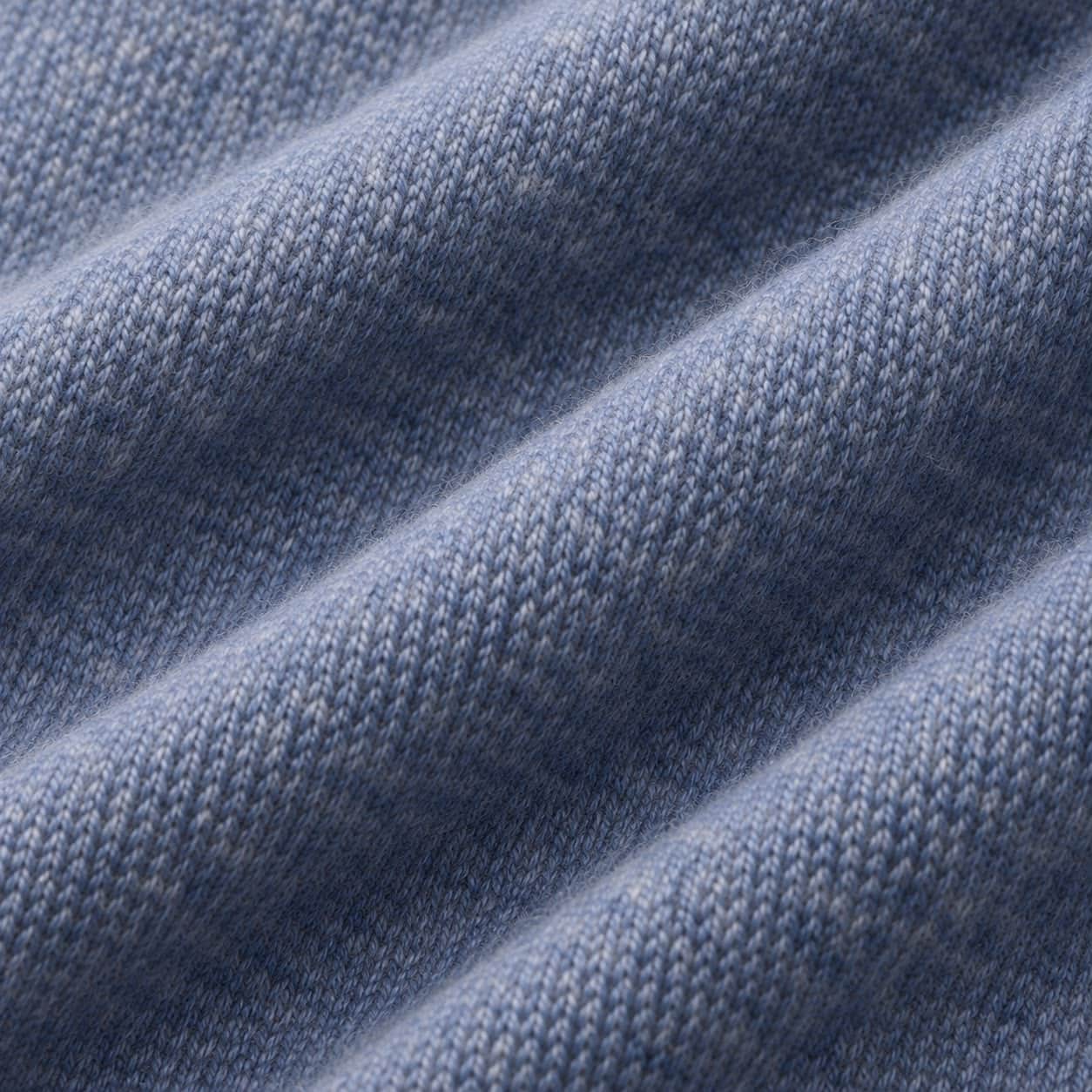
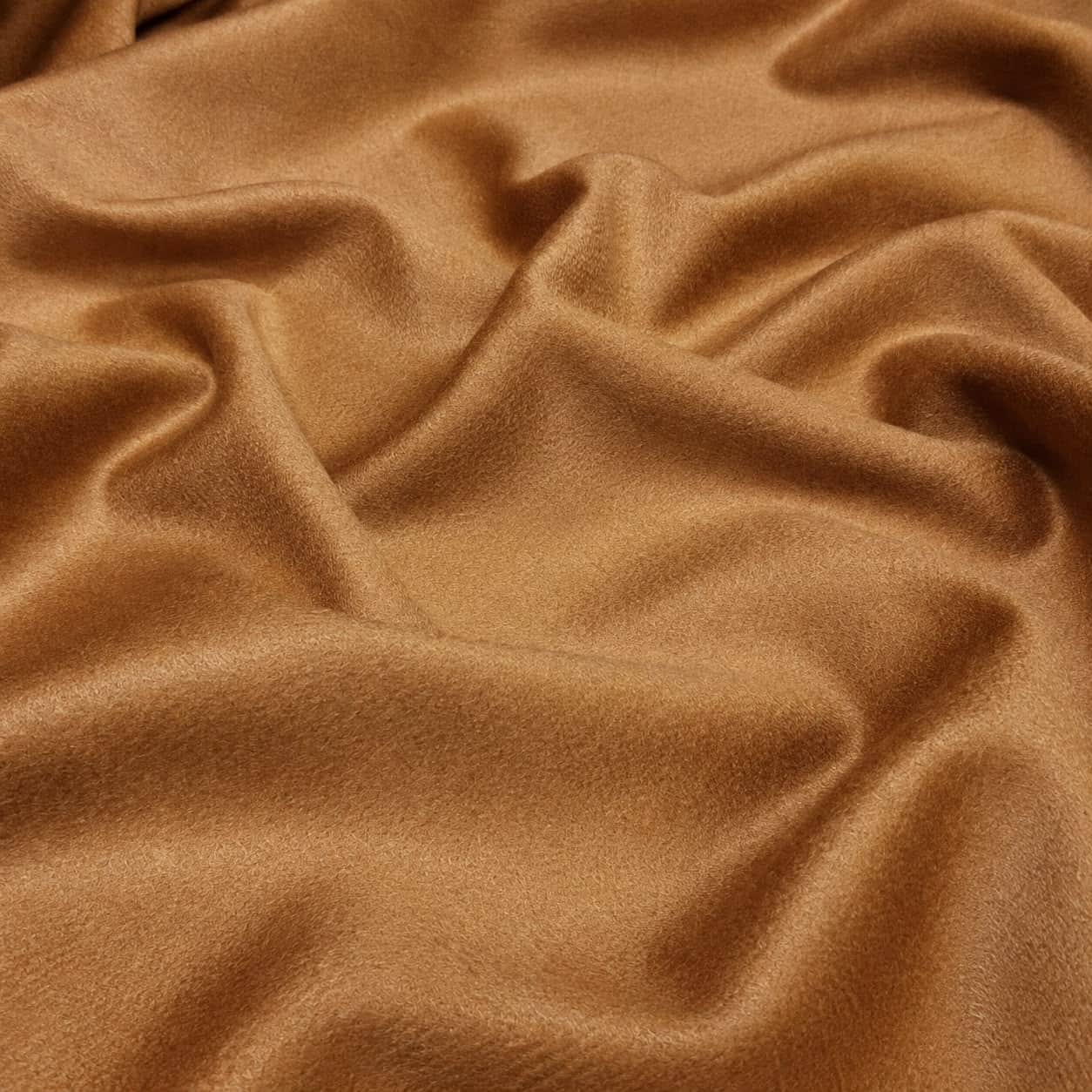
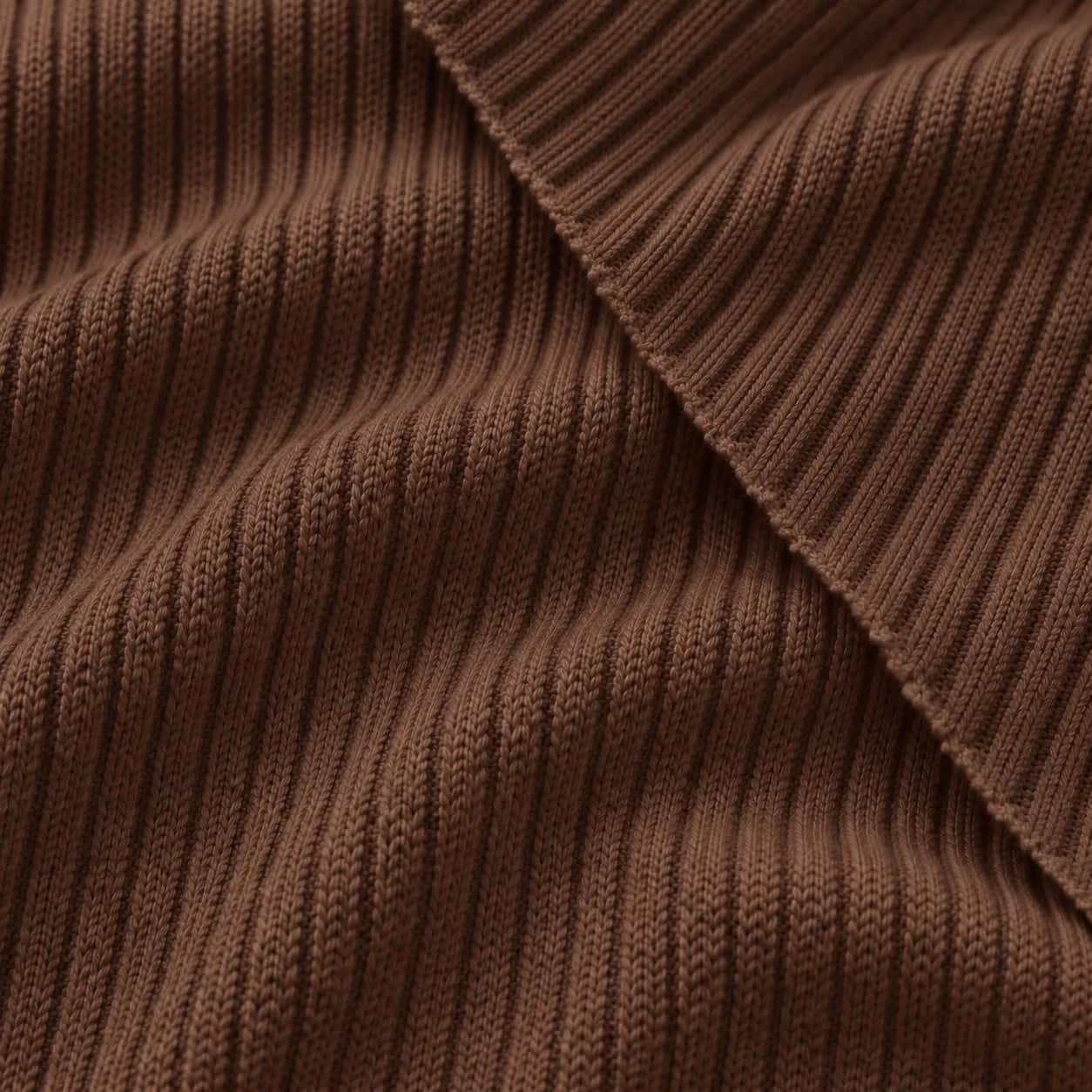
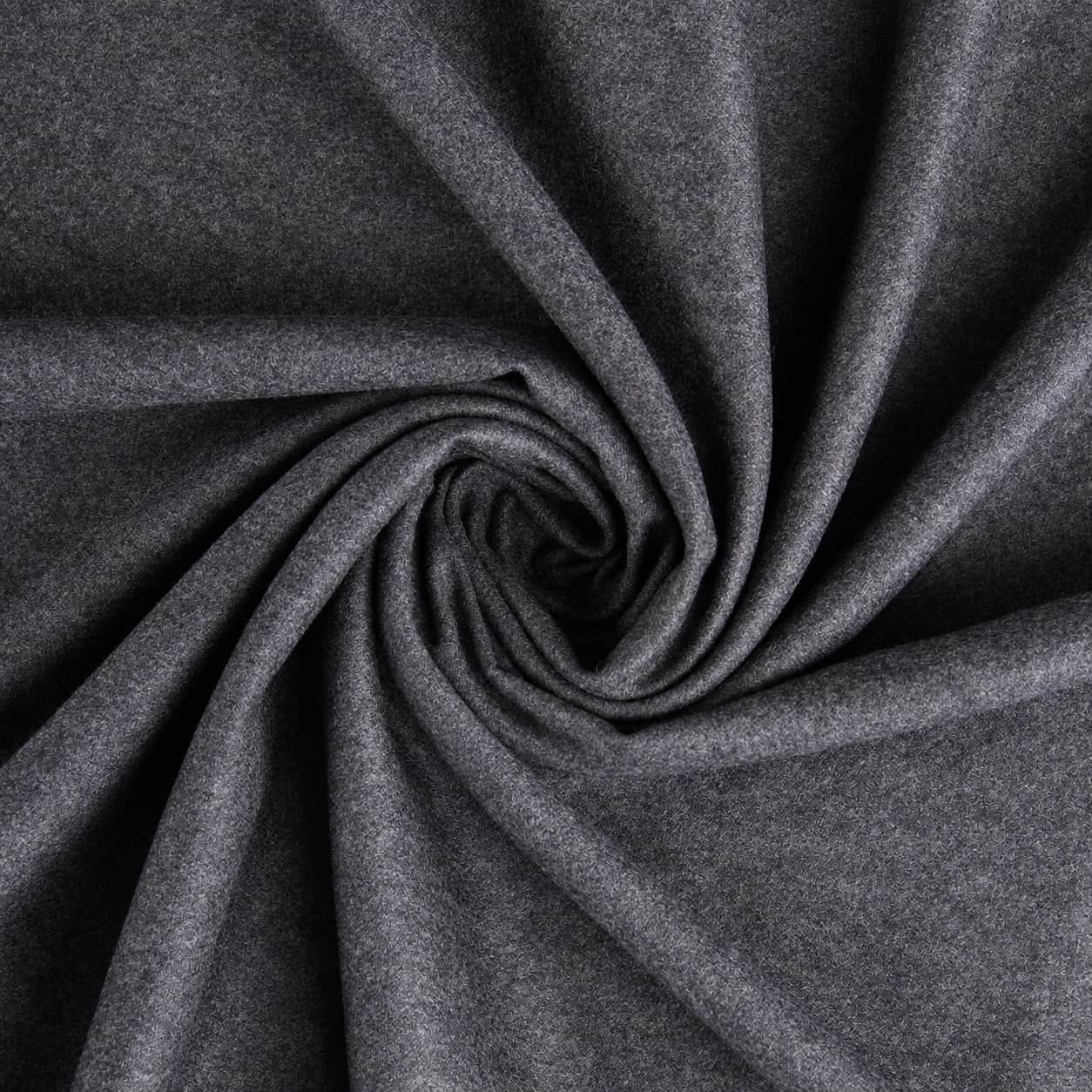
The knit polo is the polo shirt after it learned drape. It keeps the collar and placket but replaces sporty pique with sweater logic: gauge, yarn, rib, and handfeel. The result sits between knitwear and shirting, which is why it looks more expensive than a basic tee.
The Knit Polo / Sweater Polo -- "The knit polo is the polo shirt after it learned drape."
The knit polo grew out of mid-century leisurewear, golf, tennis, and fine-gauge knitwear. It borrows the ease of the polo shirt but uses sweater construction: rib hems, fully fashioned shaping, textured stitches, and softer yarns. Fashion returns to it whenever relaxed tailoring and quiet luxury are in demand.
Construction logic
A knit polo can be fully fashioned or cut-and-sewn from knitted panels. The collar, placket, rib hem, and sleeve opening must hold shape. Cable, rib, waffle, or fine-gauge jersey structures change cost and seasonality.
Commercial logic for creators
For creators, the knit polo is a premium-looking bridge product. It can elevate knitwear assortments without the heaviness of a sweater. The risks are collar collapse, placket stretching, and pilling.
FAQ
knitwear factories are preferred; standard jersey factories cannot usually make true sweater polos.
A knit polo or sweater polo is a collared knit top with a placket, made from sweater yarns or knitted fabric.
Common options include cotton knit, merino wool, wool/cashmere blends, viscose, linen knit, rib knit, and shell or horn buttons.. Choose based on target price, handfeel, durability, and care requirements.
Focus on knit collar, placket reinforcement, rib hem, fully fashioned shoulder, buttonholes, and stitch tension. These details usually determine whether the product feels credible or cheap.
Check collar shape, shoulder width, body length, placket tension, sleeve opening, and drape. Fit should be reviewed on the body type and use case the product is designed for, not only on a flat measurement sheet.
The main cost drivers are yarn quality, gauge, stitch texture, fully fashioned construction, buttons, and linking labour. Sampling time and rejection risk also increase cost when the fit is sensitive.
Request checks for pilling, collar recovery, placket stretching, seam linking, shrinkage, and colourfastness. For performance or workwear products, test under the real use condition rather than only visually.
Watch for wavy placket, limp collar, pilling, twisted body, and stretched hem. These issues should be caught at fit sample, pre-production sample, and bulk inspection stages.
affordable uses cotton/acrylic blends; premium uses cotton or merino; luxury uses cashmere blends or refined fine-gauge knitting.
Include gauge, yarn content, stitch type, collar dimensions, placket length, button spec, and shrinkage tolerance. Add reference photos and tolerance notes where fit or construction is easy to misread.
Use OEKO-TEX STANDARD 100 as a consumer-safety baseline where possible. Use GOTS for organic cotton, GRS for recycled polyester or nylon, RWS for responsible wool, and leather-specific or chemical compliance where relevant to the material.
reshape after washing and avoid high heat; wool and cashmere require gentle care.