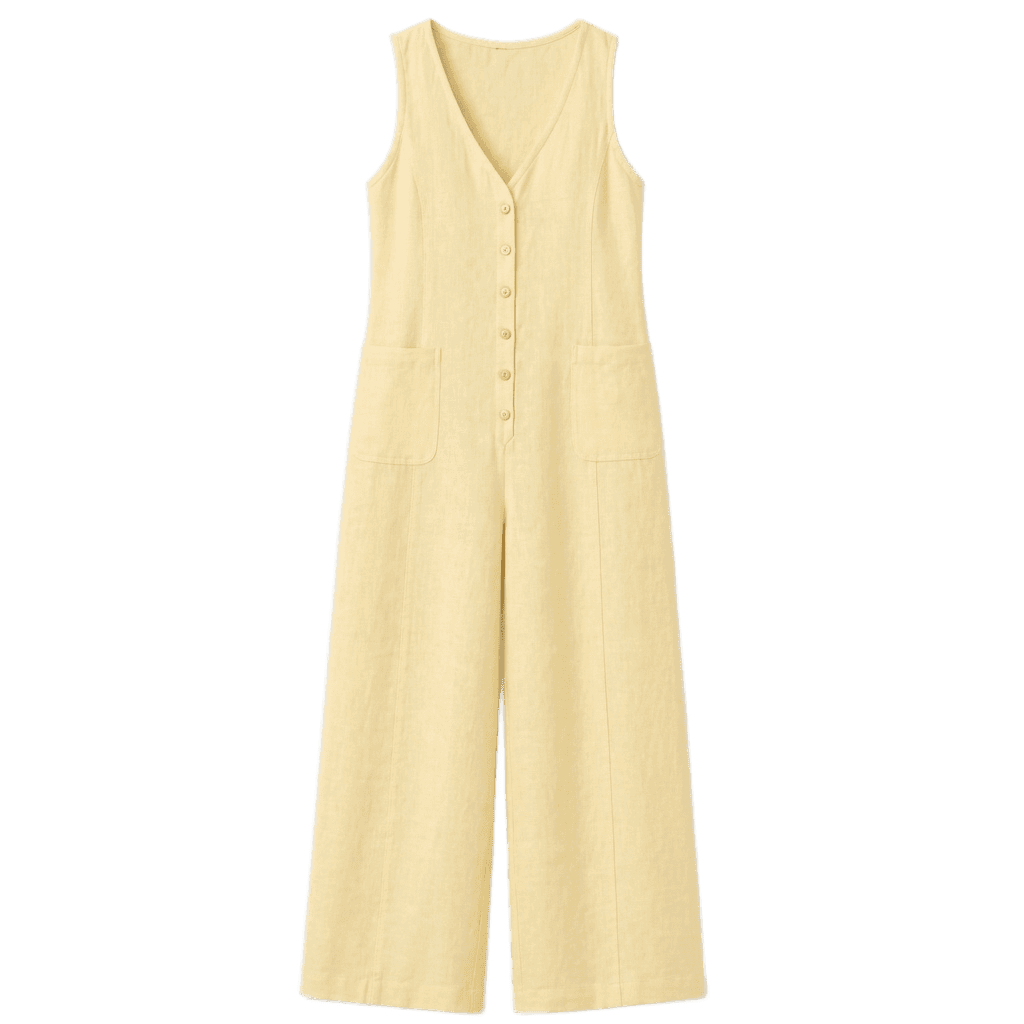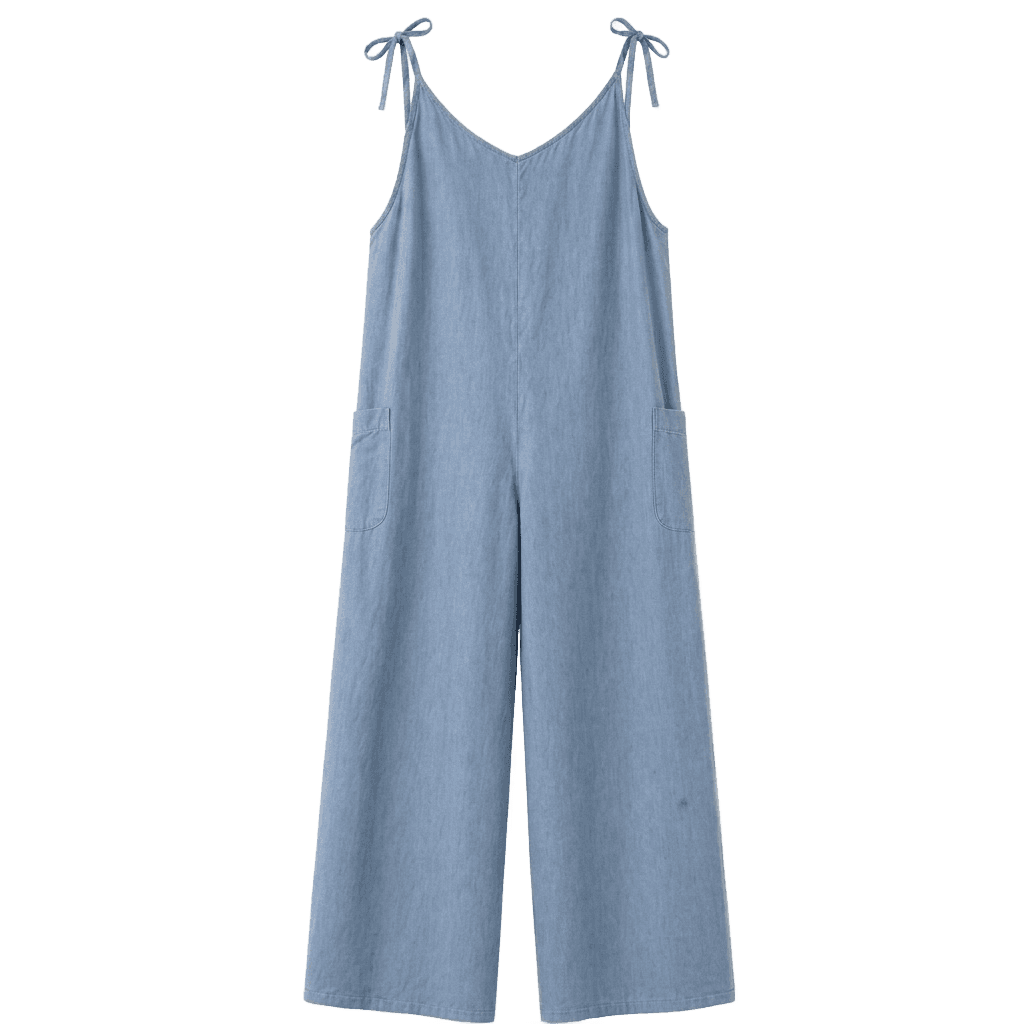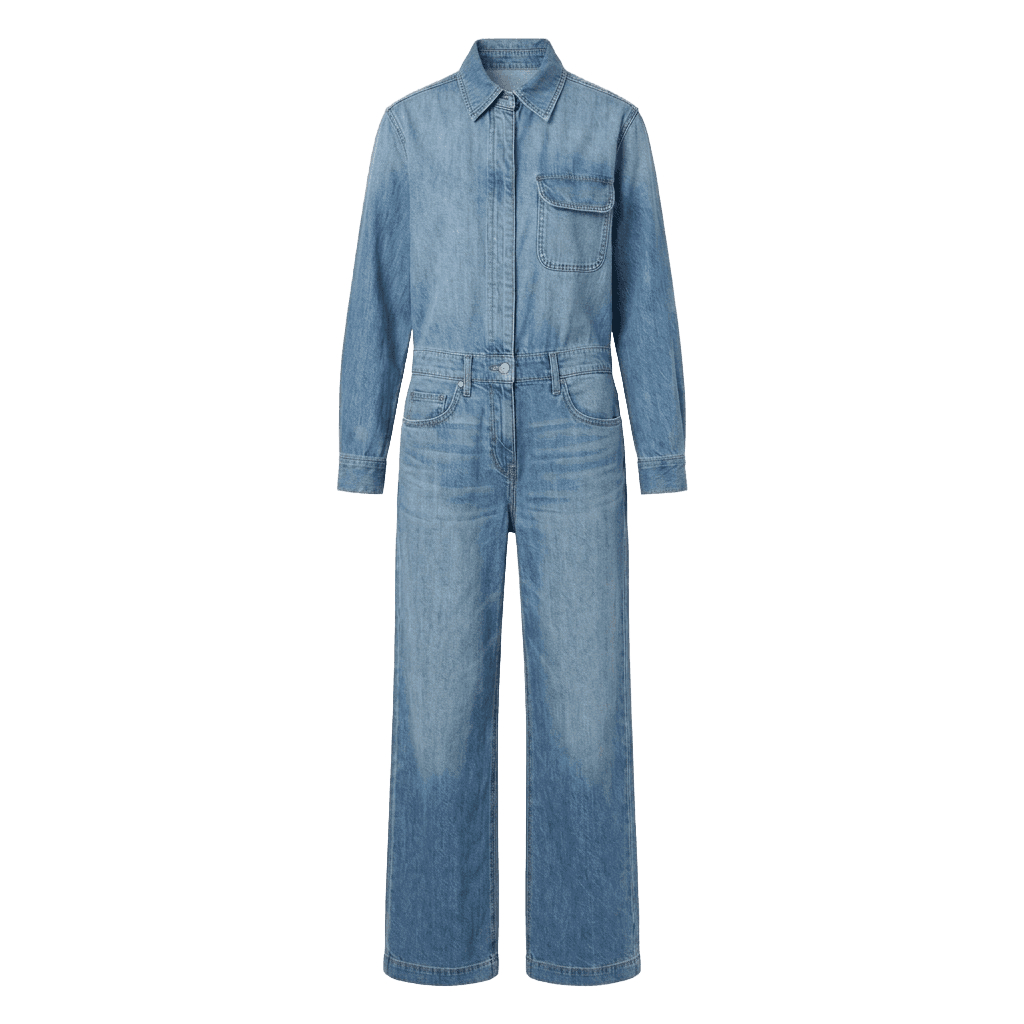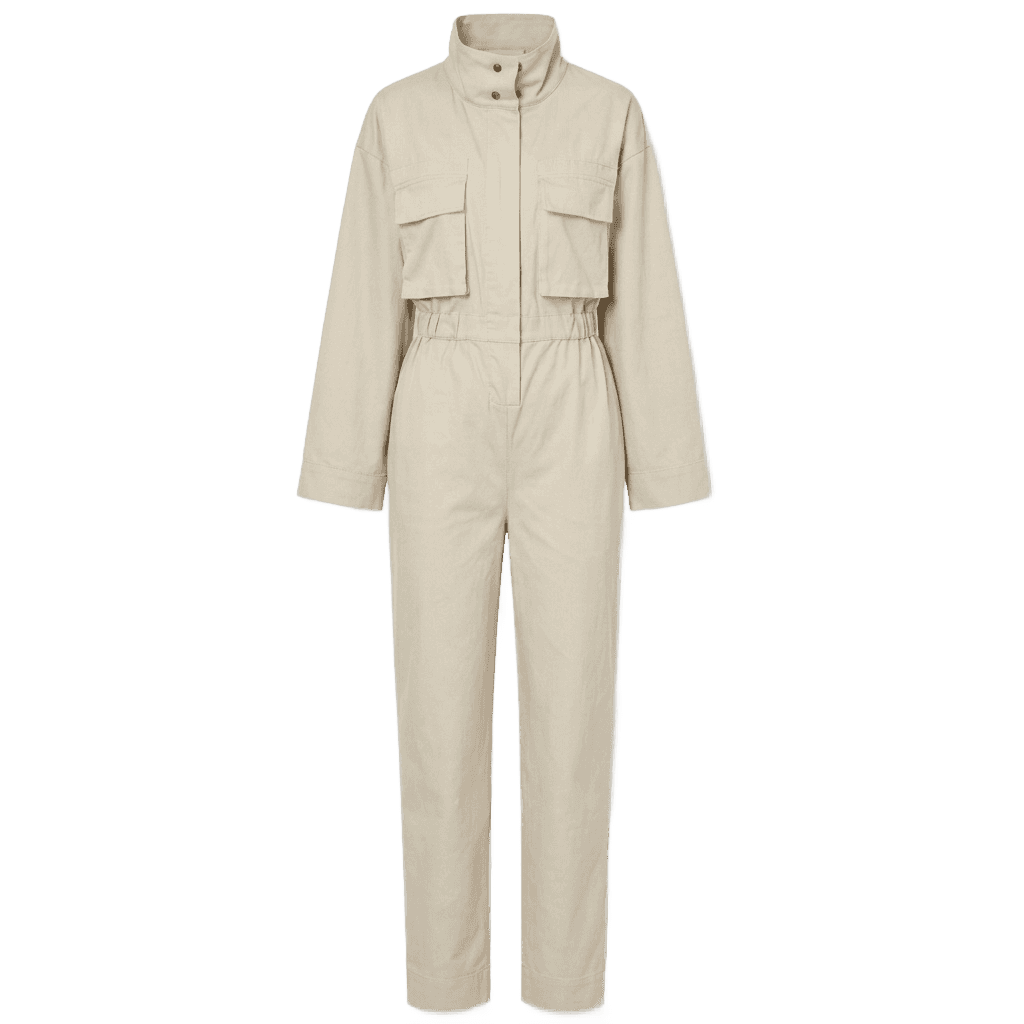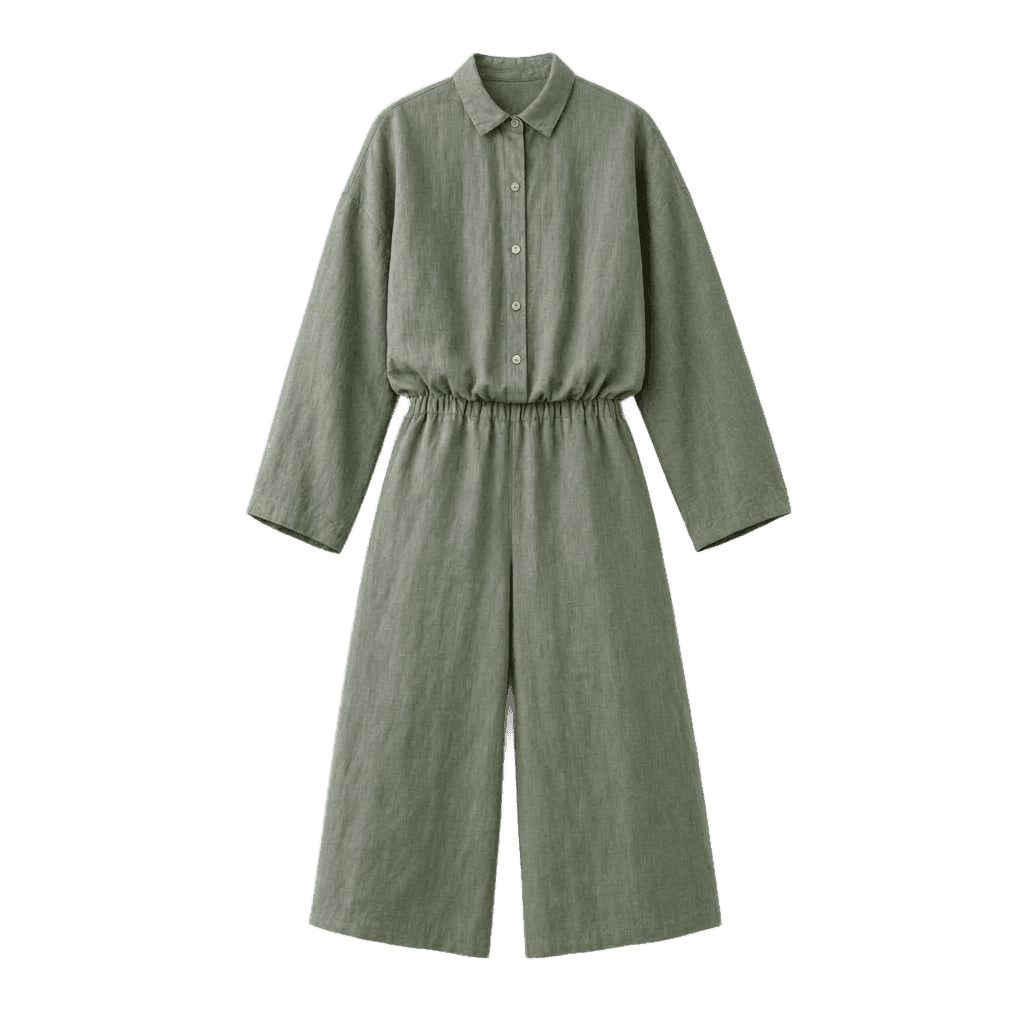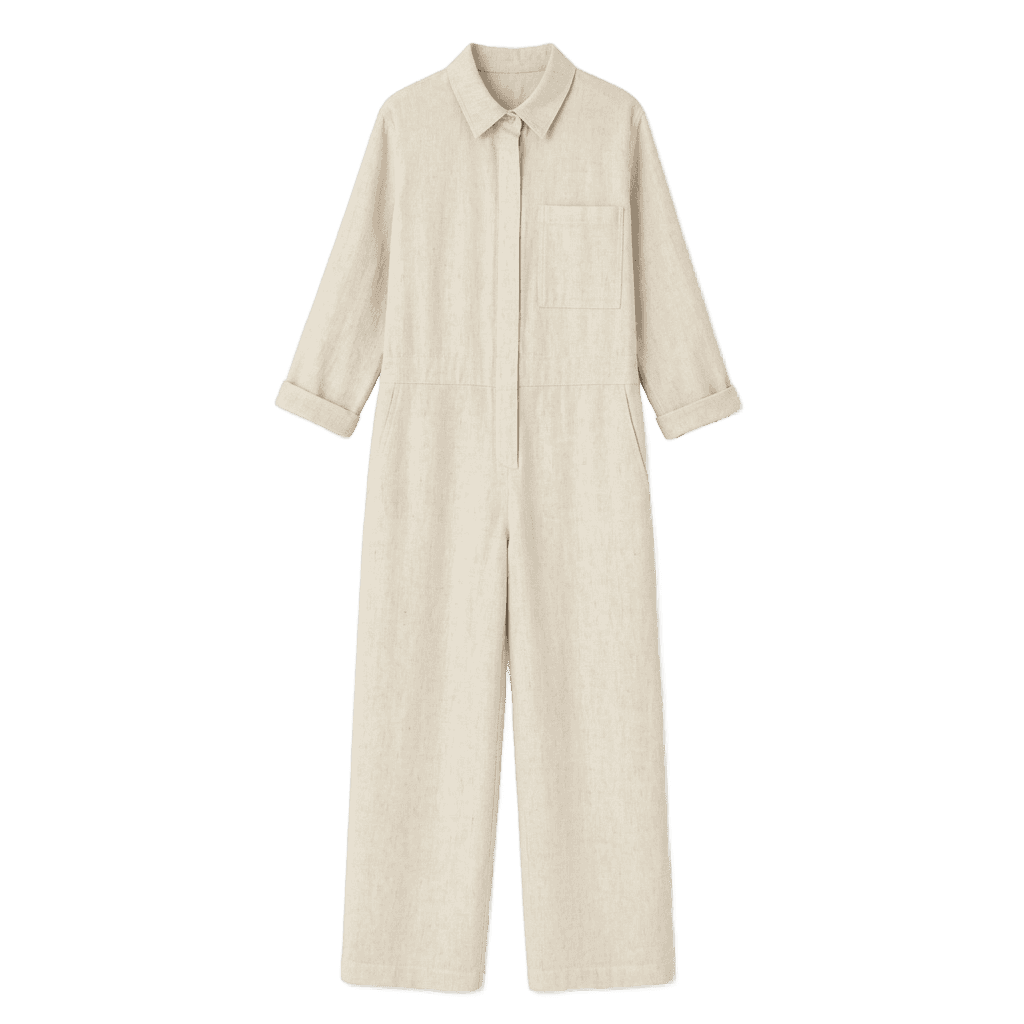
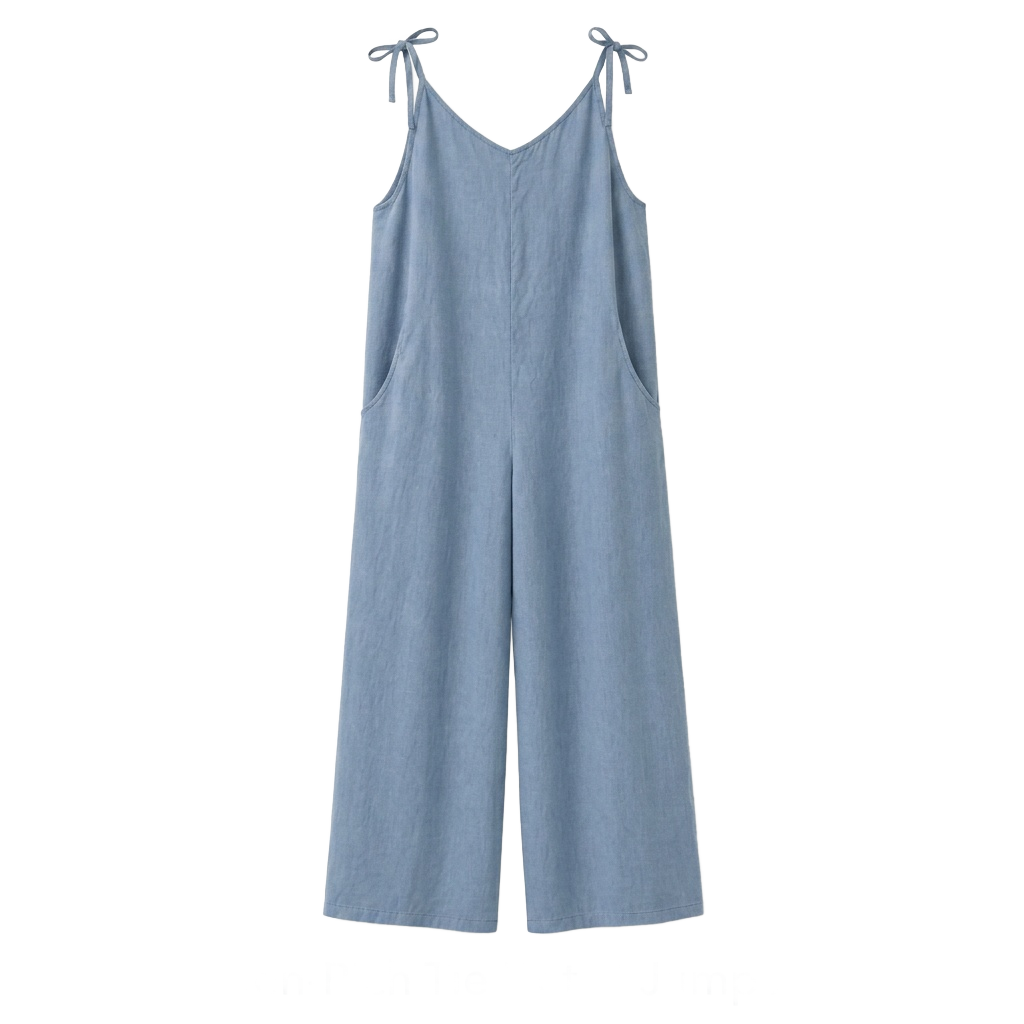
Linen-Rich Tie Detail Jumpsuit
Self-fabric tie straps fasten at the shoulders above a V-neck front and scoop back. The sleeveless bodice falls straight through the waist into wide legs that end at a cropped, straight hem. A concealed invisible zipper sits at the left side seam, and center front and back seams run the length of the pale blue garment.
The same factories that produce for houses like Celine and Balenciaga can produce this piece, directly to you
GABI
Make it yours
Material gradeMOQ 50
Colour
- Main Fabric: 100% Linen, 190gsm
- pocketing: 100% Cotton
- Machine wash at 30°C on a gentle cycle
- Wash separately for the first few washes — the finish may transfer
- Do not bleach
- Tumble dry on low heat
- Iron on a medium setting
- Fasten zips and hardware before washing
A guide based on the garment’s materials — always follow the care label on the item itself.
The jumpsuit is the all-in-one garment that refuses to stay in one category. It has been aviation gear, factory uniform, disco silhouette, utility fashion, and linen resort piece. The reason it keeps returning is simple: one garment creates a full look, and one fit mistake ruins the whole thing.
The Jumpsuit / Boiler Suit -- "The jumpsuit is the all-in-one garment that refuses to stay in one category."
The jumpsuit began as functional work and flight clothing, designed to cover the body in a single practical layer. Boiler suits protected industrial workers; flight suits gave pilots mobility and pocket access; later fashion versions kept the all-in-one drama while changing fabric and fit. The garment's history is utility first, glamour second.
Construction logic
A jumpsuit combines top, trouser, placket, waist shaping, and rise into one pattern. It requires more fit control than a dress because torso length, crotch depth, shoulder mobility, and leg shape all interact. Closures can be zip, button front, wrap, or tie-shoulder, and each affects cost and wearability.
Commercial logic for creators
For creators, the jumpsuit is a high-impact product with higher sampling risk. It photographs well, simplifies styling, and can command premium pricing, but grading must be tested across heights. A good jumpsuit sells as a complete outfit; a bad one fails on torso fit.
FAQ
woven factories with dress and trouser capability are preferred; utility jumpsuits need workwear machinery.
A jumpsuit is a one-piece garment combining bodice and trouser into a single fitted or relaxed silhouette.
Common options include cotton twill, denim, linen, viscose, Tencel, performance knit, and lightweight suiting fabrics.. Choose based on target price, handfeel, durability, and care requirements.
Focus on front closures, waist seams or elastic channels, crotch and rise shaping, pocket construction, and reinforced stress points. These details usually determine whether the product feels credible or cheap.
Check torso length, shoulder reach, crotch depth, waist position, seat allowance, and leg shape. Fit should be reviewed on the body type and use case the product is designed for, not only on a flat measurement sheet.
The main cost drivers are fabric consumption, closure length, pocket count, waist detailing, lining, and the number of fit corrections needed. Sampling time and rejection risk also increase cost when the fit is sensitive.
Request checks for zip smoothness, seam strength at crotch and armhole, pocket balance, shrinkage, and post-wash leg twist. For performance or workwear products, test under the real use condition rather than only visually.
Watch for short torso, pulling at the seat, gaping placket, difficult entry, and uneven waist seam. These issues should be caught at fit sample, pre-production sample, and bulk inspection stages.
affordable uses cotton twill or simple linen blends; premium adds better drape and hardware; luxury uses refined fabric, lining, and tailoring details.
Include body length, rise, inseam, closure type, pocket map, waist treatment, and grading notes for petite/tall fit. Add reference photos and tolerance notes where fit or construction is easy to misread.
Use OEKO-TEX STANDARD 100 as a consumer-safety baseline where possible. Use GOTS for organic cotton, GRS for recycled polyester or nylon, RWS for responsible wool, and leather-specific or chemical compliance where relevant to the material.
pre-shrunk fabric and clear wash testing are important because shrinkage affects both torso and inseam.