Discover with
Encyclopedia
Explore an extensive collection of garments curated by the community, featuring tailored filters and distinctive viewpoints.
Discover with
Encyclopedia
Explore an extensive collection of garments curated by the community, featuring tailored filters and distinctive viewpoints.

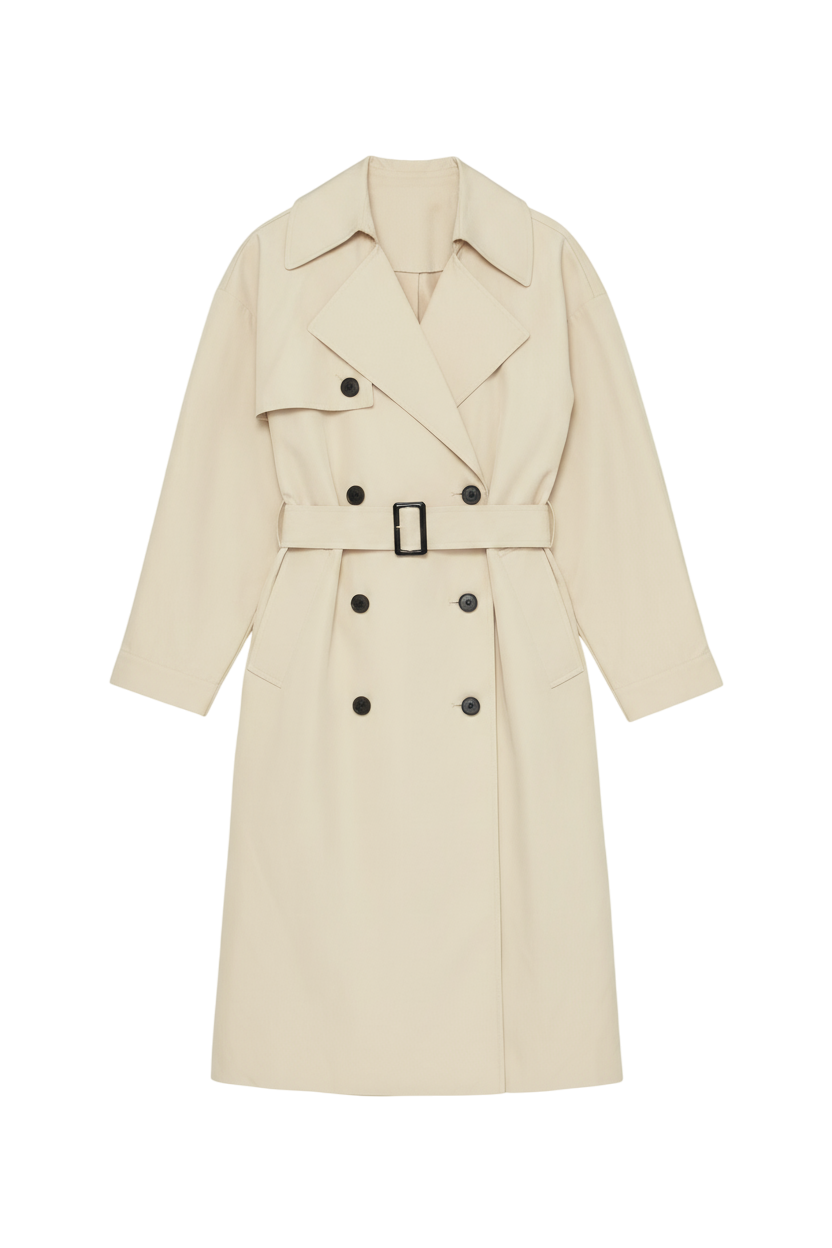
The same factories that produce for houses like Celine and Balenciaga can produce this piece, directly to you
GABI
Online now
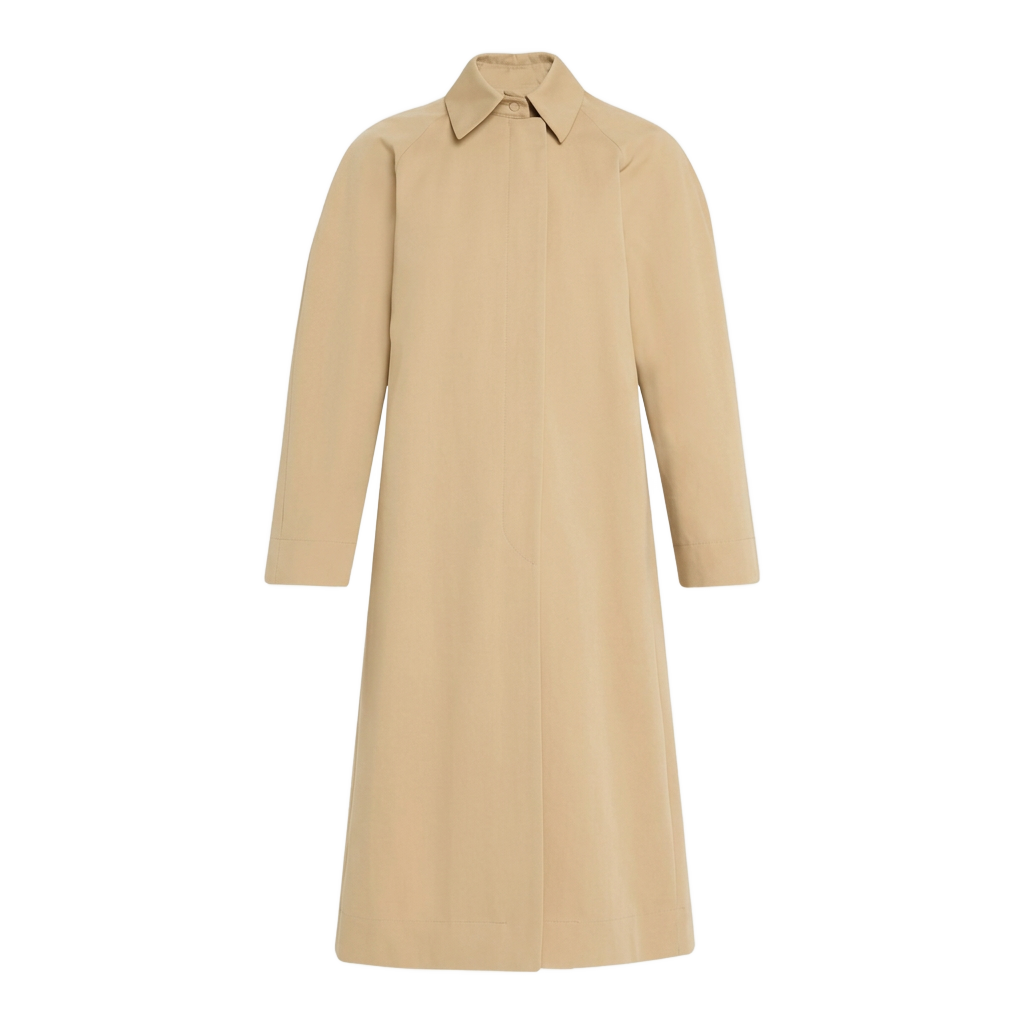
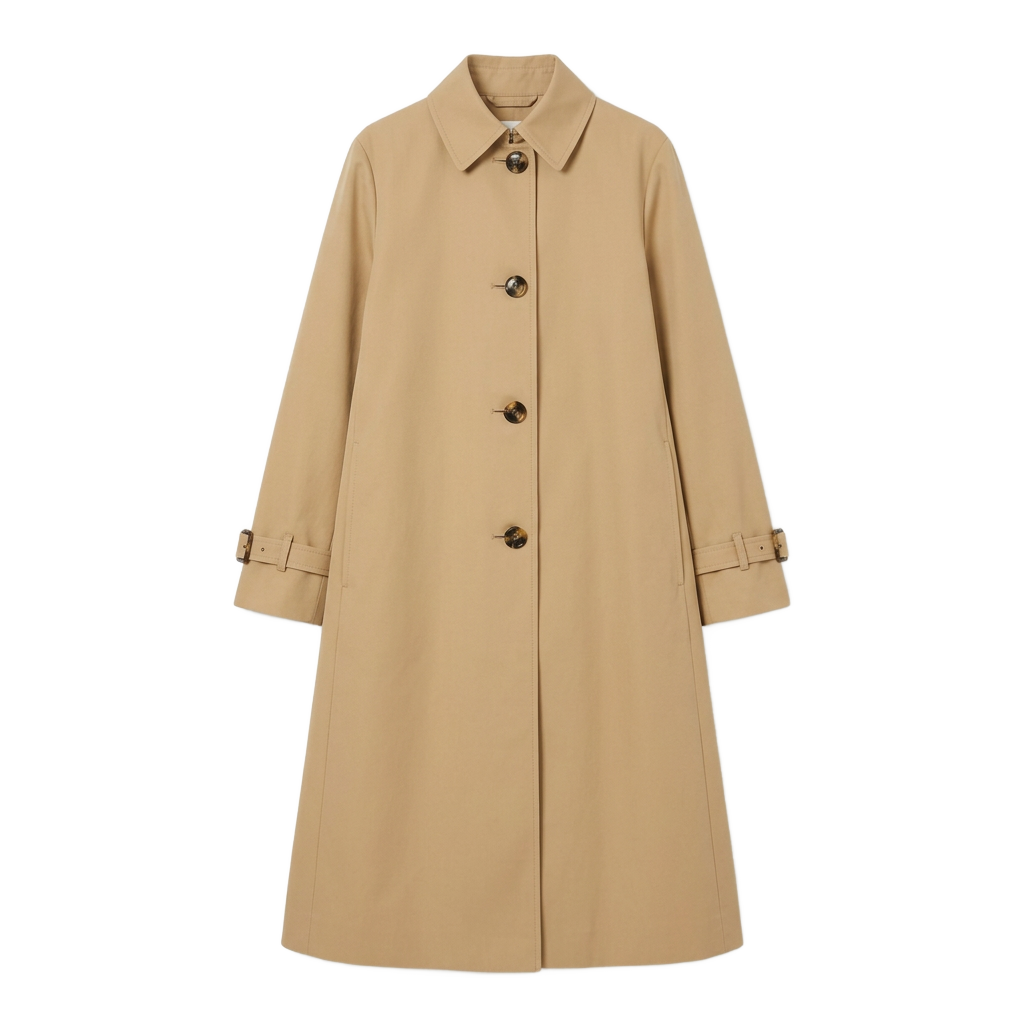
Trench Coat
The same factories that produce for houses like Celine and Balenciaga can produce this piece, directly to you
GABI
Online now
Trench Coat
In 1879, Thomas Burberry invented a fabric he called gabardine — tightly woven, water-resistant, breathable. In 1914, the British War Office commissioned him to design a coat for officers in the trenches of the Western Front. The coat had a storm flap, epaulettes, a D-ring belt, and a full lining. It became the most copied garment in fashion history. The trench coat has been in continuous production for 110 years. Humphrey Bogart wore one. Audrey Hepburn wore one. Kanye West wore one to the Met Gala. You cannot improve on the original.
The Story of the Trench Coat — "The Coat That Has Never Gone Out of Fashion"
The trench coat is the most documented garment in fashion history, and the most counterintuitive. It was designed for one of the most brutal environments in modern warfare — the Western Front trenches of World War One — and it became the most enduring symbol of civilian elegance in the 20th century. Nothing about this trajectory was predictable, and everything about it was structural.
A trench coat costs between $76 and $389 per unit landed — the widest cost range in the outerwear family. An affordable cotton/poly gabardine trench with fusible interlining and taffeta lining from China lands at approximately $76. A premium GOTS cotton gabardine trench with structured interlining and cupro lining from Turkey lands at approximately $161. A luxury Egyptian cotton gabardine trench with canvas interlining and detachable wool lining from Italy lands at approximately $389. The trench coat has higher landed costs than any other garment in Family 04 due to its 14-plus component construction, full lining, structured interlining, and higher fabric consumption.
Gabardine is a tightly woven twill fabric — typically a 2×2 right-hand twill — in which the yarn is set very closely together, producing a dense, smooth surface with a distinctive diagonal rib. The tight weave makes the fabric naturally water-resistant without surface treatment. Thomas Burberry patented gabardine in 1879 after discovering that waterproofing the yarn before weaving, rather than treating the finished fabric, produced a breathable waterproofing that previous rubberised fabrics could not match. Cotton gabardine is the classic trench coat fabric. Polyester and cotton/poly blends are the affordable alternatives.
Interlining is the structural layer applied between the outer shell fabric and the lining in each panel of the coat. It gives the garment its body, its shape retention, and its ability to hold the lapels, collar, and front panels flat and in the correct position. Without interlining, a trench coat will not hold its shape — the lapels will curl, the collar will collapse, and the front panels will buckle. There are three main types: soft fusible interlining, structured fusible interlining, and canvas interlining. Interlining specification must be in the tech pack before production begins — it cannot be retrofitted.
Thomas Burberry patented gabardine in 1879 — a tightly woven twill fabric using yarn that had been waterproofed before weaving, rather than being treated with a surface coating after construction. The result was a fabric that was genuinely water-resistant without the suffocating rubberised surfaces of mackintosh coats, breathable because the weave itself expelled moisture rather than trapping it, and durable enough for outdoor and sporting use. Burberry had initially developed the fabric for outdoor sports — shooting, fishing, golf — in the English climate where waterproofing was a practical necessity rather than a luxury.
The military commission that transformed the coat arrived in 1914. The British War Office needed an officer's coat suitable for the Western Front: waterproof, warm enough for trench conditions, practical enough to allow full military movement, and capable of holding rank insignia. Burberry designed what he called a tielocken coat — a precursor — and then the formal trench coat. The design brief was exhaustively functional. The storm flap across the right shoulder directed rain away from the body. The gun flap reinforced the right shoulder for rifle recoil. The epaulettes allowed rank insignia to be attached. The D-ring belt carried equipment. The deep pockets held maps and ammunition. The full lining — typically a detachable wool lining in the military original — provided warmth.
Every feature of the trench coat was originally a technical solution to a specific military problem. The double-breasted button system provided redundancy — if one row of buttons was damaged, the other secured the coat. The throat latch buttoned the collar closed against wind and rain. The buckled sleeve straps prevented water from running into the cuffs. The rear vent allowed movement on horseback. Aquascutum and Burberry developed rival officer-class trench coats simultaneously, and the garment's structural logic was fixed early.
The coat's civilian transformation happened almost immediately after the Armistice of 1918. Officers returning from the front brought their trench coats with them. The garment's associations — with the officer class, with military service, with the outdoors tradition of the English upper class — transferred directly to civilian use. Through the 1920s and 1930s, the trench coat became the defining overcoat of the professional man, the journalist, the detective, and the intellectual.
Hollywood codified the trench coat's cultural meaning in ways that proved permanent. Humphrey Bogart's Rick in Casablanca, Audrey Hepburn in Breakfast at Tiffany's, and the noir detective archetype all fixed the coat's meanings beyond weather protection: sophistication, ambiguity, intelligence, and a particular kind of effortless elegance.
Burberry's trajectory through the late 20th and early 21st century is a case study in luxury brand management. The Nova check lining became one of the most recognised patterns in luxury fashion and one of the most copied. The brand's later creative resets preserved the trench coat's recognisable architecture while making it contemporary through oversized silhouettes and deconstructed runway treatments.
The contemporary trench coat market spans an extraordinary price range. A fast fashion polyester gabardine trench can retail around £60. A premium high-street cotton gabardine trench can retail at £250–400. A Burberry Heritage Trench in proprietary cotton gabardine can retail at £1,500–2,500. A bespoke trench from a Savile Row tailor can reach £4,000–8,000. The silhouette is constant; the difference is fabric, interlining, construction method, and labour quality.
For independent creators, the trench coat is the most ambitious garment in the outerwear family and one of the most rewarding when executed well. It has a 110-year design heritage, a fully resolved silhouette, and a commercial positioning that spans every market segment. The manufacturing challenge is real: it requires a structured outerwear factory, a pattern maker who understands internal coat architecture, and a CMT budget that reflects a 14-plus component build.
The storm system refers to the weather-protection components that define the heritage trench coat silhouette: the storm flap, gun flap, epaulettes, throat latch, and sleeve buckle straps. These were all functional military-origin details from the 1914 War Office brief. In contemporary fashion versions, some are omitted to create a cleaner silhouette. In heritage and premium positioning, all components should be present and correctly executed.
Cotton gabardine is the classic choice — naturally water-resistant, breathable, and DWR-ready. At affordable tier, cotton/poly gabardine offers lower cost and better wrinkle resistance. At premium tier, GOTS-certified cotton gabardine with sanforized preshrink treatment is the responsible specification. At luxury tier, Egyptian or Pima long-staple cotton gabardine is the Burberry-adjacent reference. Waxed cotton is an alternative for heritage positioning but cannot be machine washed. Polyester gabardine is the cost-down option.
Polyester taffeta is the commercial default at affordable tier. Cupro or Bemberg is the premium standard because it feels more breathable and reduces static over tailored clothing. Heritage check or plaid lining is the key brand-story opportunity, though custom woven checks usually require 300–500m minimum order. A detachable quilted or wool lining extends the coat's seasonal range and reflects the military original.
Fusible interlining is a woven or non-woven fabric with heat-activated adhesive that bonds to the shell fabric when pressed. It is faster and cheaper and is the commercial standard. Canvas interlining is a woven fabric applied without adhesive and pad-stitched in the traditional tailoring method. Canvas allows the coat to move more naturally and mould to the wearer over time. It requires a luxury-tier factory with structured outerwear tailoring capability.
Sanforization is a mechanical preshrinking process applied to cotton fabric before cutting. The fabric is dampened, stretched, and compressed to remove latent shrinkage. Without sanforization, a cotton gabardine trench can shrink 3–5% in the first wash, which is a major dimensional change at coat length. It is a non-negotiable specification for any machine-washable cotton gabardine trench.
A full heritage trench coat has 14 or more components: front panels, back panel, sleeves, shoulder yoke, storm flap, gun flap, epaulettes, collar and stand, full lining sections, interlining, D-ring belt with loops, and sleeve buckle straps. This high component count is the main reason trench coat CMT is much higher than bomber, coach, or puffer construction.
China has the largest structured outerwear capability and the broadest gabardine sourcing. Turkey is strong for mid-premium production and EU delivery. Portugal and Italy are the premium European options, with Italy strongest for canvas-interlined luxury tailoring. The trench coat requires a factory with genuine structured outerwear capability, so always request previous structured coat samples before committing.
A double-breasted trench coat usually requires 10 to 14 buttons. Resin is the affordable default. Corozo is the premium standard. Horn is the luxury reference. Custom moulded or die-cast branded buttons are available at premium and luxury tiers. Specify diameter, colour, and shank type in the tech pack — button quality is one of the most visible quality signals after lapel roll.
Trench coats use HS code 6201 for men's and unisex woven outerwear and 6202 for women's woven outerwear. Knit outerwear uses 6101/6102. Leather outerwear uses 4203. The full-length coat does not use a different woven-outerwear heading from a jacket-length garment.