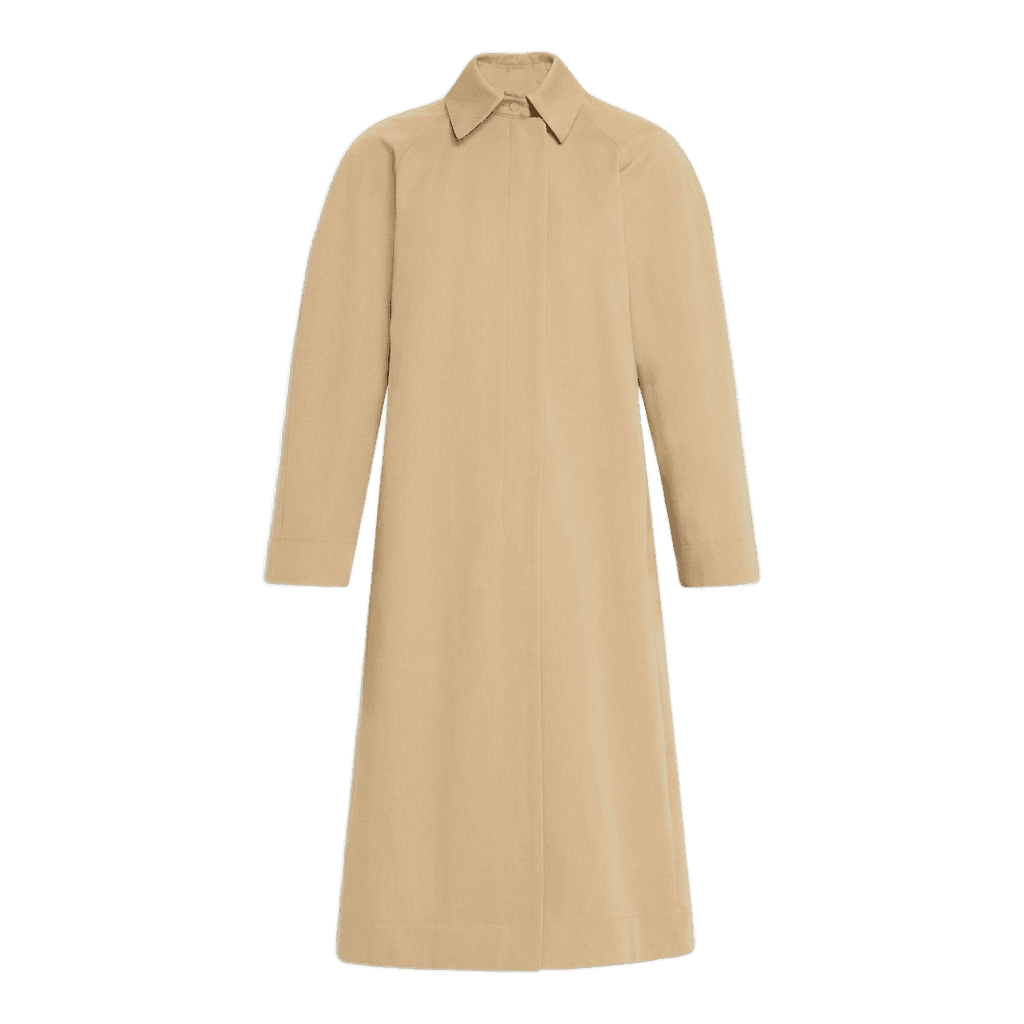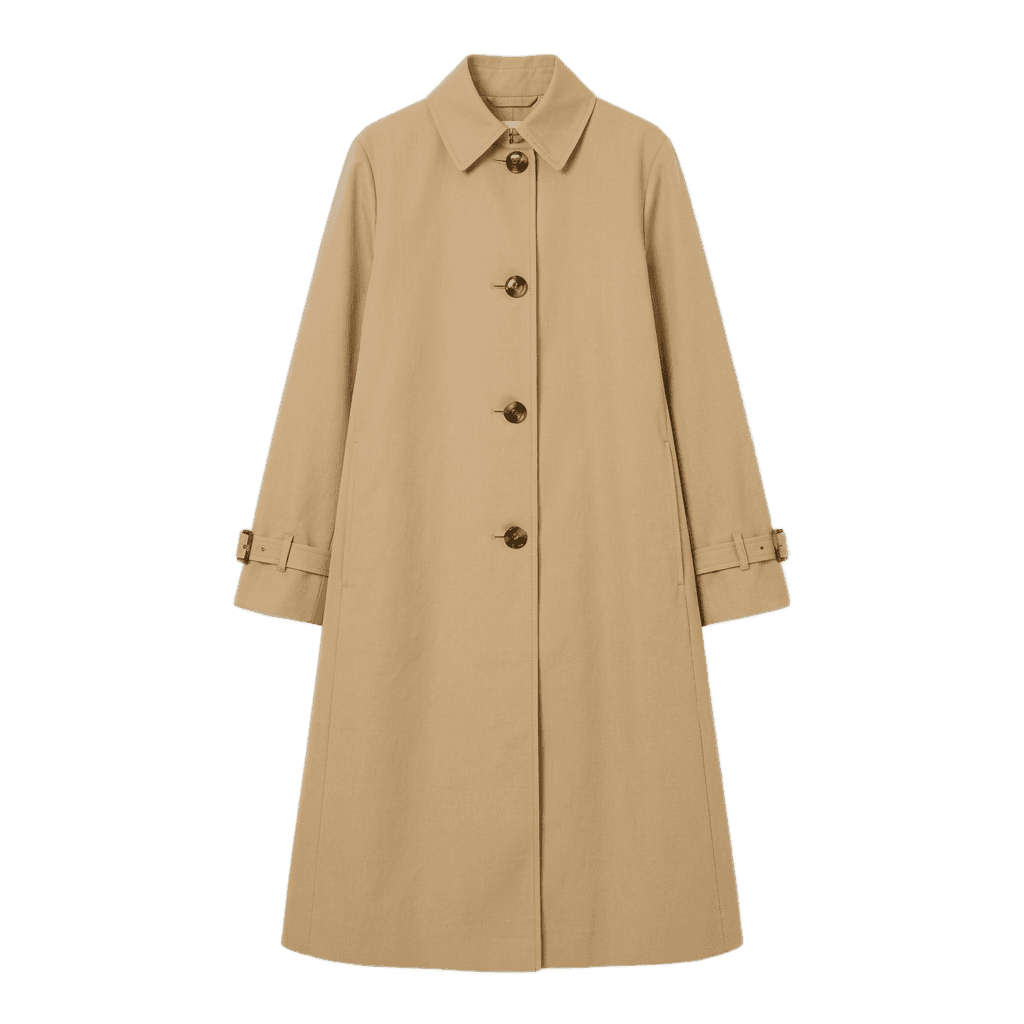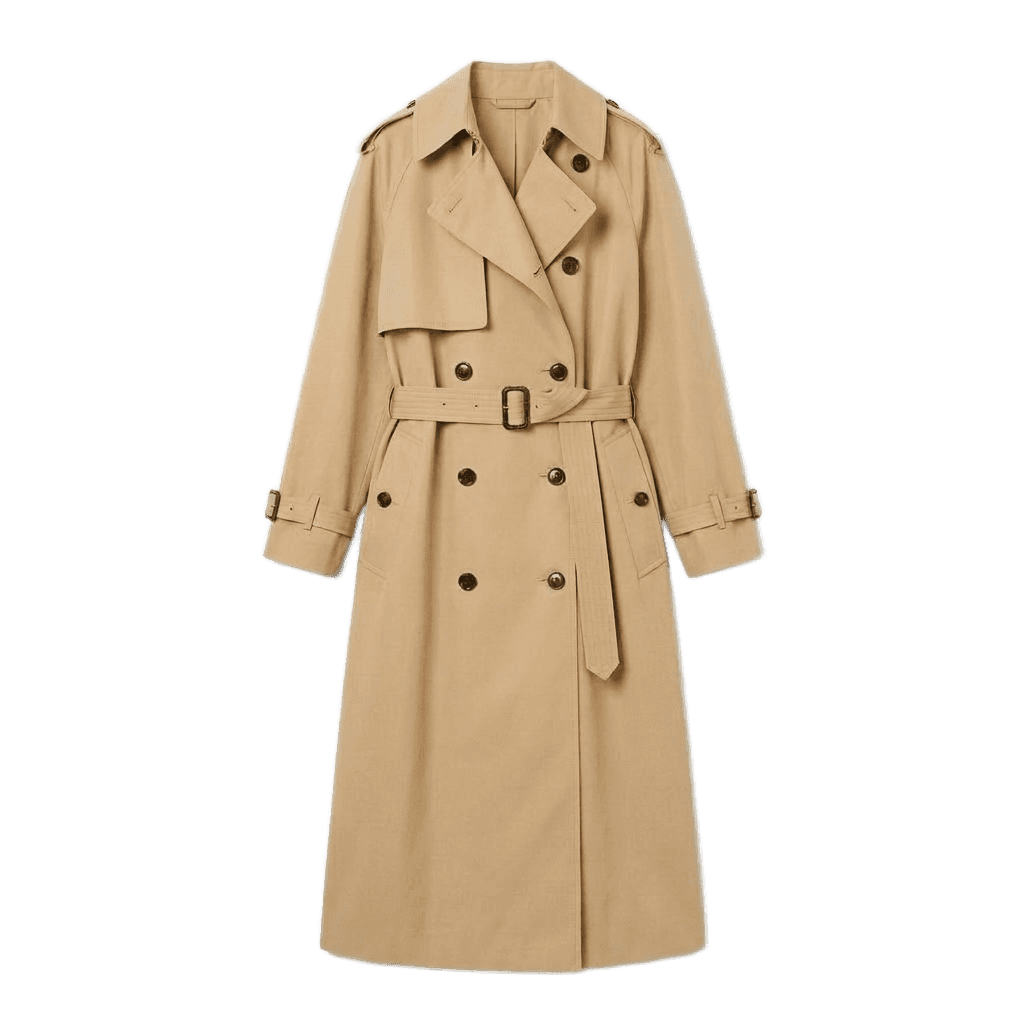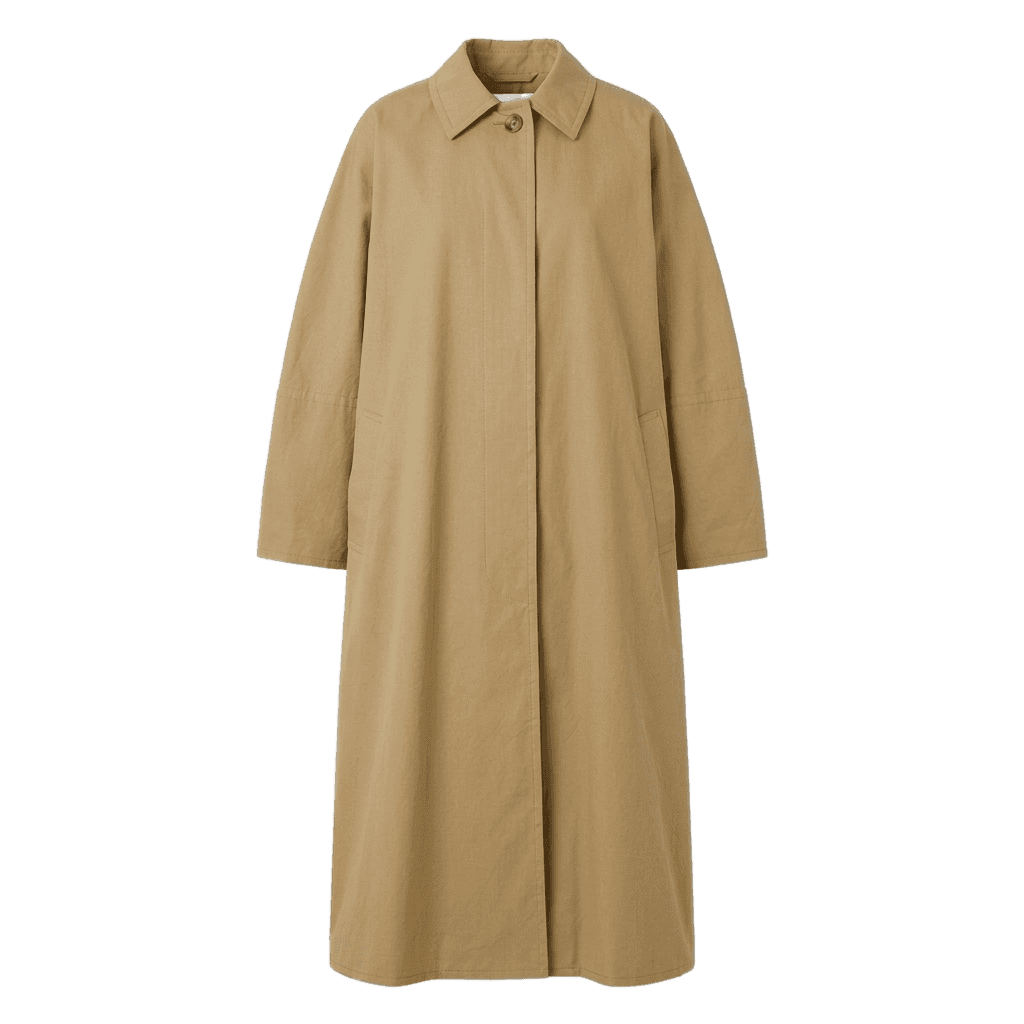
Oversized Cocoon Cape Coat
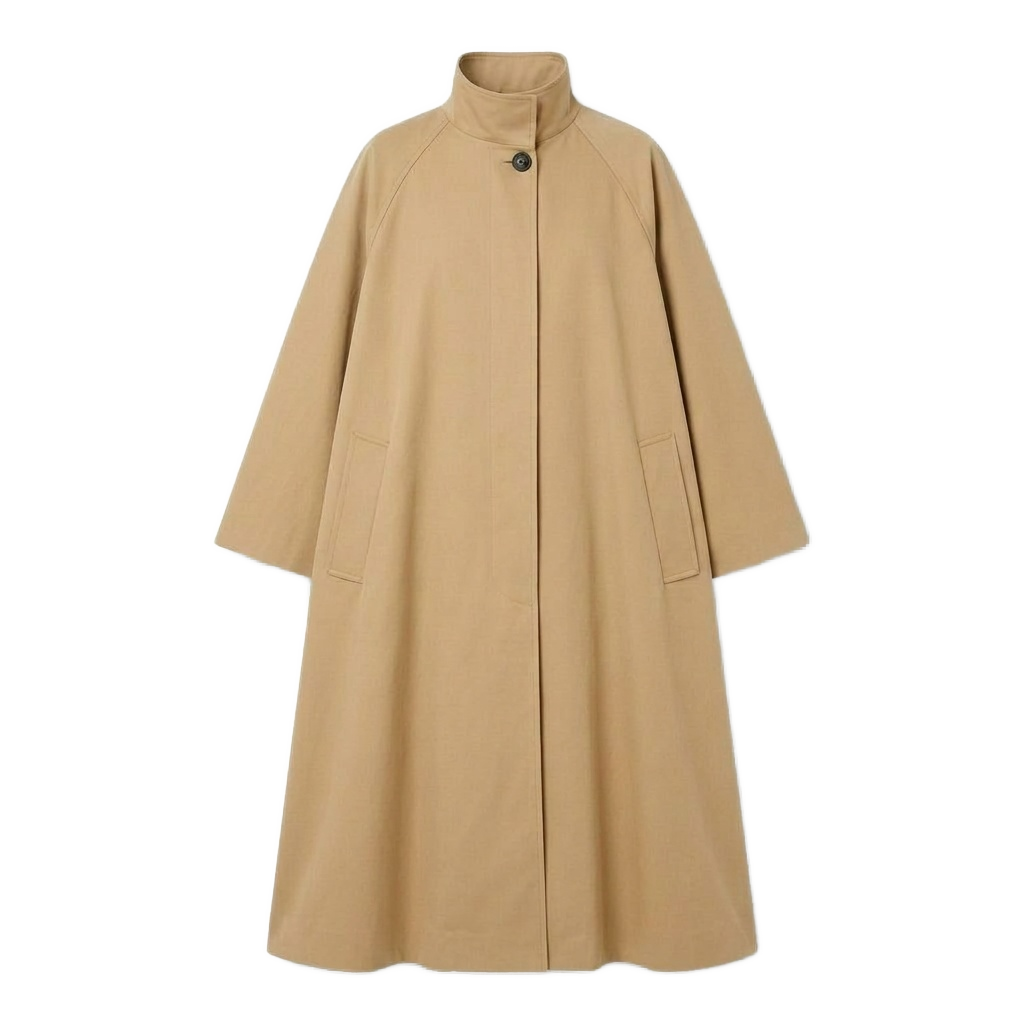
A longline A-line cocoon shape that widens steadily from the stand collar to a straight, sweeping hem, with no shoulder seam and wide raglan sleeves ending at three-quarter length in clean blind-hem cuffs. A single horn button sits at the collar above a hidden center-front placket, and angled welt pockets are set into the front side panels.
The same factories that produce for houses like Celine and Balenciaga can produce this piece, directly to you
GABI
Make it yours
Material gradeMOQ 50
Colour
- Main Fabric: 80% Wool / 20% Nylon, 450gsm
- Lining: 100% Cupro
- Dry clean only
- Do not bleach
- Do not tumble dry
- Dry flat to keep its shape
- Iron on a low setting
A guide based on the garment’s materials — always follow the care label on the item itself.
Fabrics
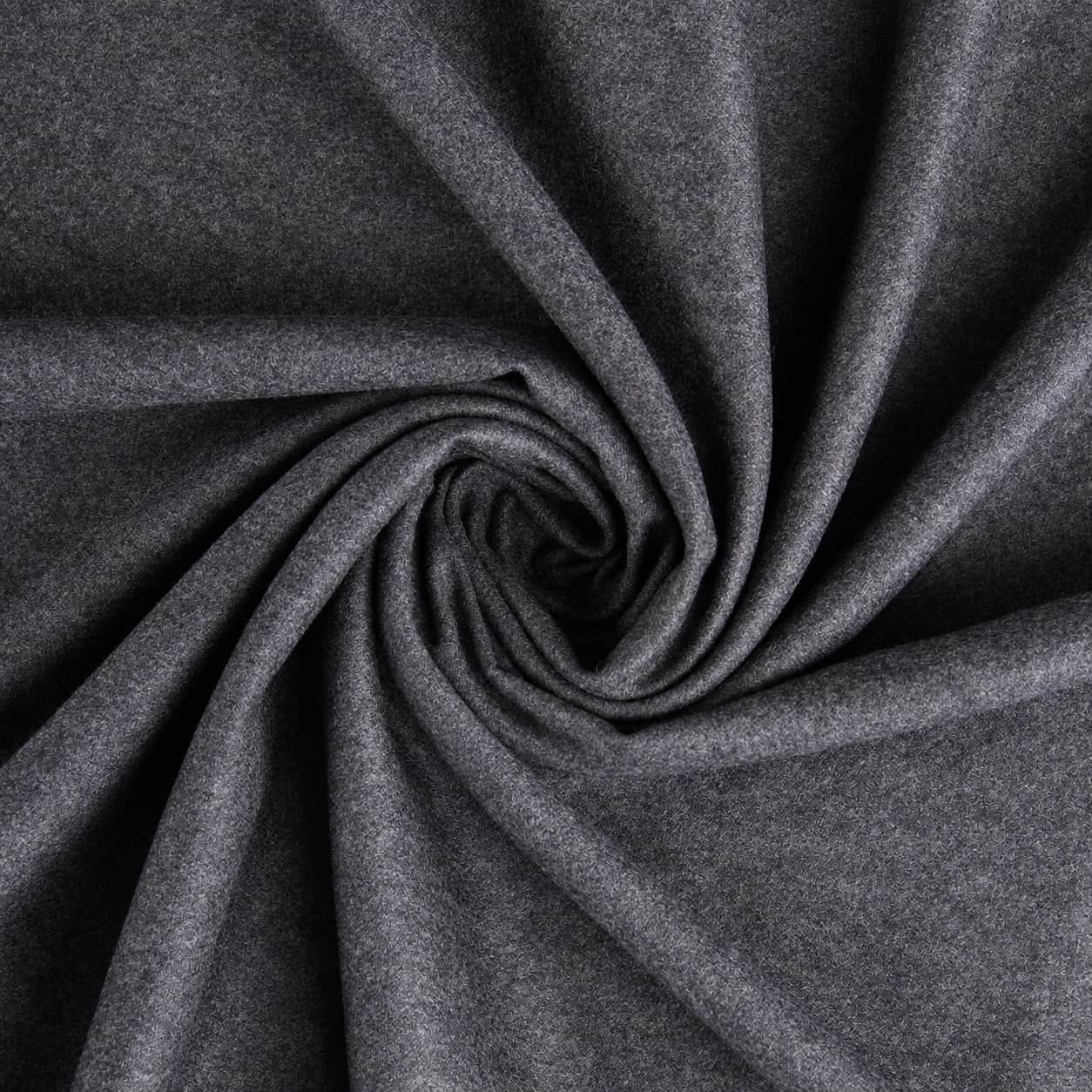
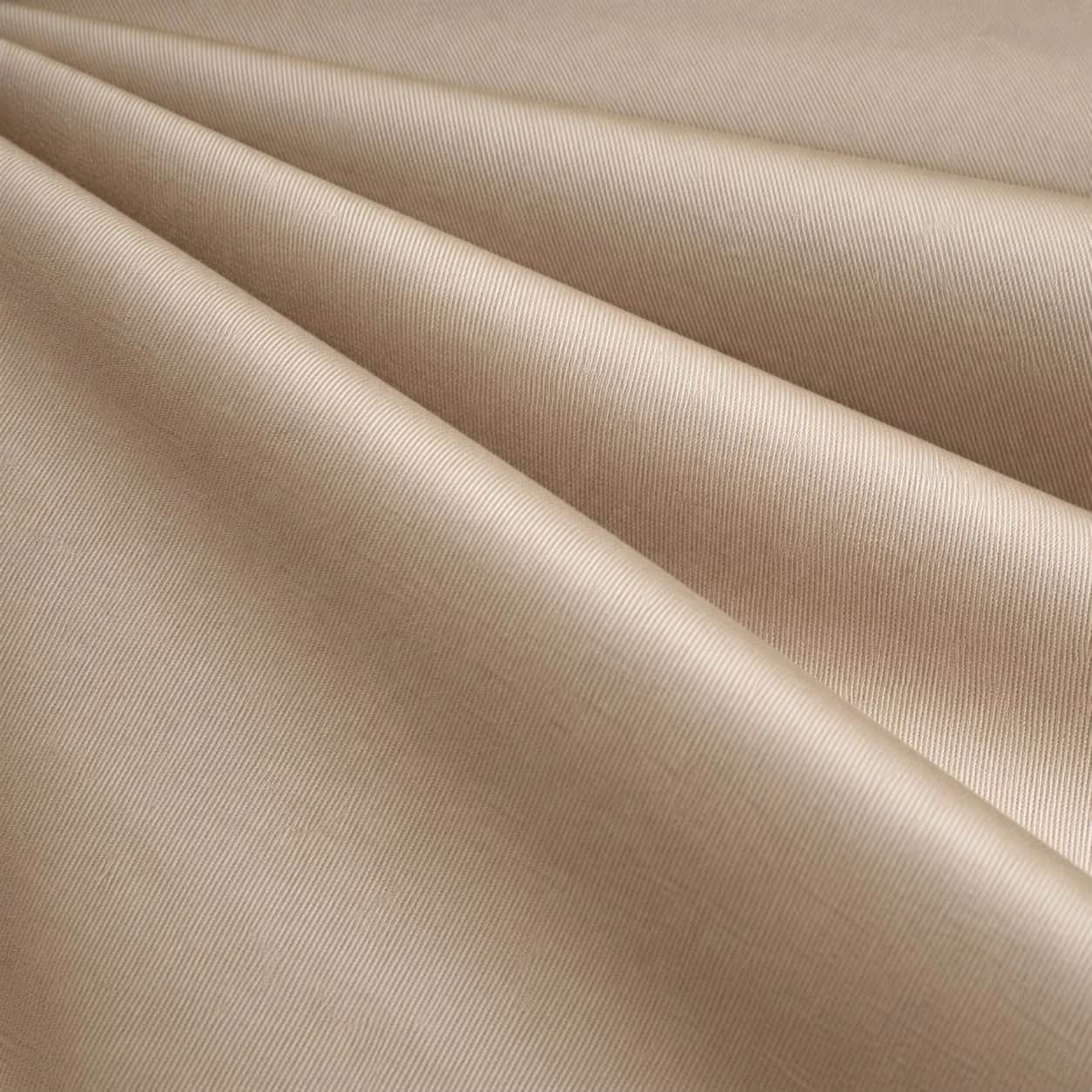
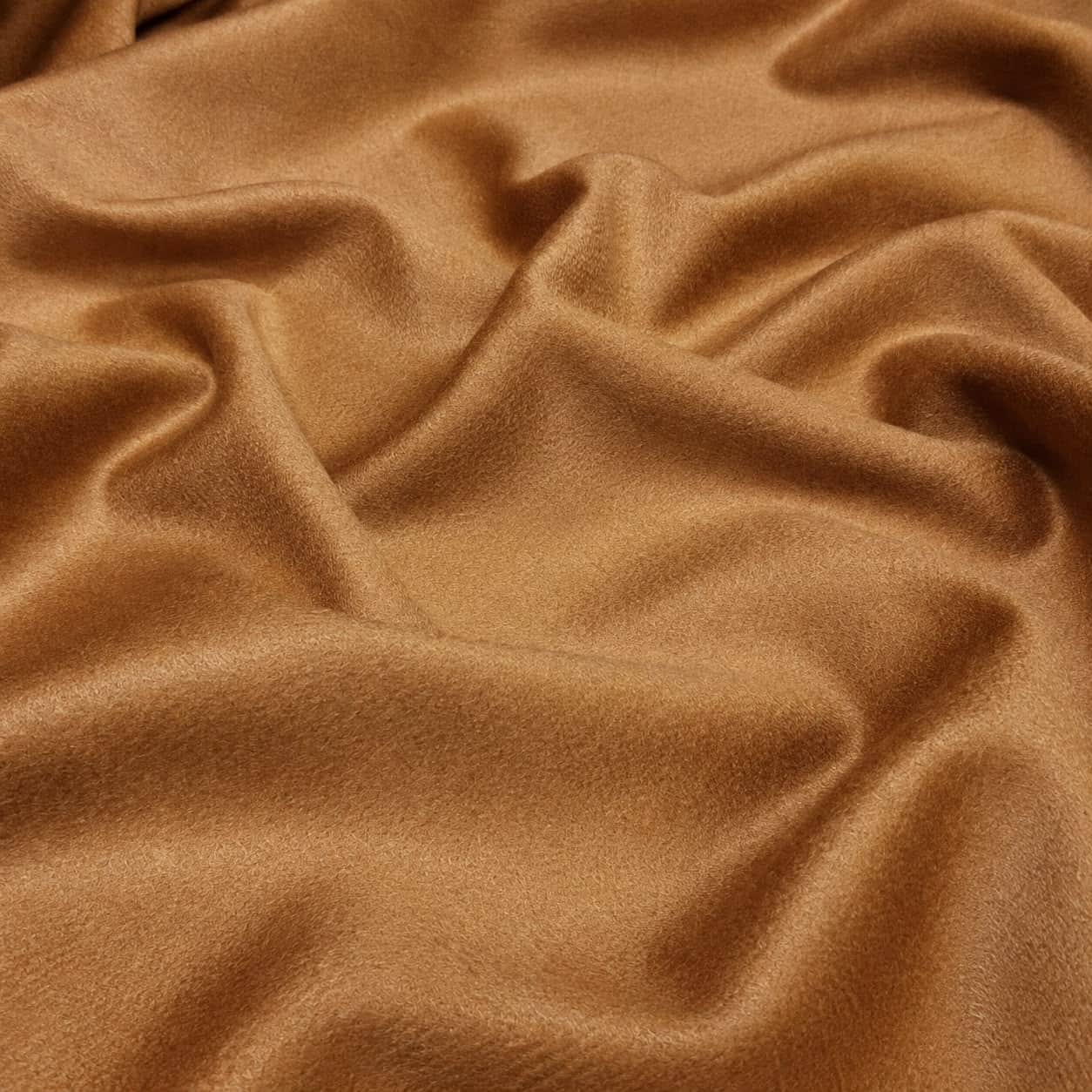
The Max Mara 101801 coat has been in production since 1981. Same pattern. Same camel hair fabric. Woven at Mantero in Como. It costs £3,200. Every ten years or so, someone declares the wool coat dead. Every winter it sells out. A 600-gram square metre of camel hair does not go out of fashion. It was keeping people warm in the Bronze Age. It will still be doing it in 2050.
The Story of the Wool Overcoat -- "The Garment That Warms Without Technology"
The wool overcoat is the oldest form of serious cold-weather protection in the human wardrobe — predating every synthetic fibre, every fill material, and every technical construction method in the outerwear family by several thousand years. Wool's thermal properties are a product of biology, not chemistry: the crimped, scaly structure of the wool fibre creates millions of microscopic air pockets that trap warmth, while the fibre's natural lanolin content provides inherent water resistance.
The great coat tradition — heavy, long, military wool coats — runs from the Napoleonic Wars through both World Wars and into the civilian wardrobe. These garments used heavy melton or doeskin wool at 600–800 GSM, designed to function in extreme cold without synthetic insulation. The wool itself was the insulation.
The civilian overcoat evolved into forms that still exist today: the Chesterfield, the raglan, and the polo coat. Camel hair became one of the most enduring luxury materials, with the Max Mara 101801 coat as its modern commercial reference.
The modern market spans from affordable wool blends to ultra-luxury fibres such as cashmere and vicuña. At luxury tier, the fabric is the product — construction is secondary. A wool overcoat is one of the few garments where fabric cost alone can define the entire price architecture.
FAQ
380–480 GSM for transitional coats. 480–600 GSM is the commercial winter sweet spot. 600–700 GSM for cold climates. 700–850 GSM for heavy greatcoats. Cashmere achieves similar warmth at lower GSM.
Double-face wool uses two bonded fabric layers finished on both sides, eliminating the need for a lining. It creates a clean, minimal coat aesthetic but increases fabric cost.
A wool overcoat costs between $94 and $706 per unit landed — the widest cost range of any garment. Affordable wool/poly blends land around $94, premium merino coats around $283, and luxury cashmere coats around $706. The primary cost driver is the fabric itself.
Standard wool: 22–30 microns. Merino: 18–22 microns (softer). Cashmere: 14–18 microns (luxury softness). Camel hair: 18–24 microns with natural tan colour. Vicuña: 12–14 microns (finest and most expensive fibre).
Interlining is the structural layer between shell and lining. Fusible works for blends, structured interlining for pure wool, and full canvas at luxury tier allows the coat to mould to the wearer over time.
Responsible Wool Standard ensures sheep welfare and land management practices. It adds ~8–12% to fabric cost and is increasingly required in European markets.
Good Cashmere Standard ensures responsible sourcing covering animal welfare and environmental impact. It adds ~10–15% to fabric cost.
Camel hair is 18–24 microns, naturally tan, and cannot be dyed white. Cashmere is finer (14–18 microns), softer, and more versatile in colour. Both have excellent warmth-to-weight ratios.
Polyester taffeta for affordable. Cupro/Bemberg for premium. Silk for luxury. Custom jacquard lining is a high-end branding option.
Italy for luxury. Portugal for premium EU. Turkey for structured mid-tier. China for all tiers with large-scale capability.
Standard MOQ is 200–500 units. Through networks, 50–100 units is possible. Fabric minimums (50–100m) are often the real constraint.
HS 6201 (mens/unisex) and 6202 (womens) for woven outerwear. Knit coats fall under 6101/6102.